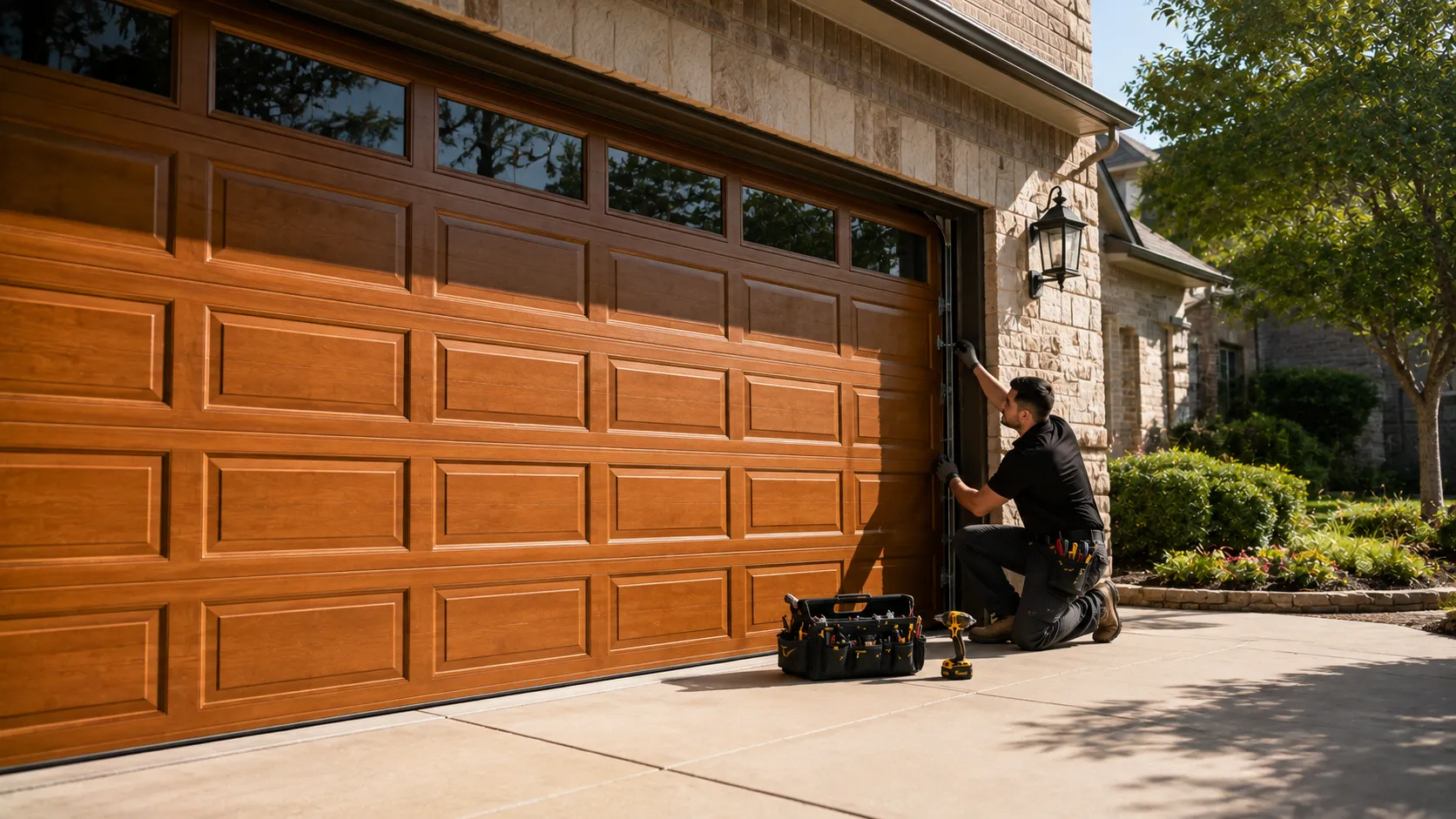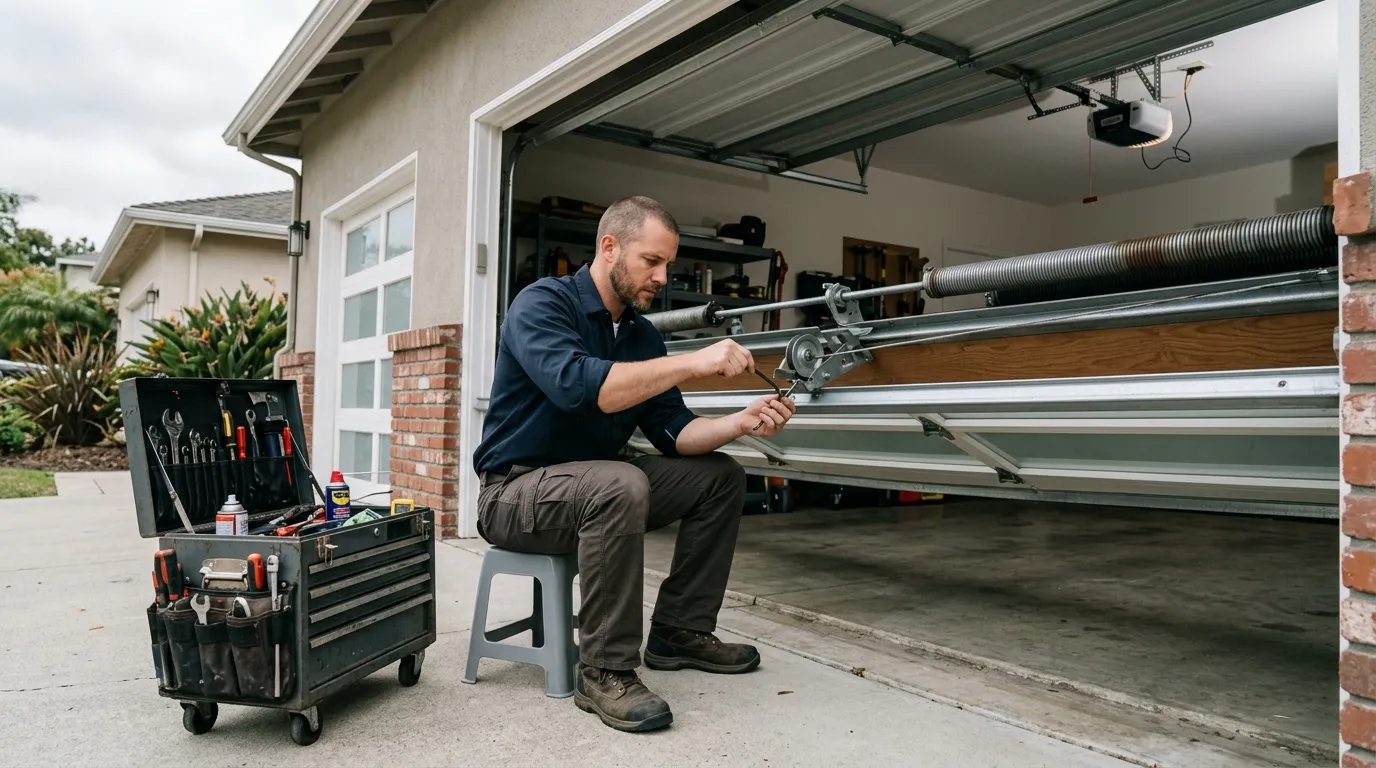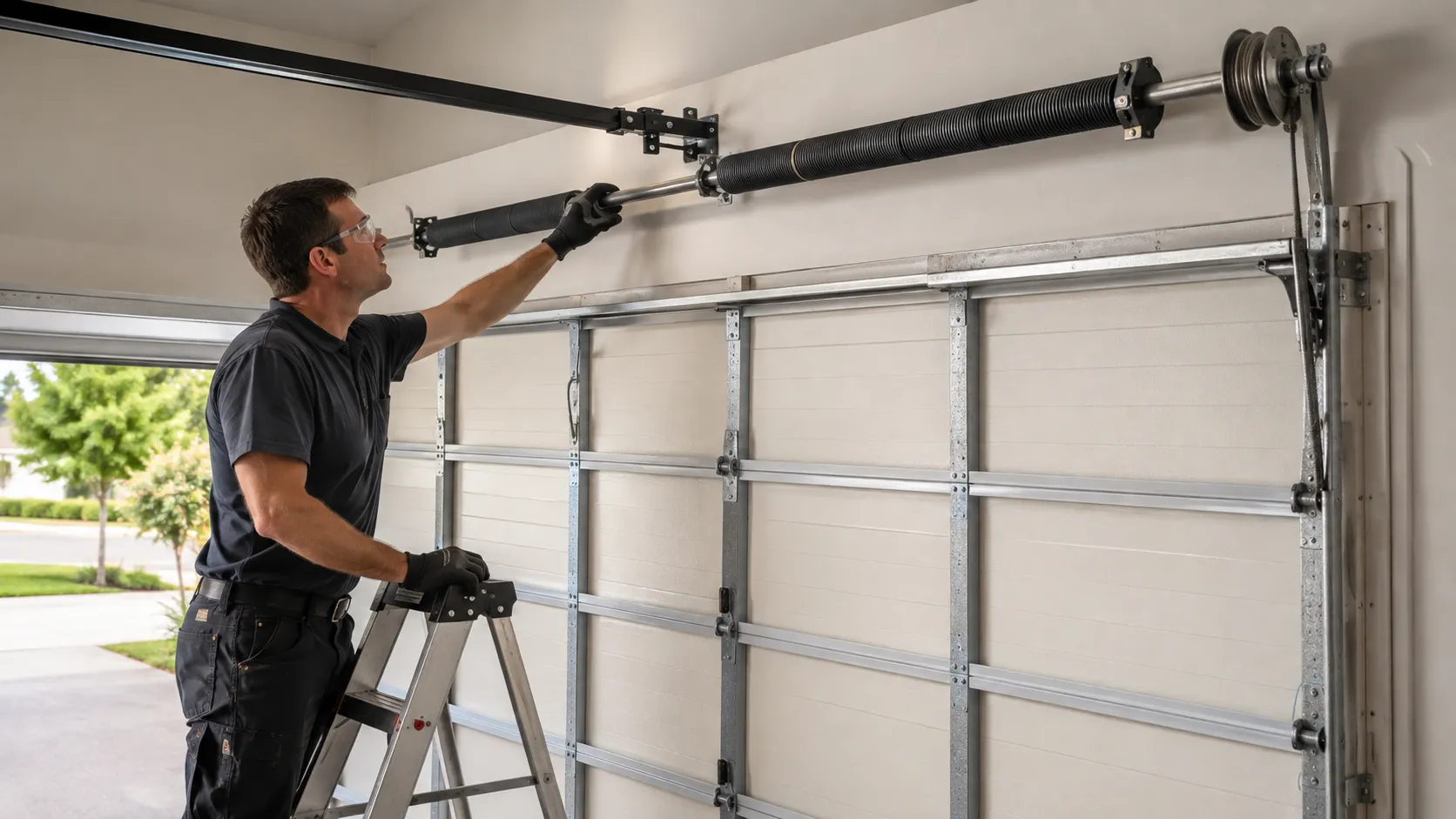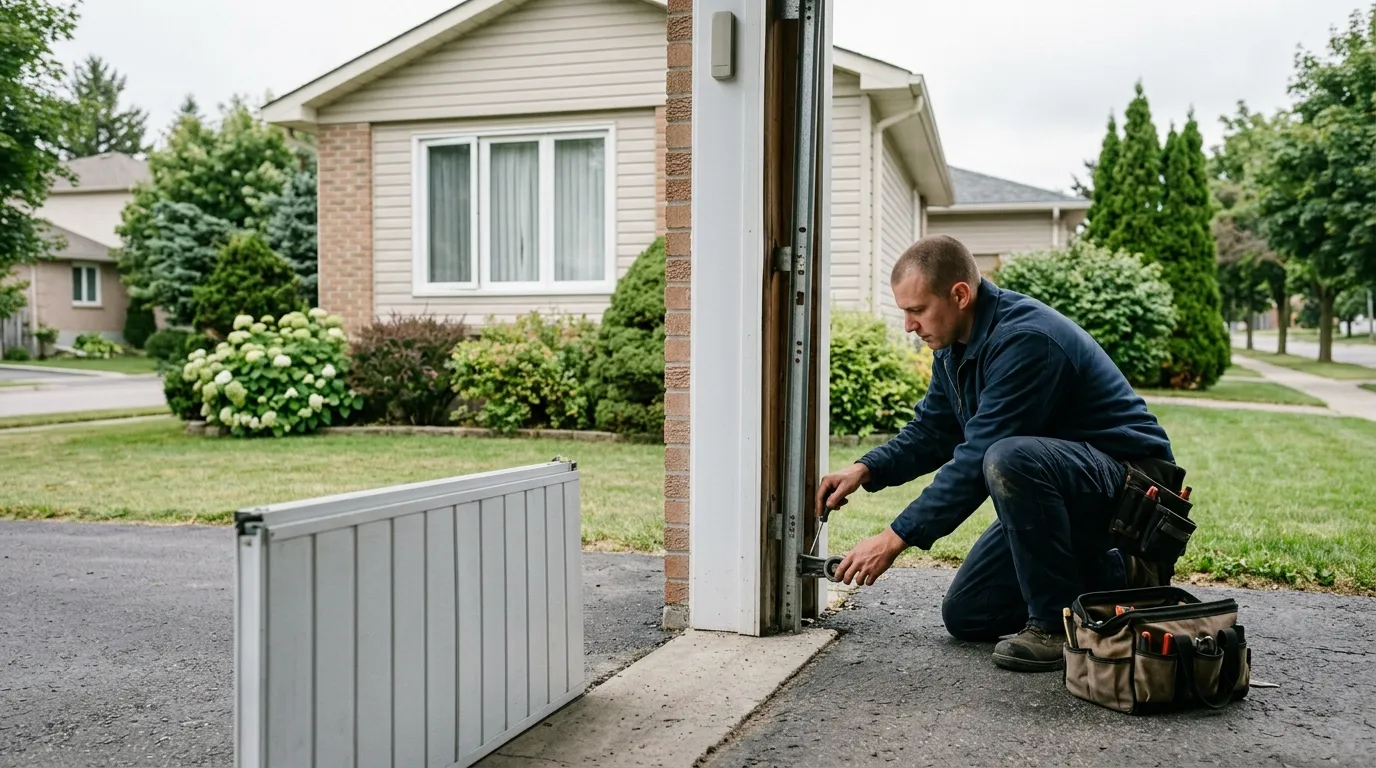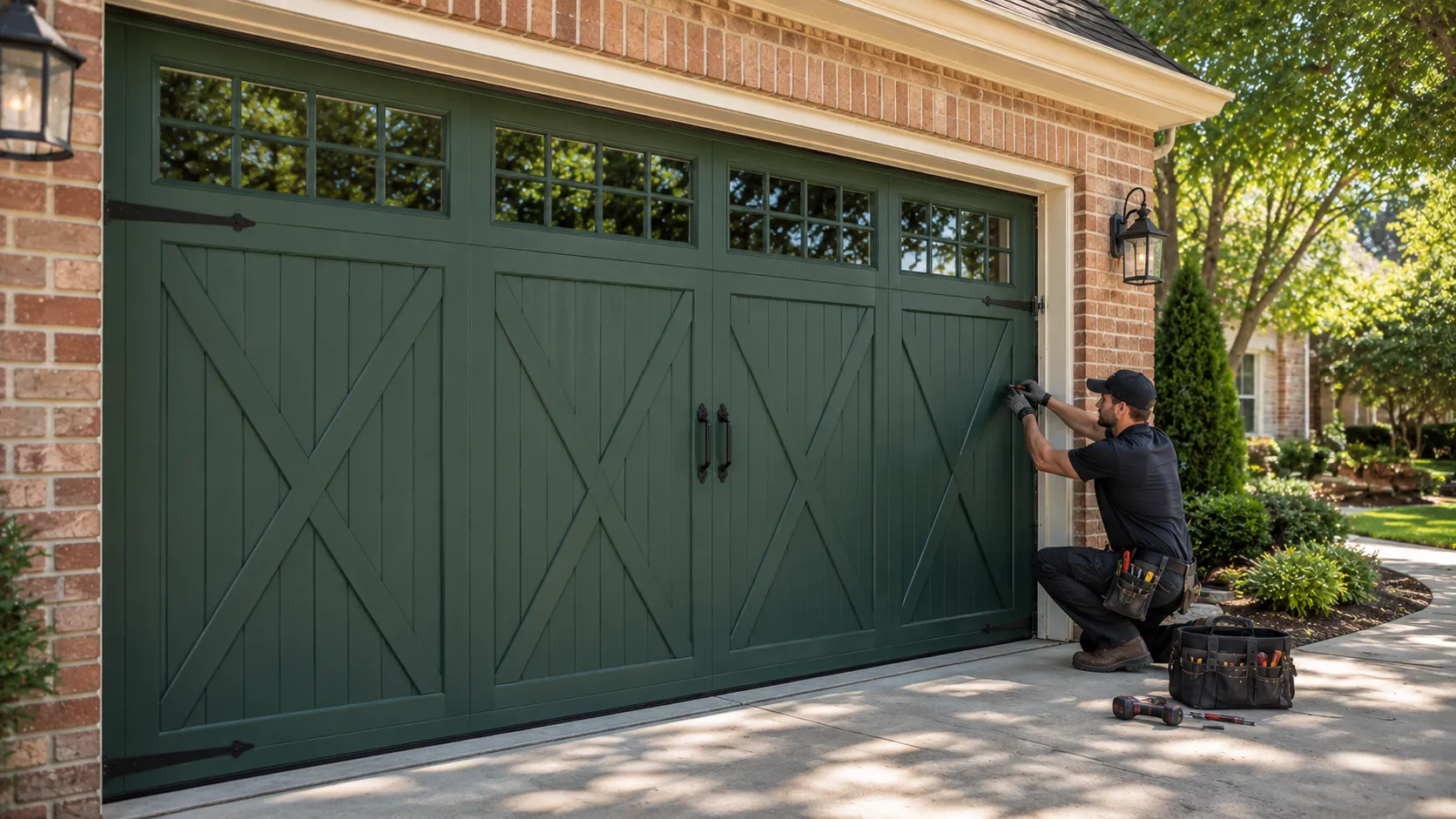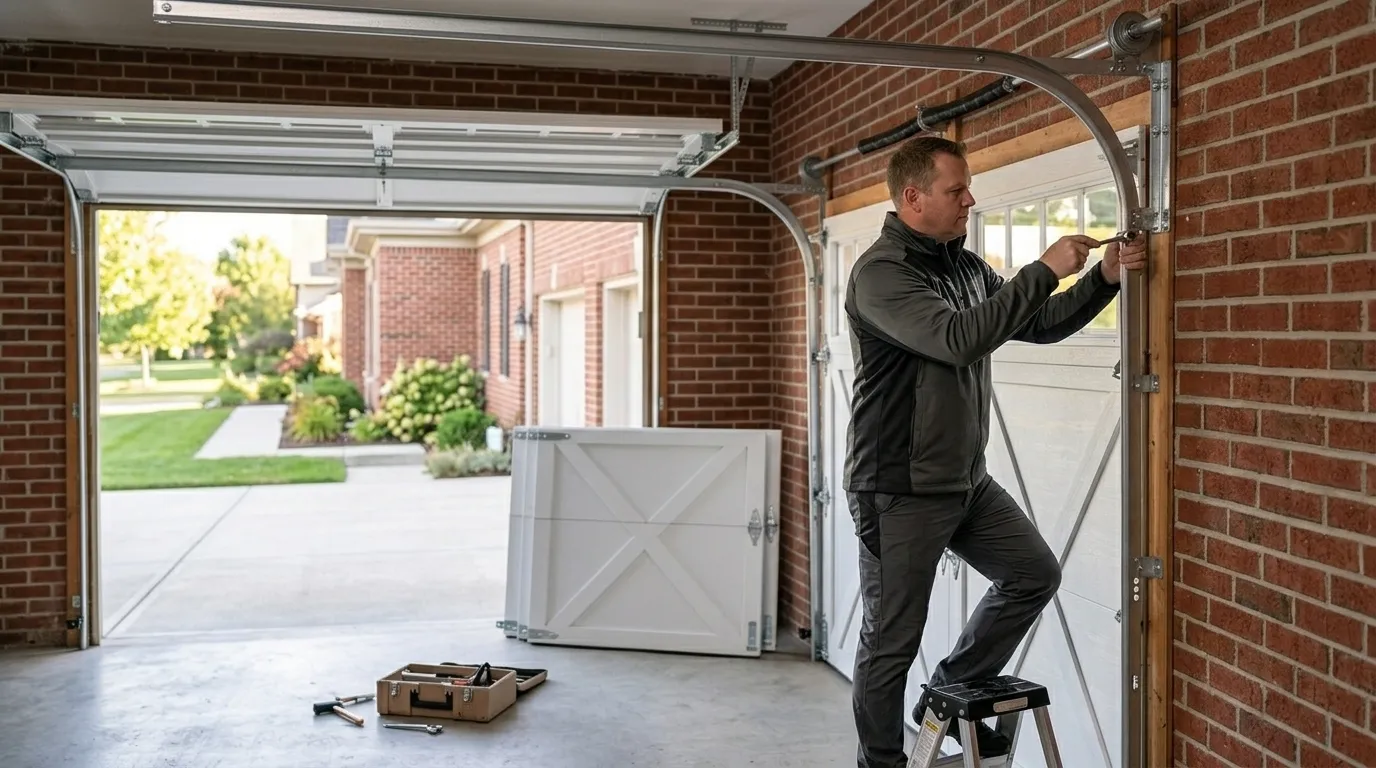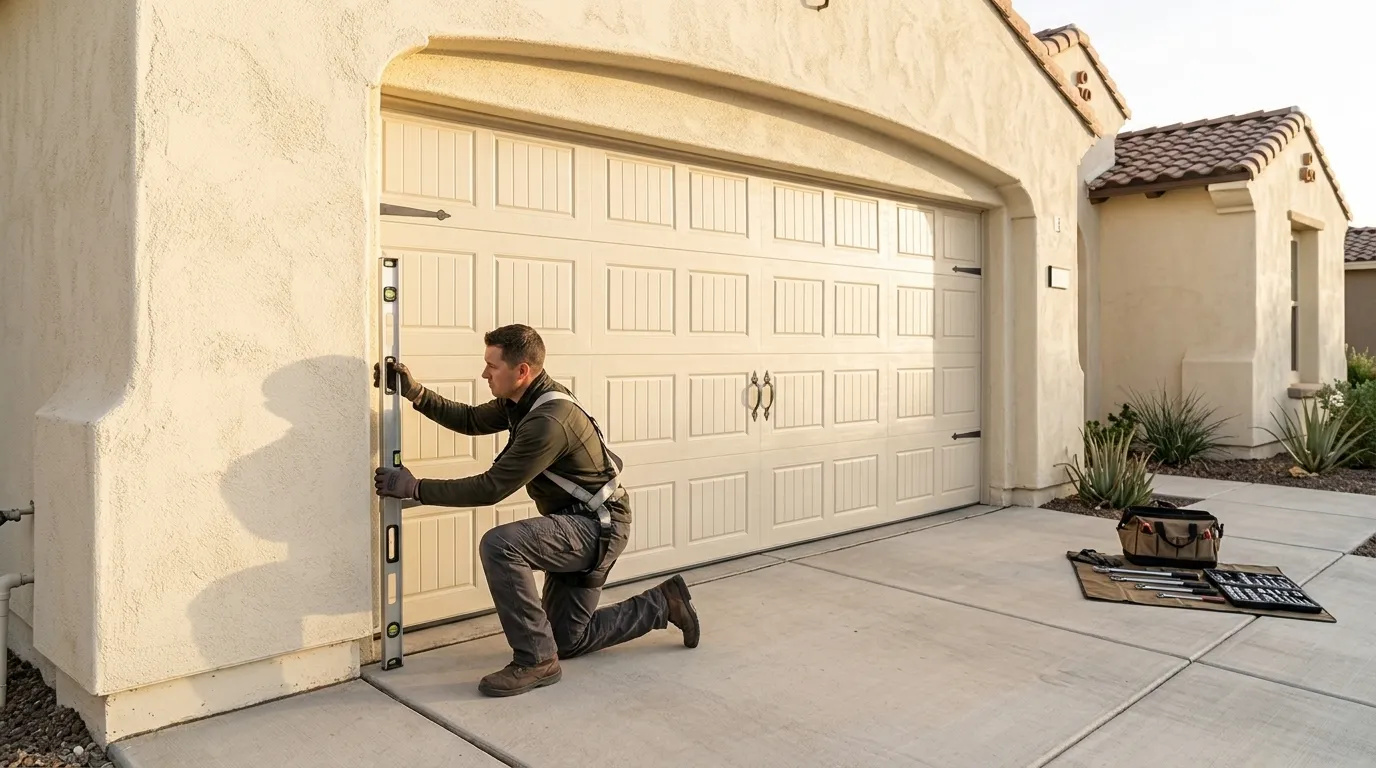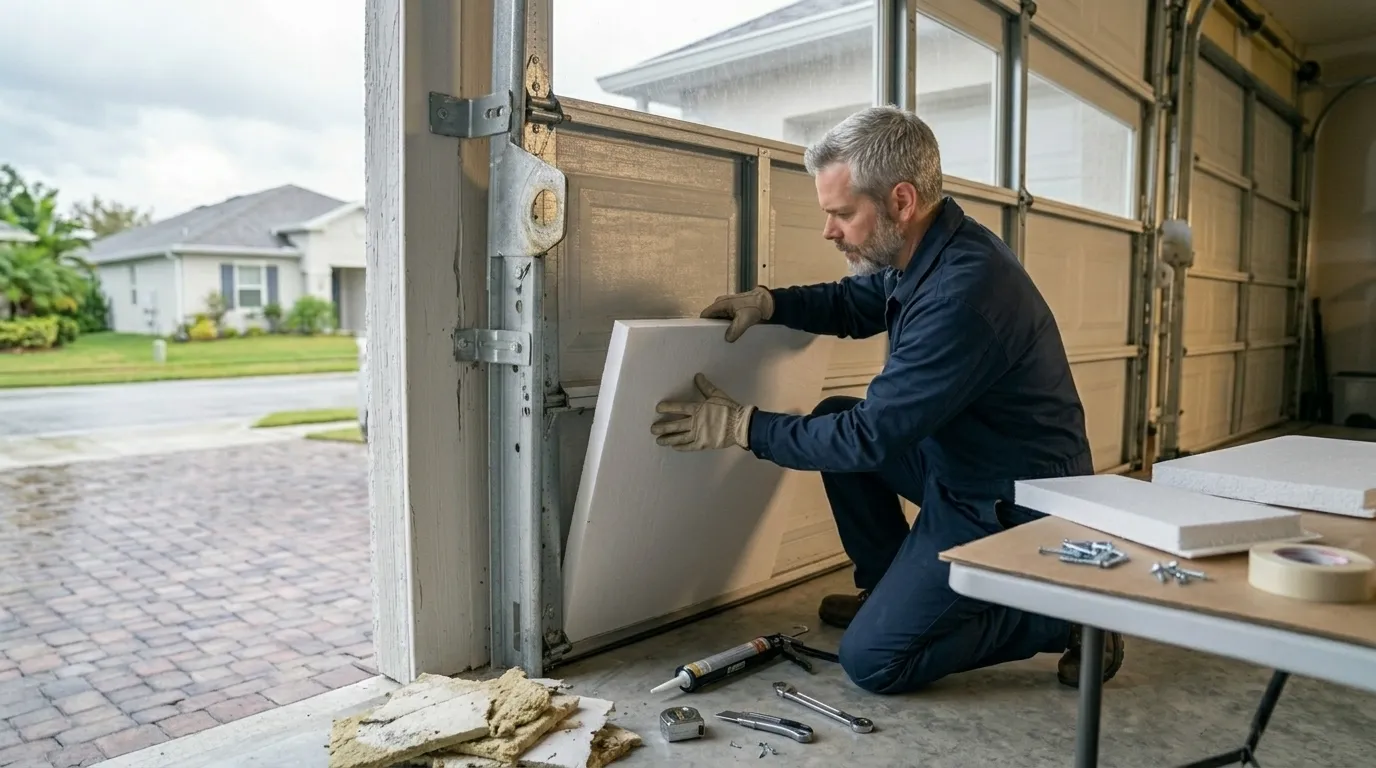
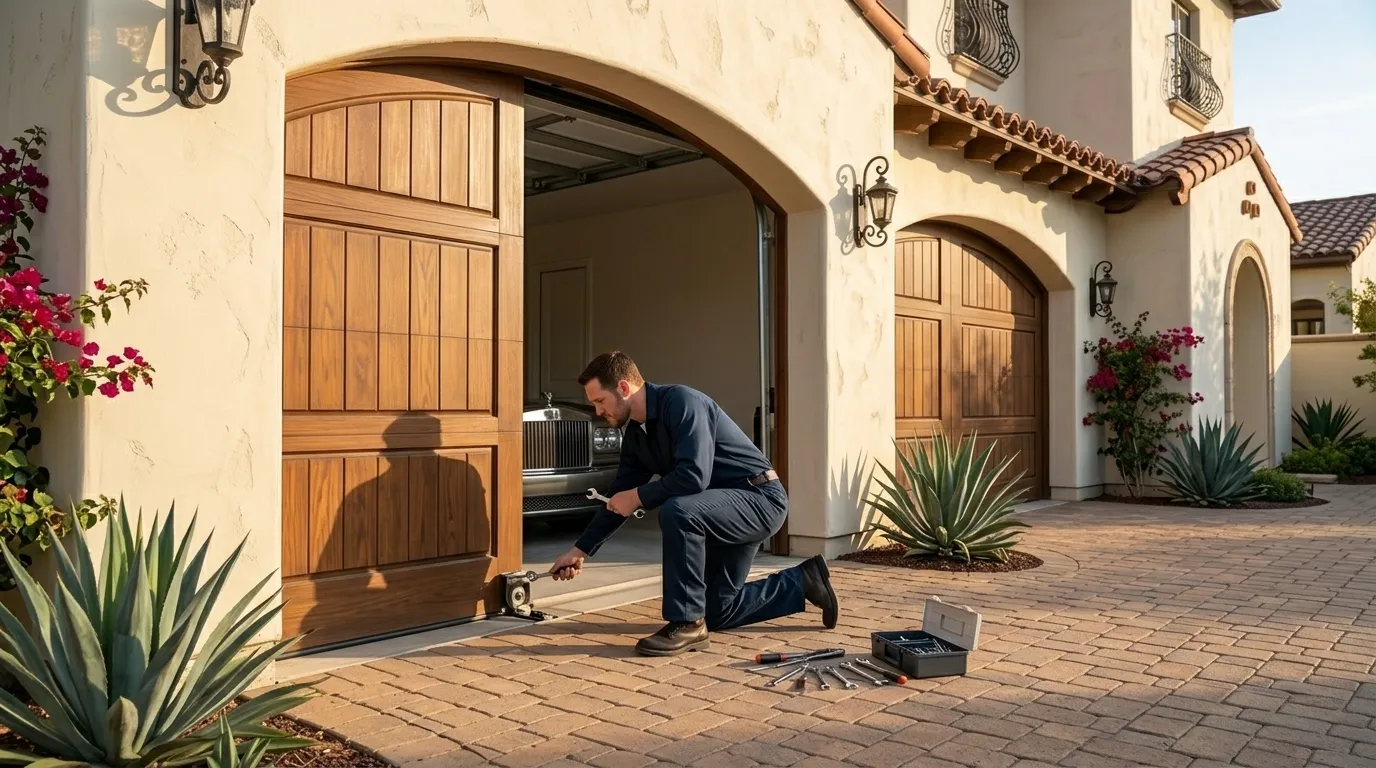
What the Fix Involves
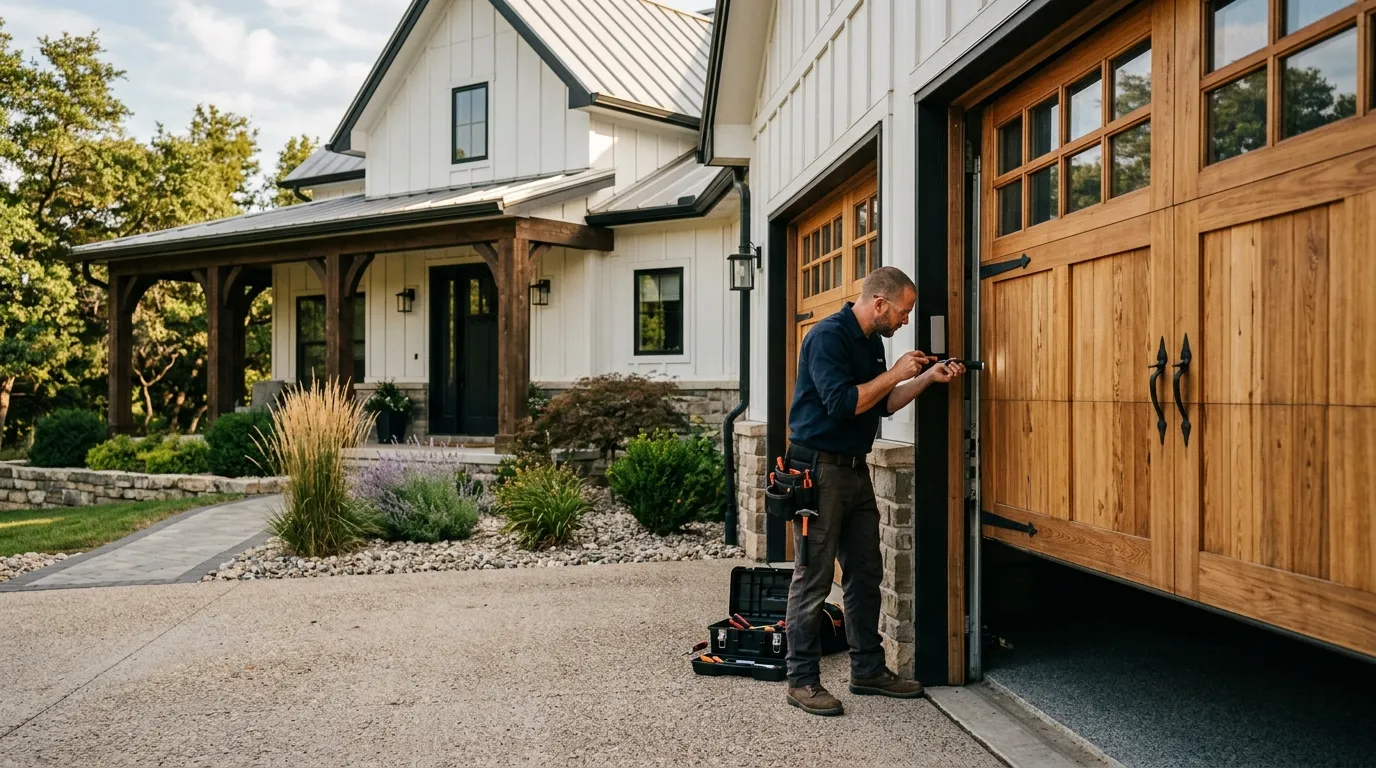
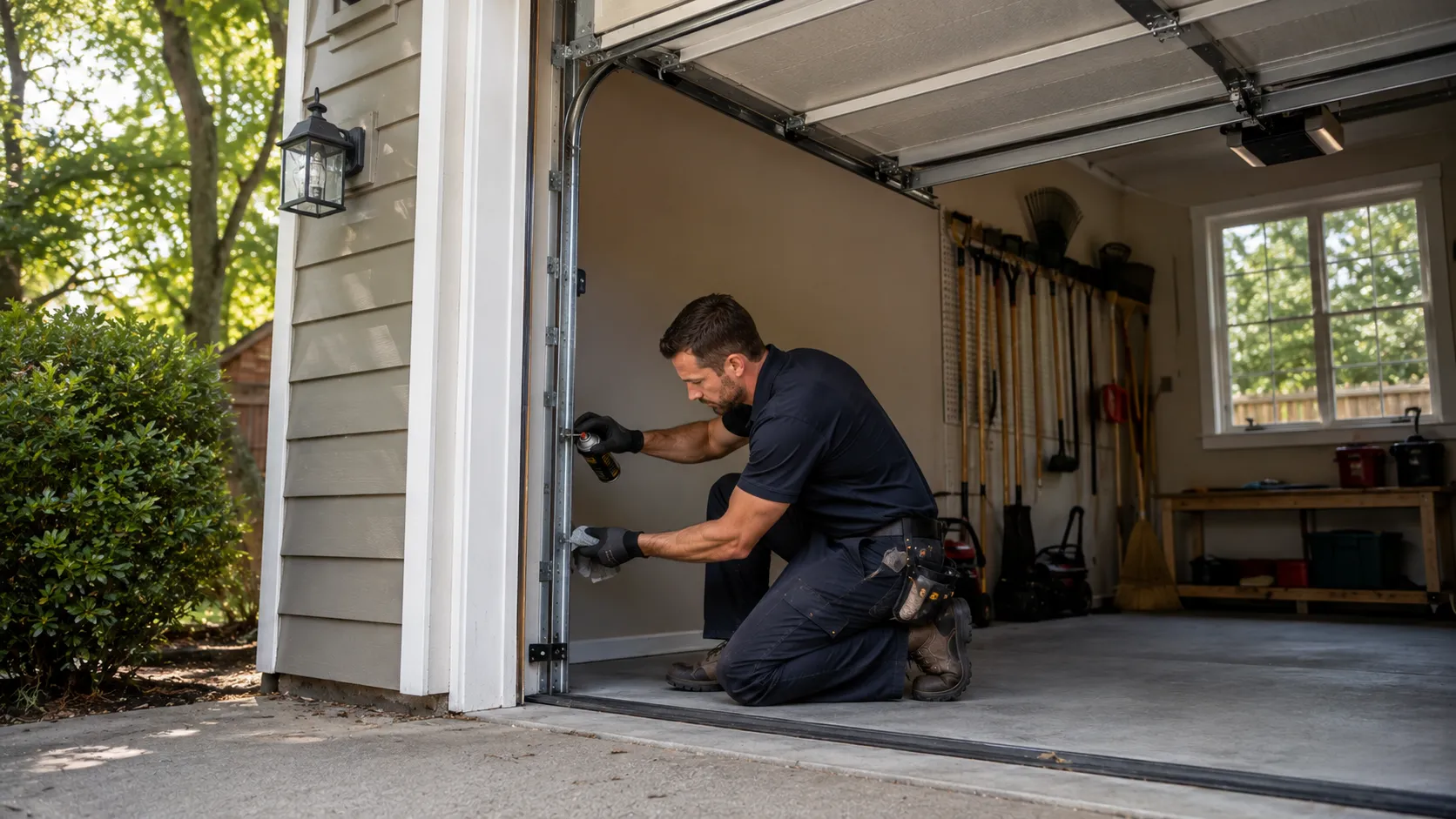
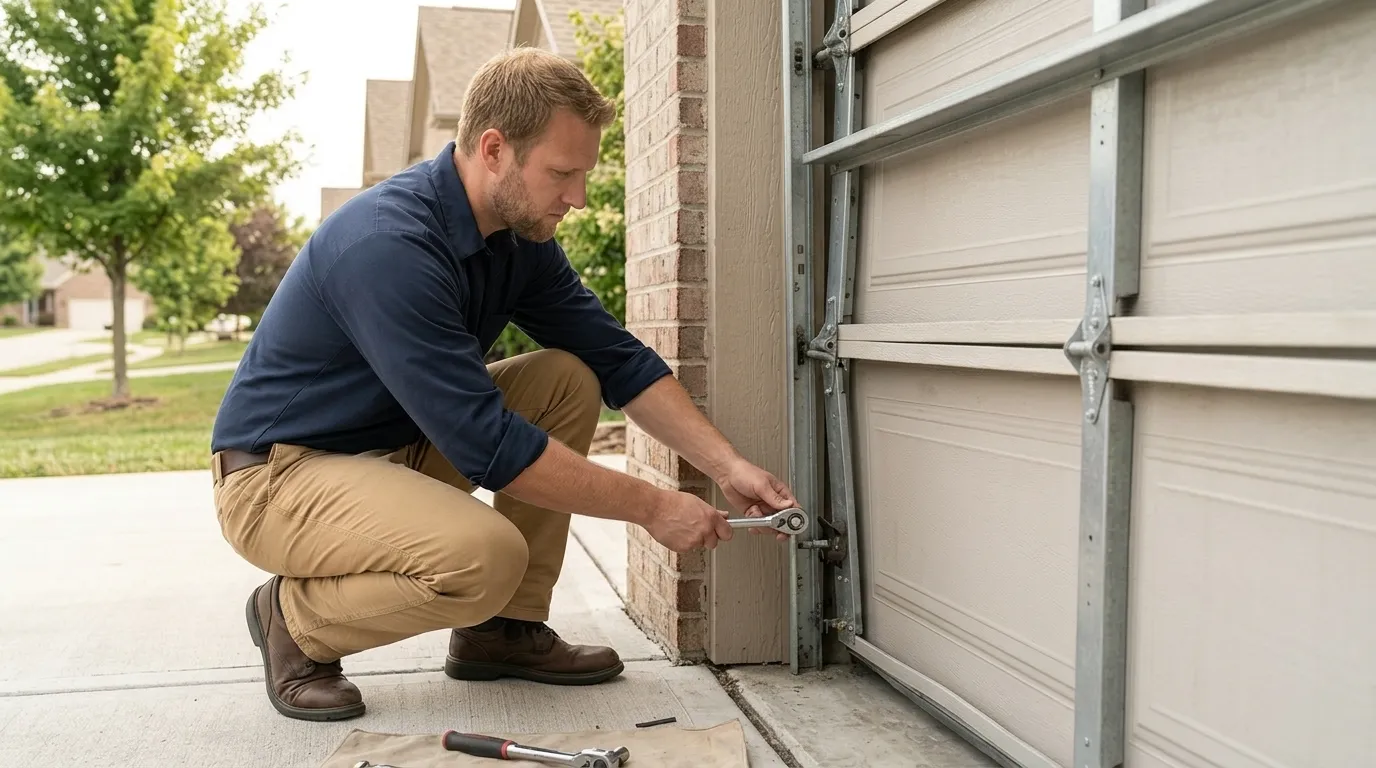
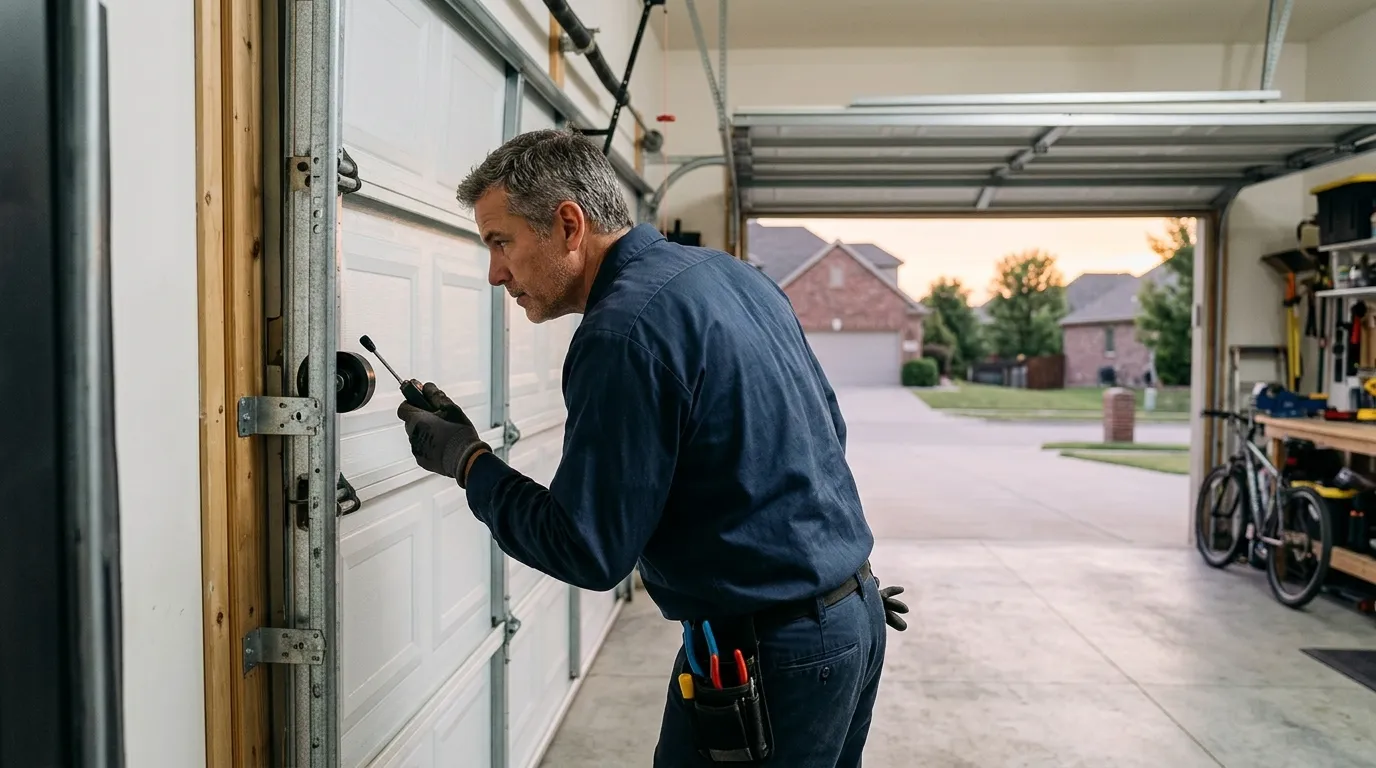
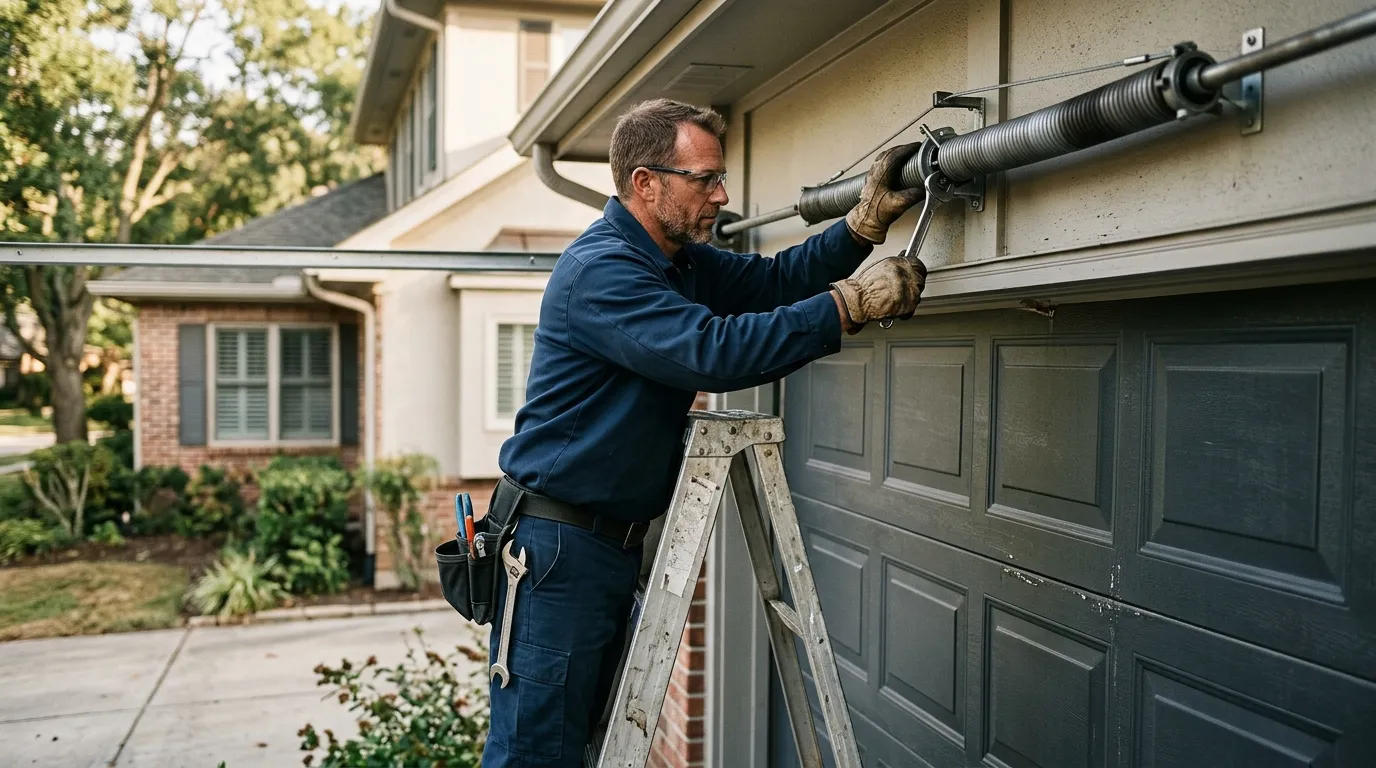
A broken extension spring or a snapped lift cable is a mechanical job, not an electronics one. We disconnect the opener from the door first - pulling on a spring-loaded door with the motor still engaged is how people get hurt - then release tension on the remaining spring before touching anything else.
On the older side-mount setups still common in this area, we're often replacing both springs as a pair even if only one broke, because a spring that's been under load since the 1960s or 70s doesn't have much life left in its twin. Cables get the same treatment - if one frayed, the other one is close behind it.
After the new hardware goes on, we balance the door by hand, checking that it holds position at waist height with the opener still disconnected. If it drifts up or down on its own, the spring tension is off and it gets adjusted before we reconnect anything electrical. Then we run the opener through a full cycle and check the reversal safety, since that's the part most homeowners never think to test until it's their kid or their car under the door.
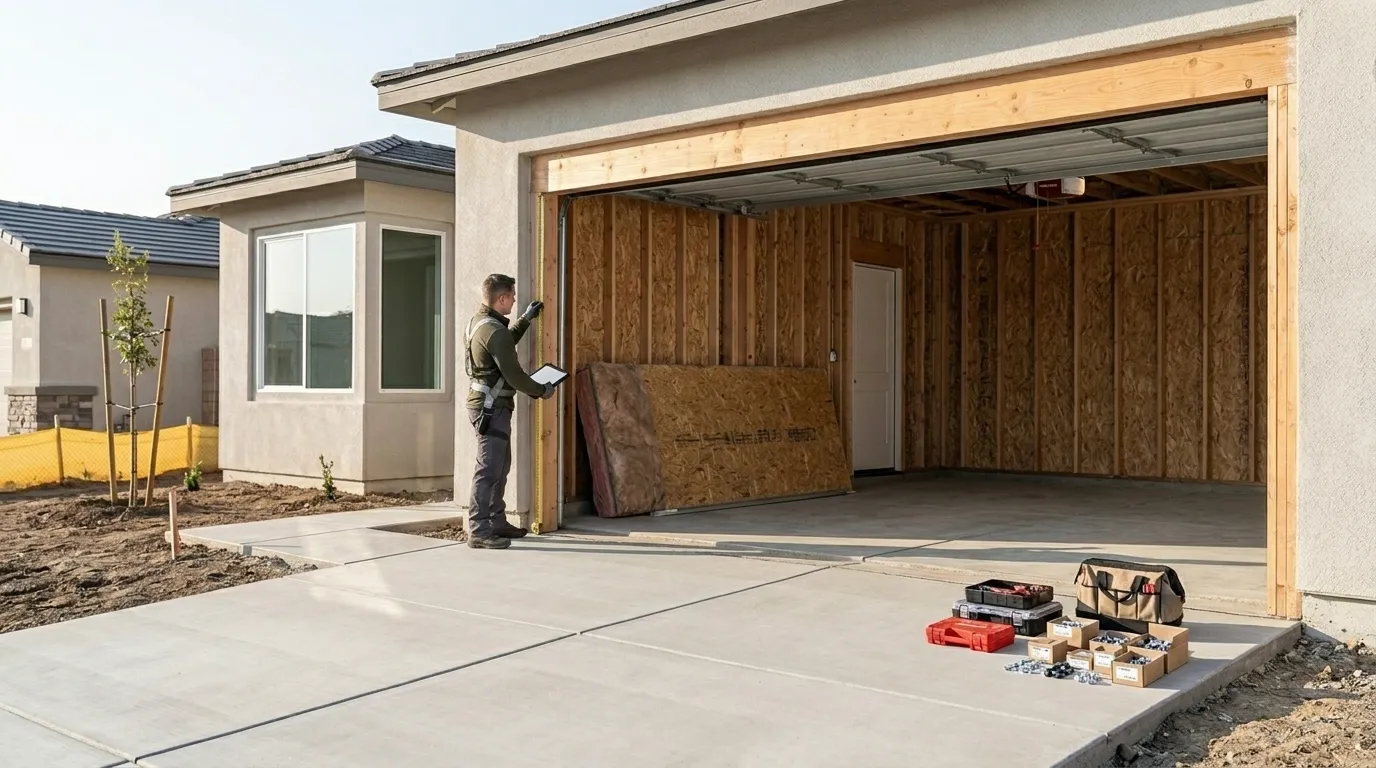
We don't stock every obsolete bracket size from a 1965-era track system, so on rare jobs we swap the mounting hardware to a current standard rather than hunt for a discontinued part.
The Symptom
The call usually starts one of two ways: the door won't budge and there's a loud bang still ringing in someone's ears, or the door is creeping open on one side while staying stuck on the other. Both point at a spring problem, not an opener problem, even though the opener gets blamed first.
A snapped torsion or extension spring takes the counterweight out of the system entirely. The opener motor was never built to lift the full weight of a garage door on its own - it's built to nudge a balanced door, so when the spring goes, the motor either stalls, strips its gear, or lifts the door crooked because one side still has tension and the other doesn't.
Cables fail differently. A frayed or snapped cable lets one side of the door drop while the other stays up, and you'll often see the door hanging at an angle in the track before it comes off the rollers entirely. Either failure can happen without warning, though most springs give a faint sag or a slower-than-usual close in the days before they go.