Garage Doors for Metro Center's 1960s and 70s Homes
Garage door repair, spring replacement, and opener service for Metro Center homes near downtown Springfield, MA, built mostly between the 1960s and 1970s.
Metro Center's housing stock mostly went up between 1938 and 1989, with the typical build year landing around 1965 - the same wave that put up most of Springfield's 1960s and 70s neighborhoods. That means original steel doors on side-mounted torsion hardware, openers that predate rolling-code remotes, and tracks that have been bent and re-hung more than once by whoever owned the place before. We don't have street-level data for Metro Center specifically, so we won't pretend to know which block has which door - but the build era tells you most of what matters: single-layer panels, thinner steel than what's sold now, and springs sized for doors that have been repainted a few times and gotten heavier for it. If your door still has the manufacturer's plate from the original install, that's usually a good sign it's due, not a sign it's fine. Across the wider service area there are close to 49,311 owner-occupied houses in this same general age bracket, so the parts problem Metro Center runs into is a shared one - not unique, but real.
Where This Is
Metro Center sits about two miles west-southwest of downtown Springfield. East Forest Park is roughly two miles south, and Liberty Heights is about two miles northwest - both close enough that a truck working one can usually swing by the other same day. Sixteen Acres runs about two miles east-southeast, and East Springfield is two miles north-northwest, which puts Metro Center in the cluster of close-in neighborhoods rather than out toward the longer-distance towns like Wilbraham or East Longmeadow. We mention the neighbors mainly for context: this is a compact, built-up part of the city, not a spread-out subdivision, and that shapes how quickly we can get to a stuck door versus a call coming from ten or fifteen miles out.
Typical Work
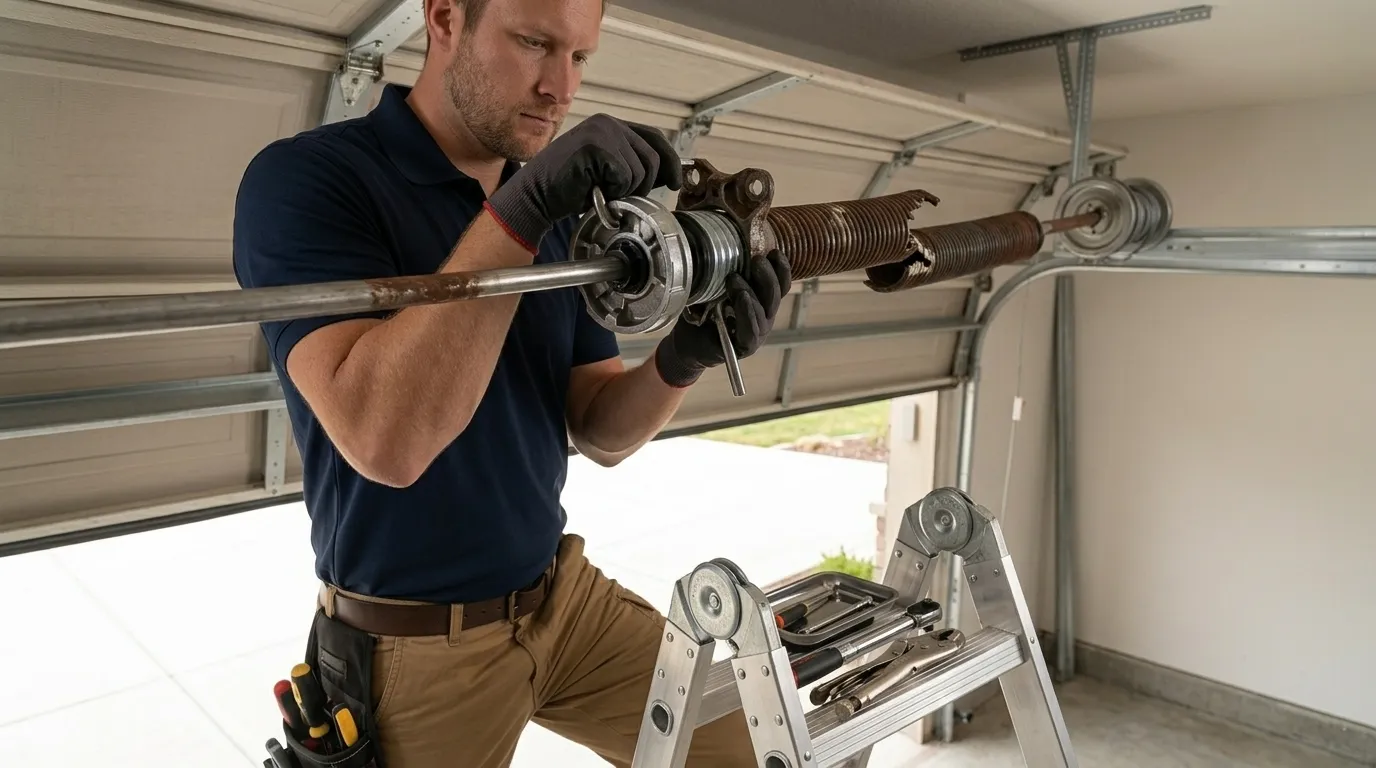
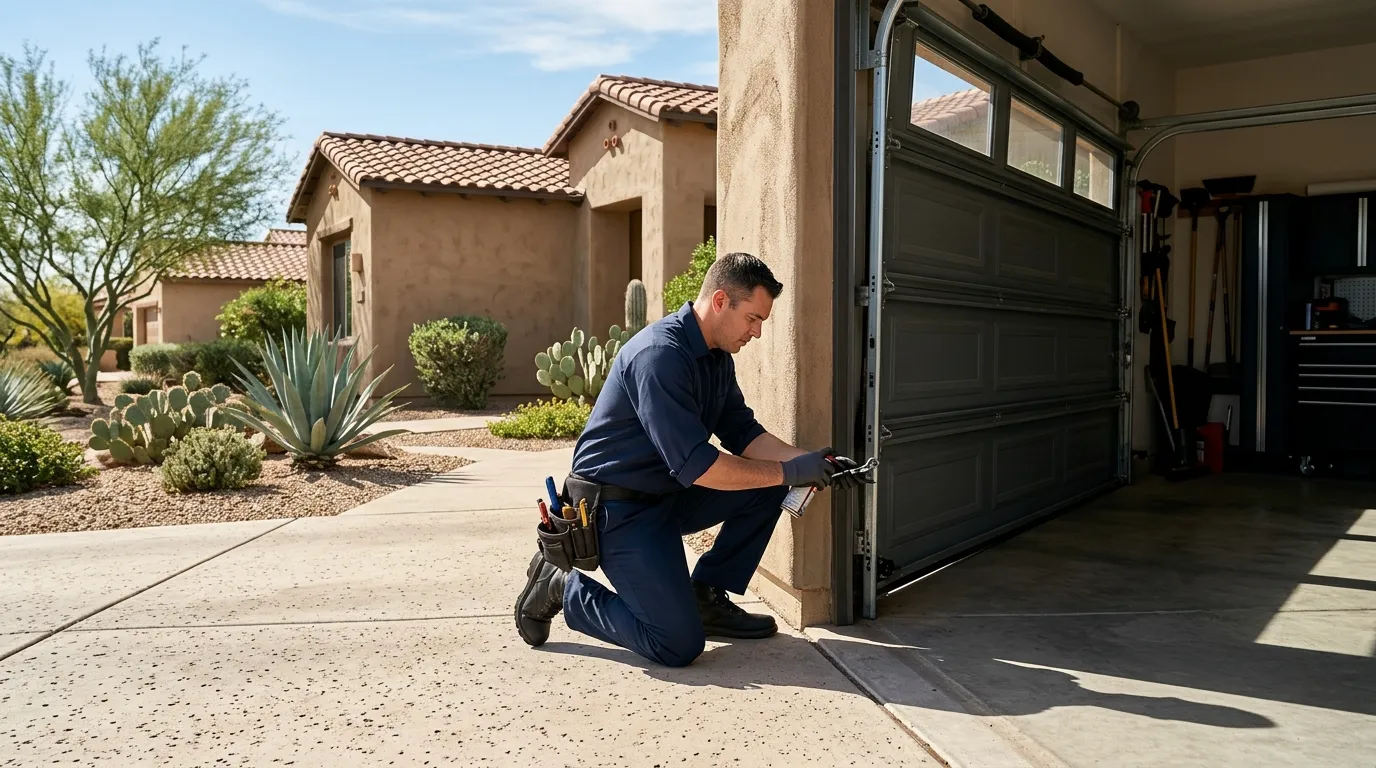
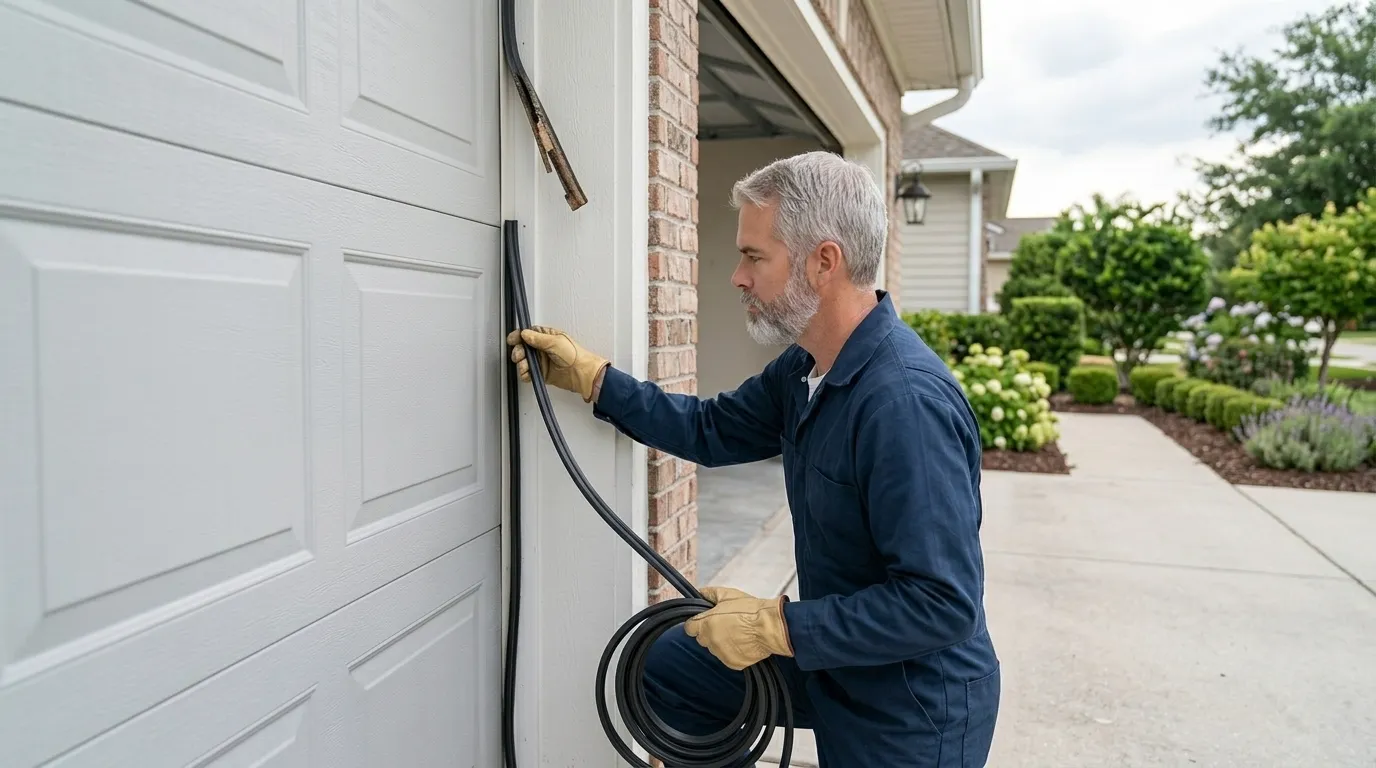
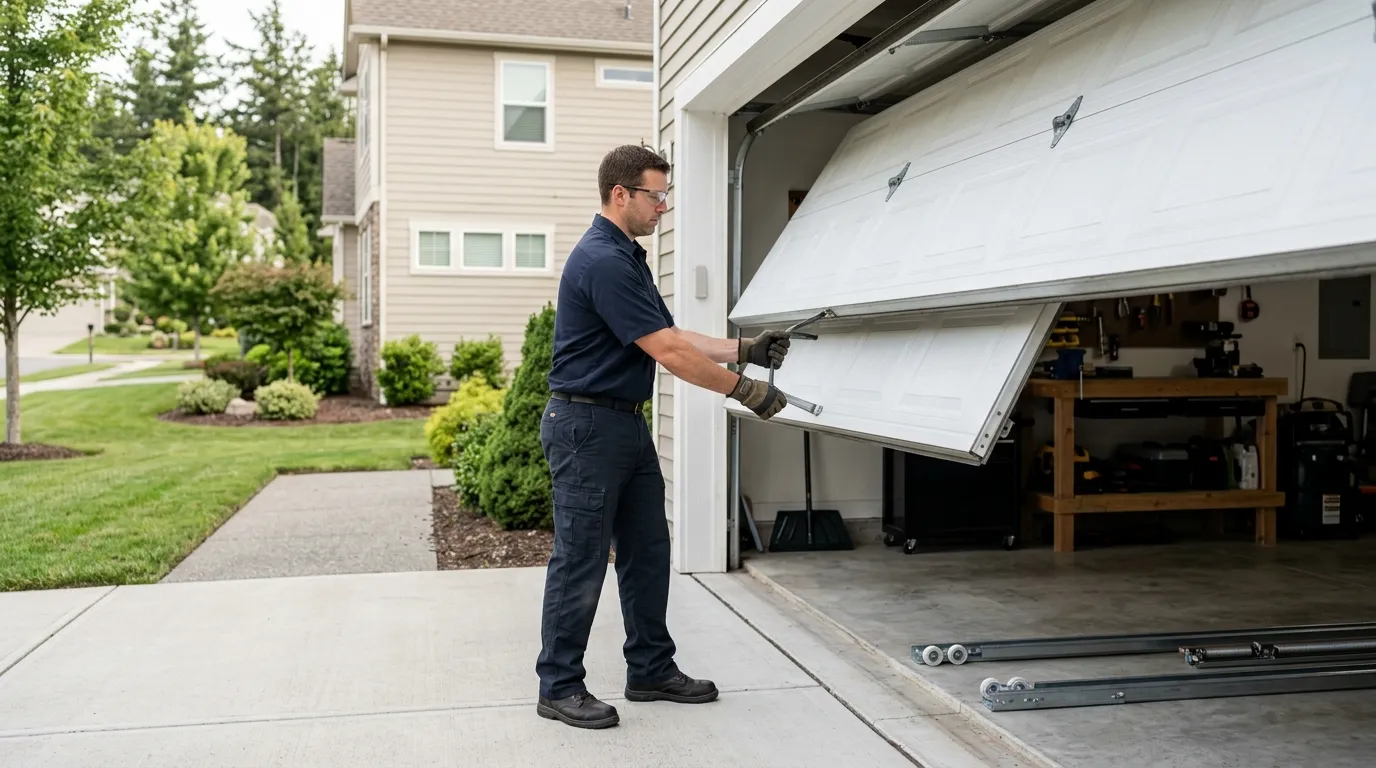
Springfield sits in a cold, severe winter climate band, and Metro Center's older doors feel that every January - steel contracts, weatherstripping cracks, and a door that rolled fine in October starts binding on the track once the cold sets in. The calls we get from this stretch of the city run heavy on broken torsion springs (expected on a door installed in the 1960s and never touched since), worn rollers that have gone from nylon to metal-on-metal, and openers original enough that replacement parts aren't made anymore. Insulated doors are a common upgrade request here, less for looks than for the cold garage walls that come with a house this age. Median household income across the service area runs around $93,808, and at that level most owners we talk to choose a full door replacement over a second or third round of patching a door that's already older than the mortgage. That's not a rule, just what we see most often out this way. One honest limit: if a door needs a specific matched panel from an obsolete production run, we sometimes have to wait on it - that's not a same-day fix, no matter how simple the rest of the repair looks.
The Doors Around Here
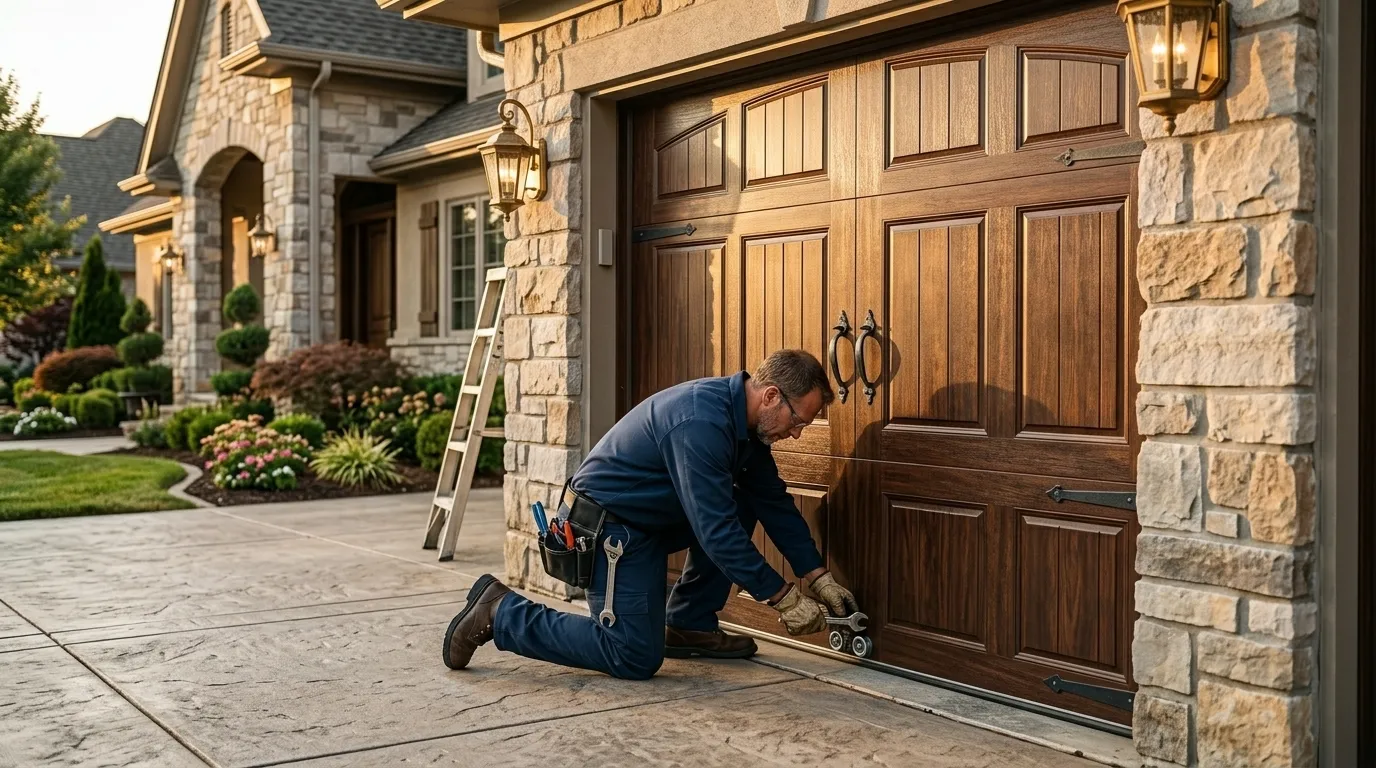
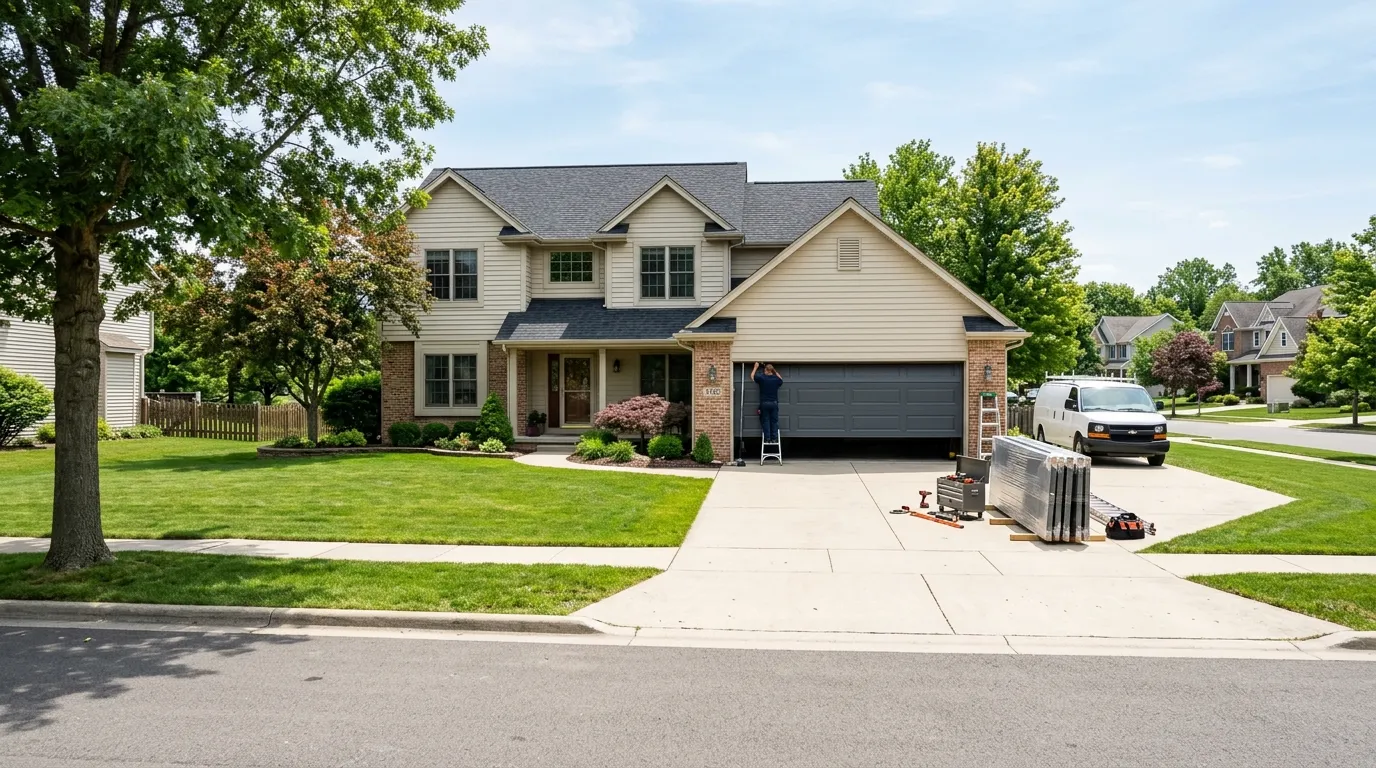
Doors from Metro Center's build era - 1938 to 1989, median around 1965 - tend to fall into a few types: flush steel panels with minimal insulation, some flat wood doors on the oldest lots, and a scattering of raised-panel steel from later remodels done in the 70s and 80s. Torsion springs on these are almost always the older, heavier gauge, sized for doors before double-layer steel and foam cores became standard. When we replace rather than repair, we're usually moving a homeowner from a single-layer door with no insulation to a two-layer steel door, which matters more in a cold-severe climate than most people expect walking into the showroom. We don't install every product line on the market - we stick to what holds up in this weather and what we can actually service years down the road, which sometimes means saying no to a cheaper door a homeowner has already picked out online.
How it works
From “it’s stuck” to “it’s fixed”
1
Tell us what’s wrong
Describe the symptom - won’t open, loud bang, opener runs but the door won’t move.
2
On-site diagnosis
A technician tests the door under power and by hand and finds what actually failed.
3
Clear, up-front plan
You get the fix that’s needed and what drives the cost - before any work starts.
4
Repaired & tested
The repair is done, the door is set true and tested, and the work area left clean.
Serving Springfield, MA - tell us what your door’s doing and we’ll take it from there.
Straight answers about garage door repair in Springfield. Still unsure? Ask us directly.
How old are most garage doors in Metro Center likely to be?
Given the neighborhood's housing mostly went up between 1938 and 1989, with a median build year around 1965, a lot of original doors and openers in Metro Center are pushing 50 to 60 years old. If yours hasn't been replaced since the house was built, it's well past the point where a spring or roller repair is the cheaper long-term choice.
Do you cover neighborhoods near Metro Center too?
Yes. Metro Center sits close to East Forest Park, Liberty Heights, Sixteen Acres, and East Springfield, all within about two miles, and we work that whole cluster of close-in Springfield neighborhoods.
Why does cold weather matter so much for an older door?
Springfield falls in a cold, severe winter climate band. Steel contracts in the cold, weatherstripping on an older door cracks and stops sealing, and springs sized decades ago start feeling stiffer. It's usually the season that exposes a door that's been marginal all year.
Can you always match an old panel instead of replacing the whole door?
Sometimes, but not always. Panels from production runs that old aren't stocked the way current models are, so a matched-panel repair can mean a real wait. We'll tell you upfront if that's the case rather than promise a same-day fix we can't deliver.