What the Fix Involves
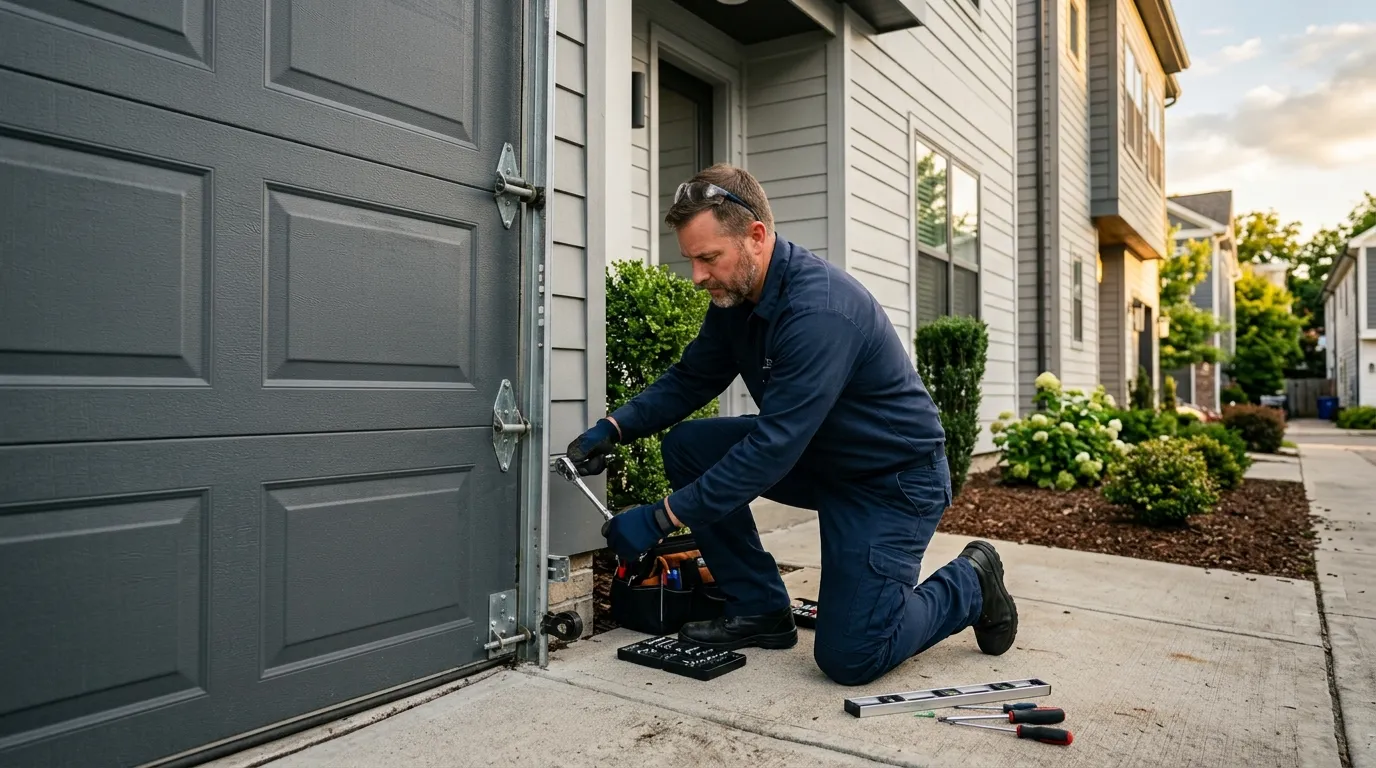
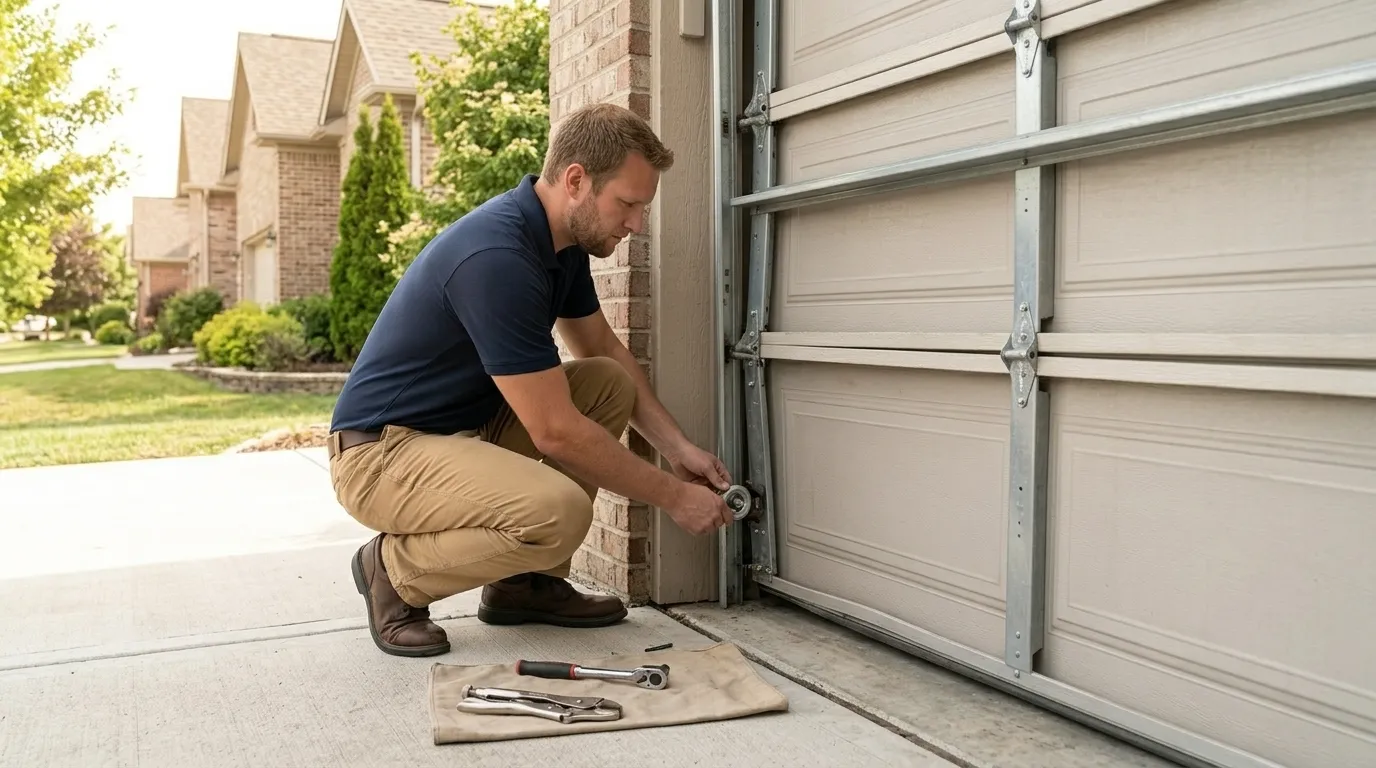
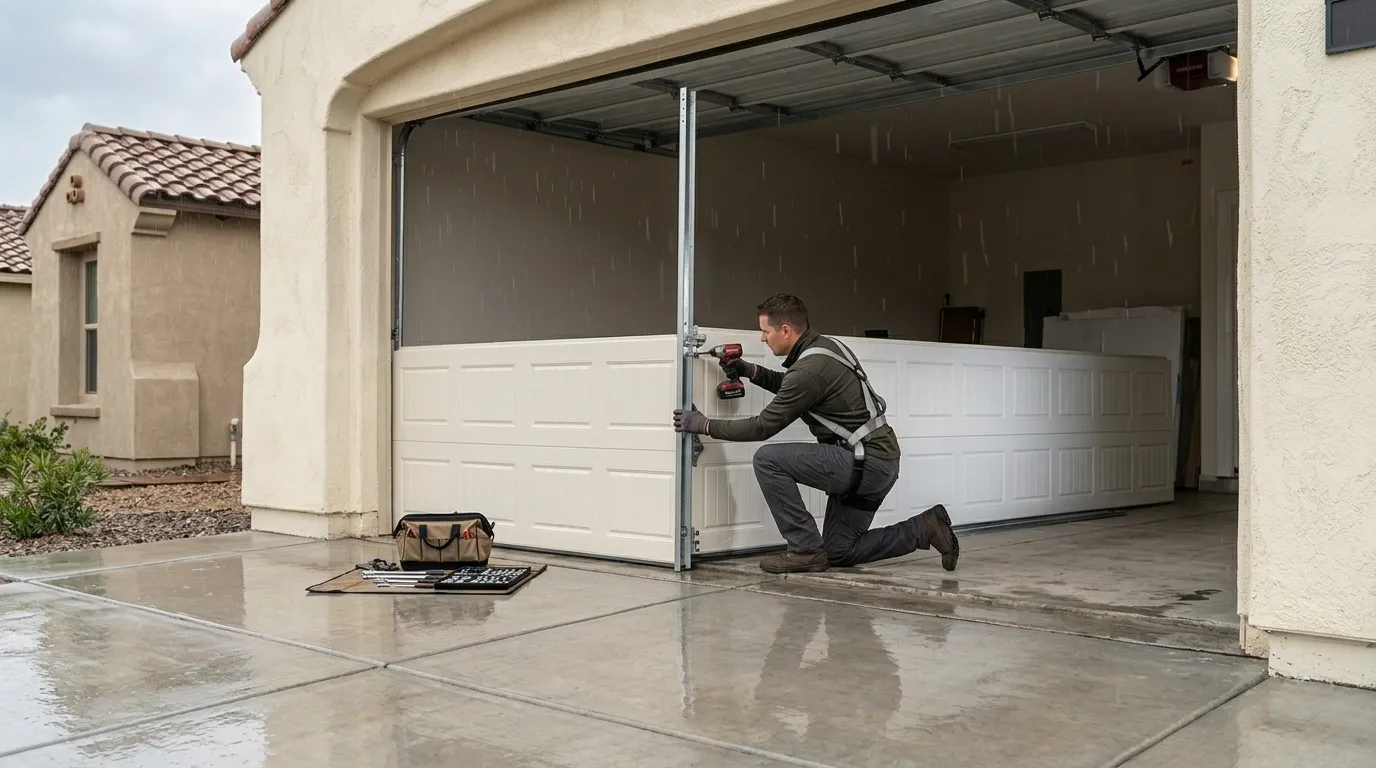
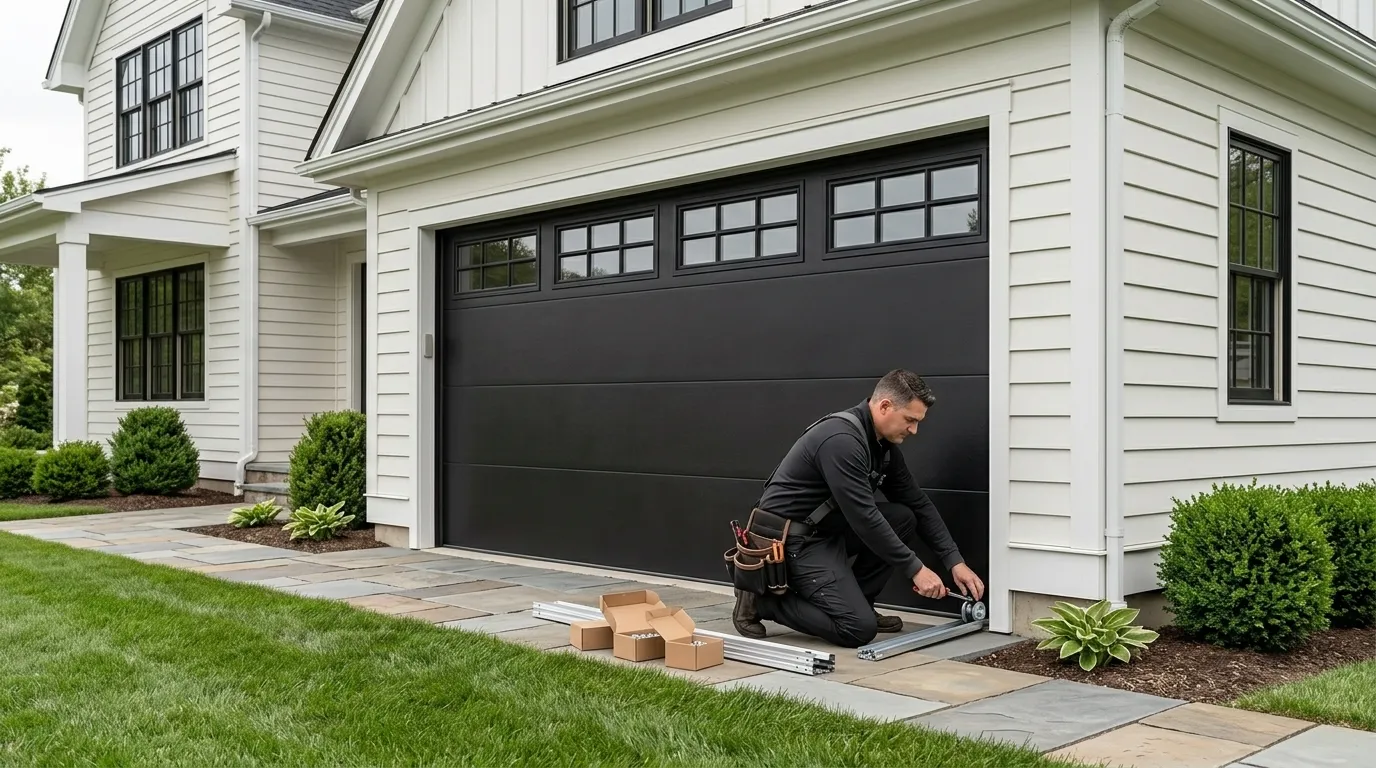
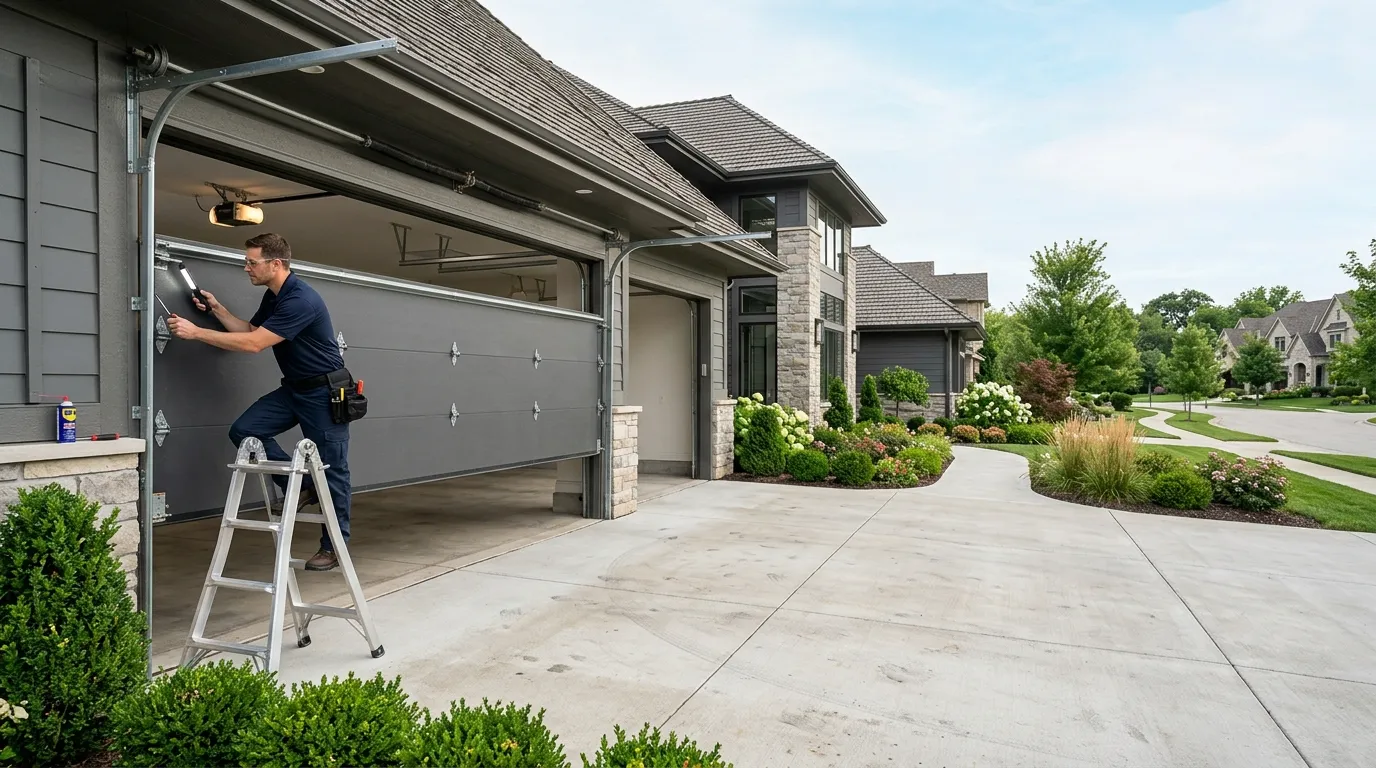
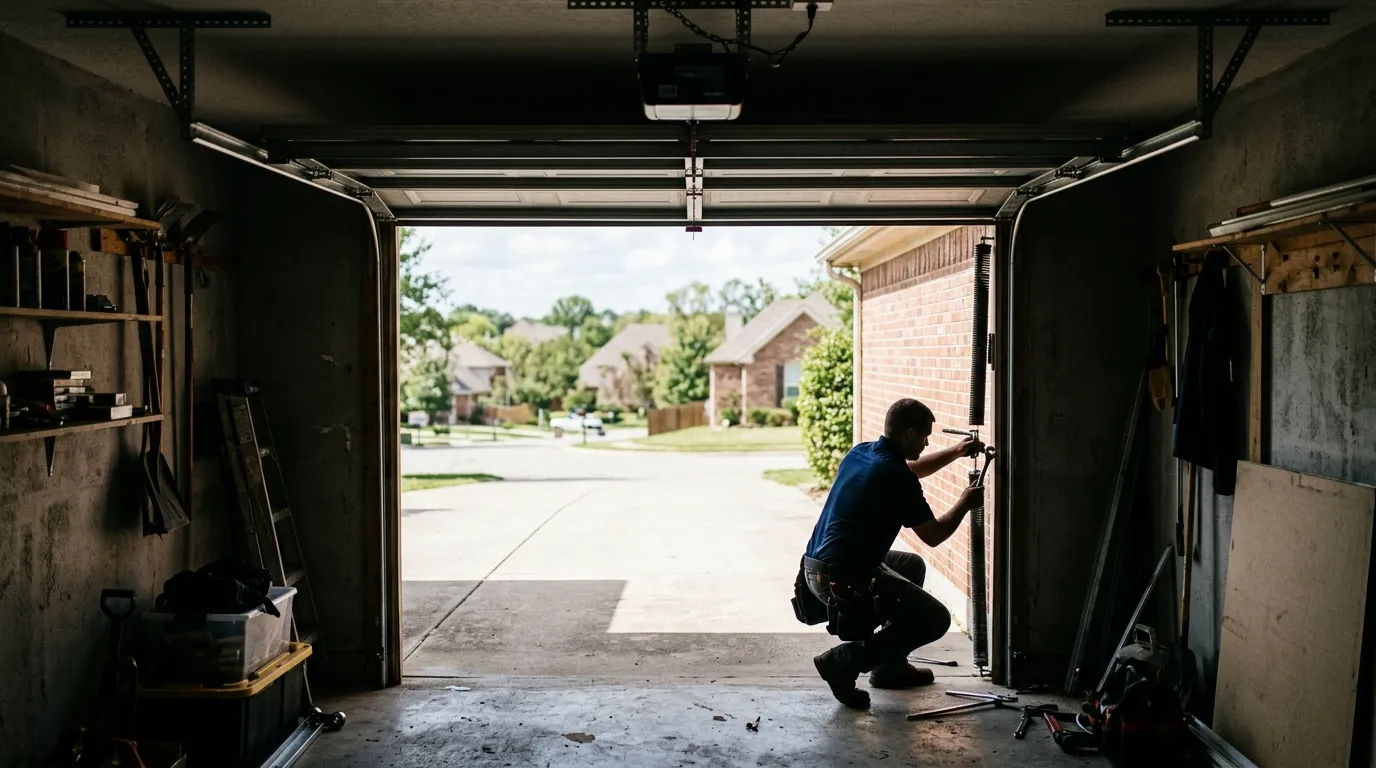
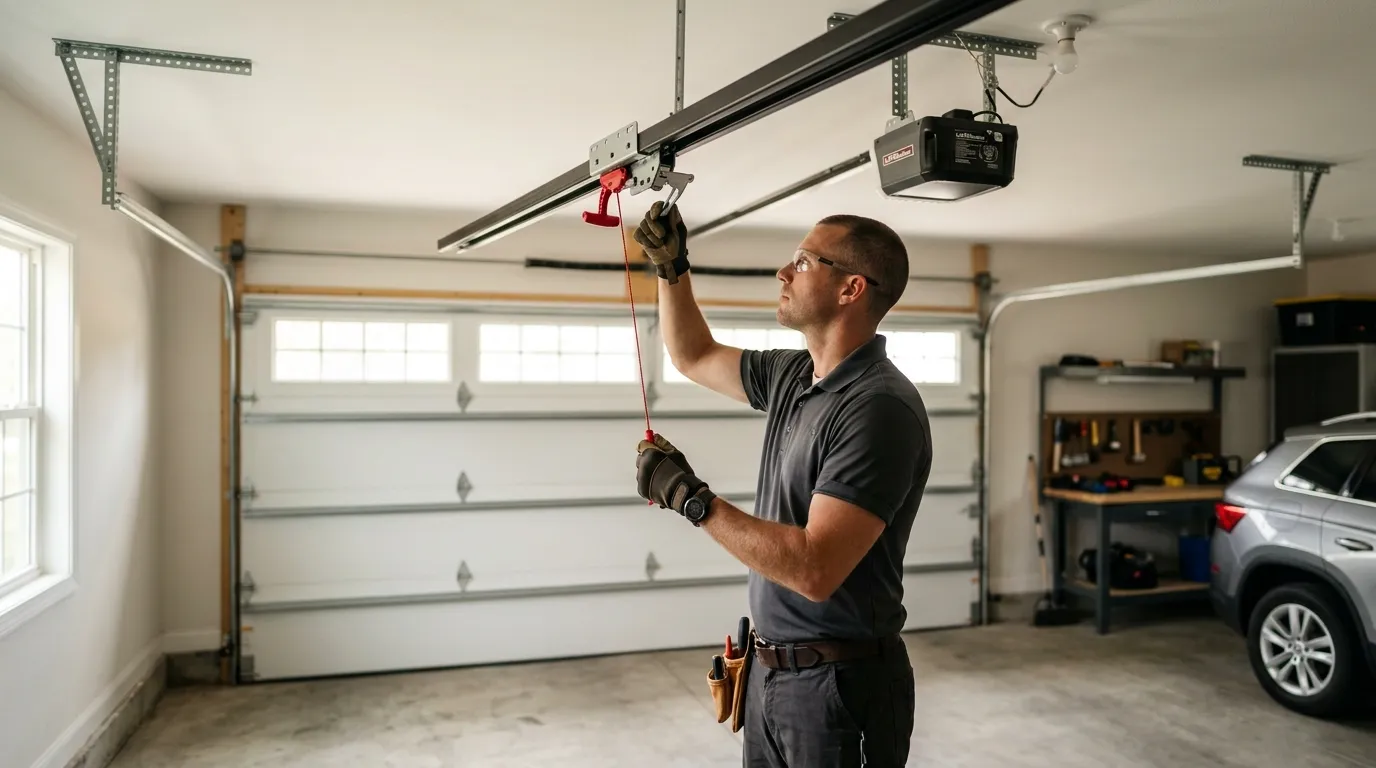
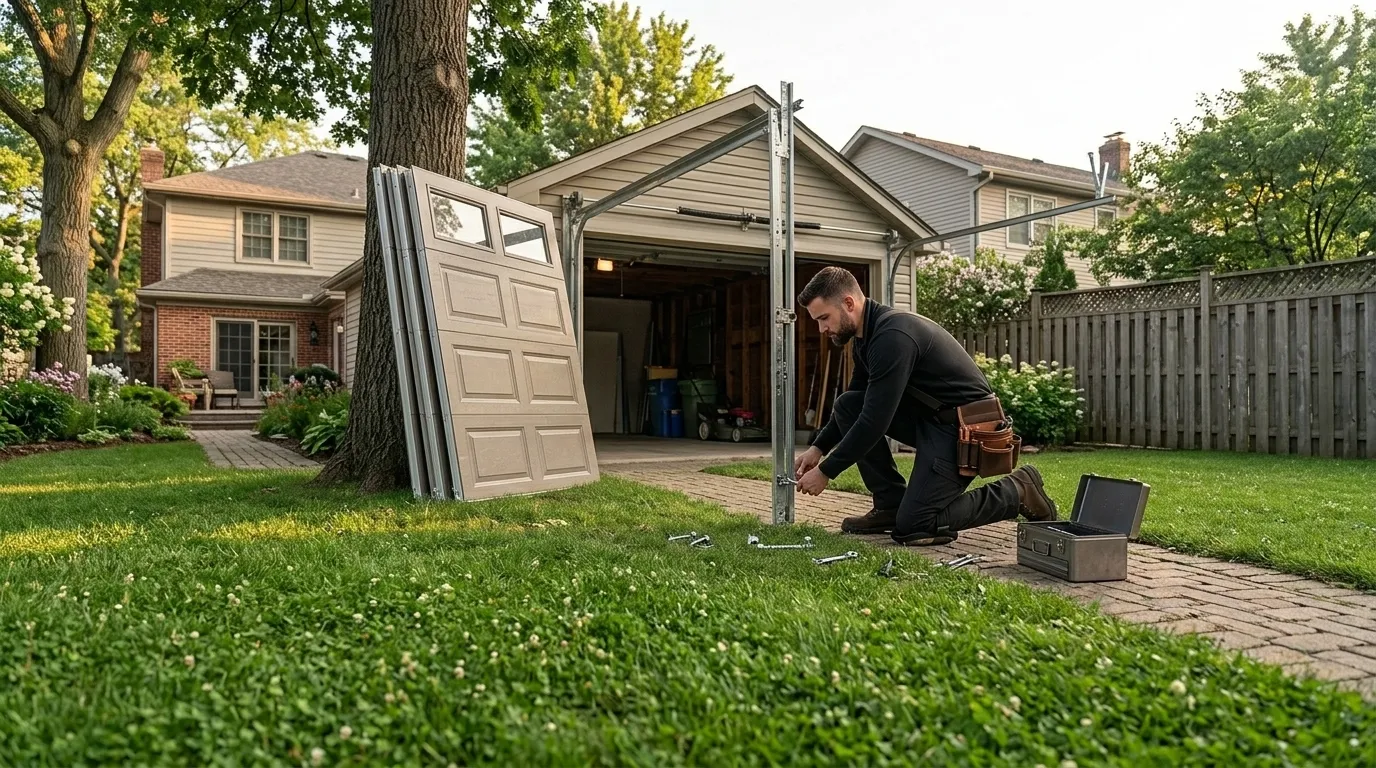
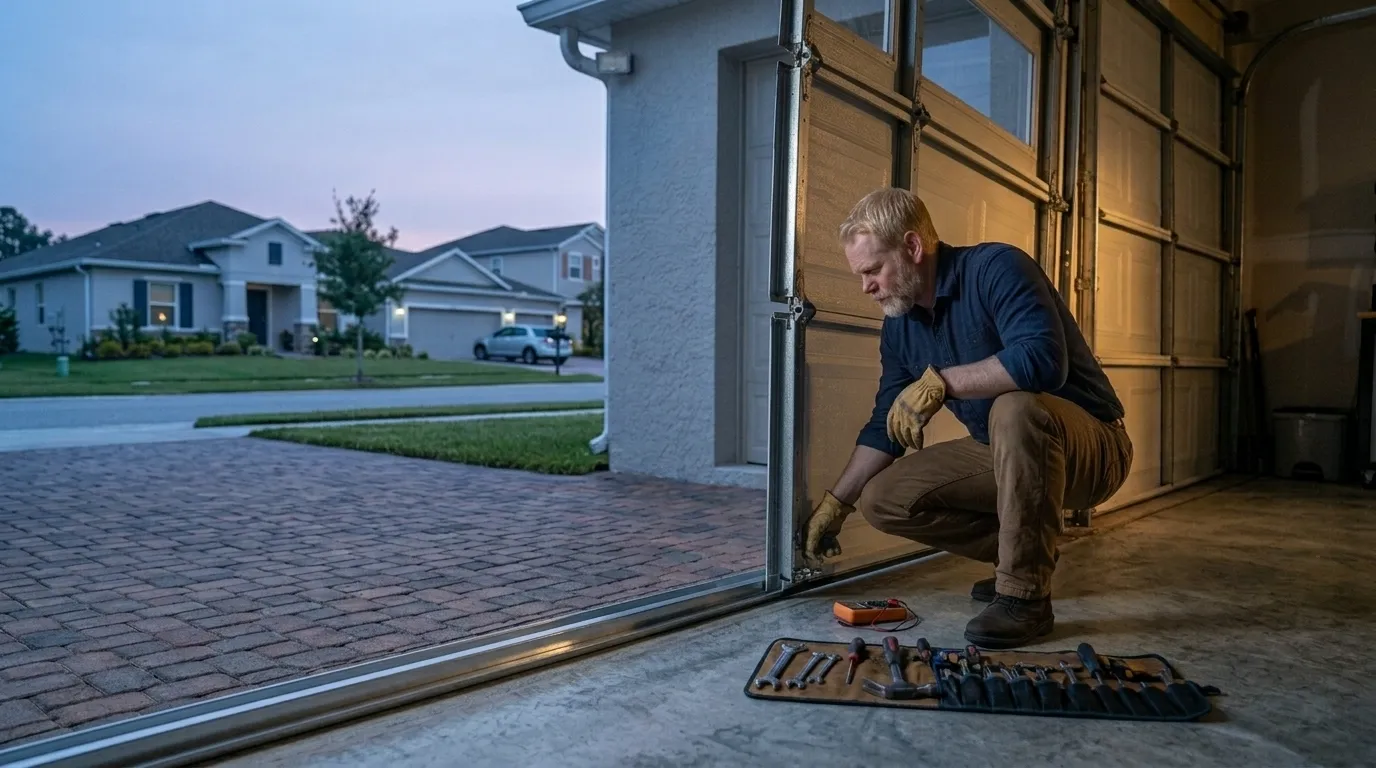
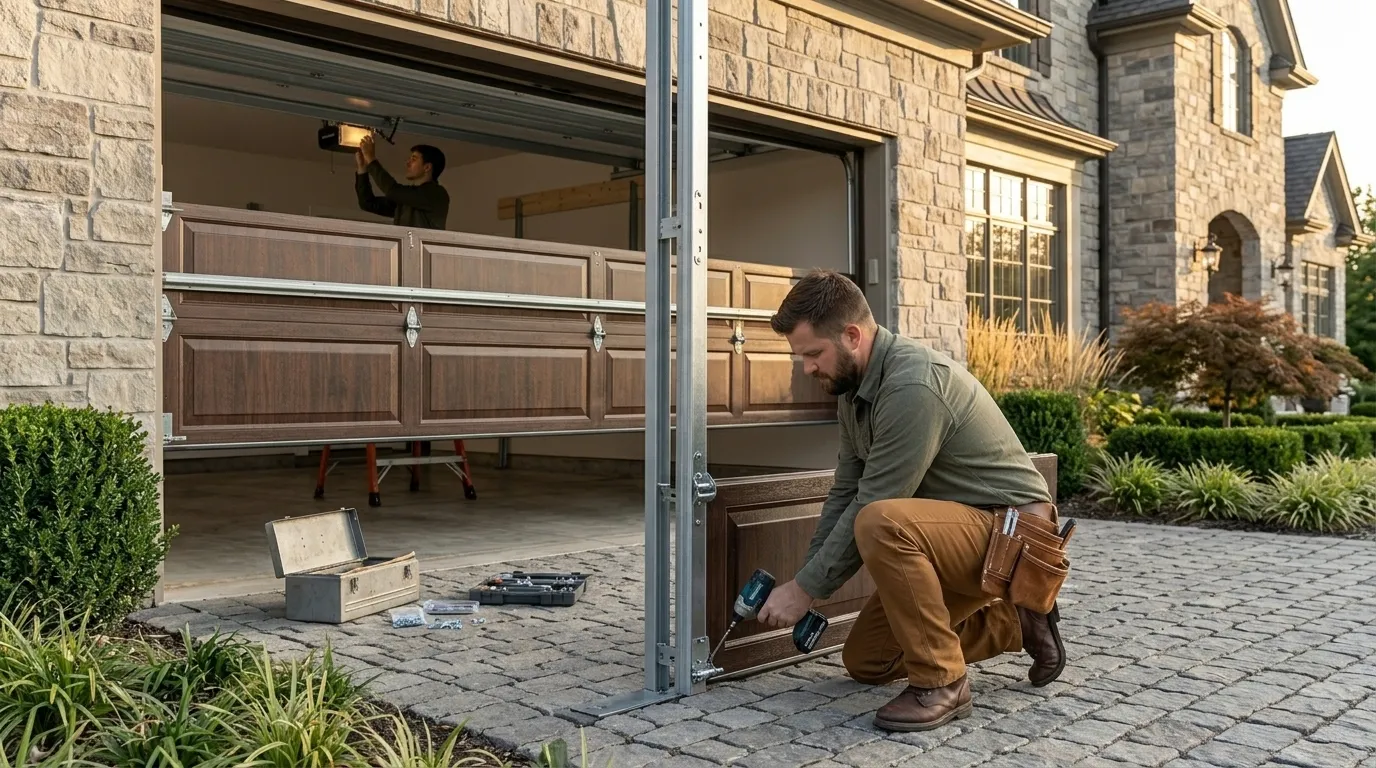
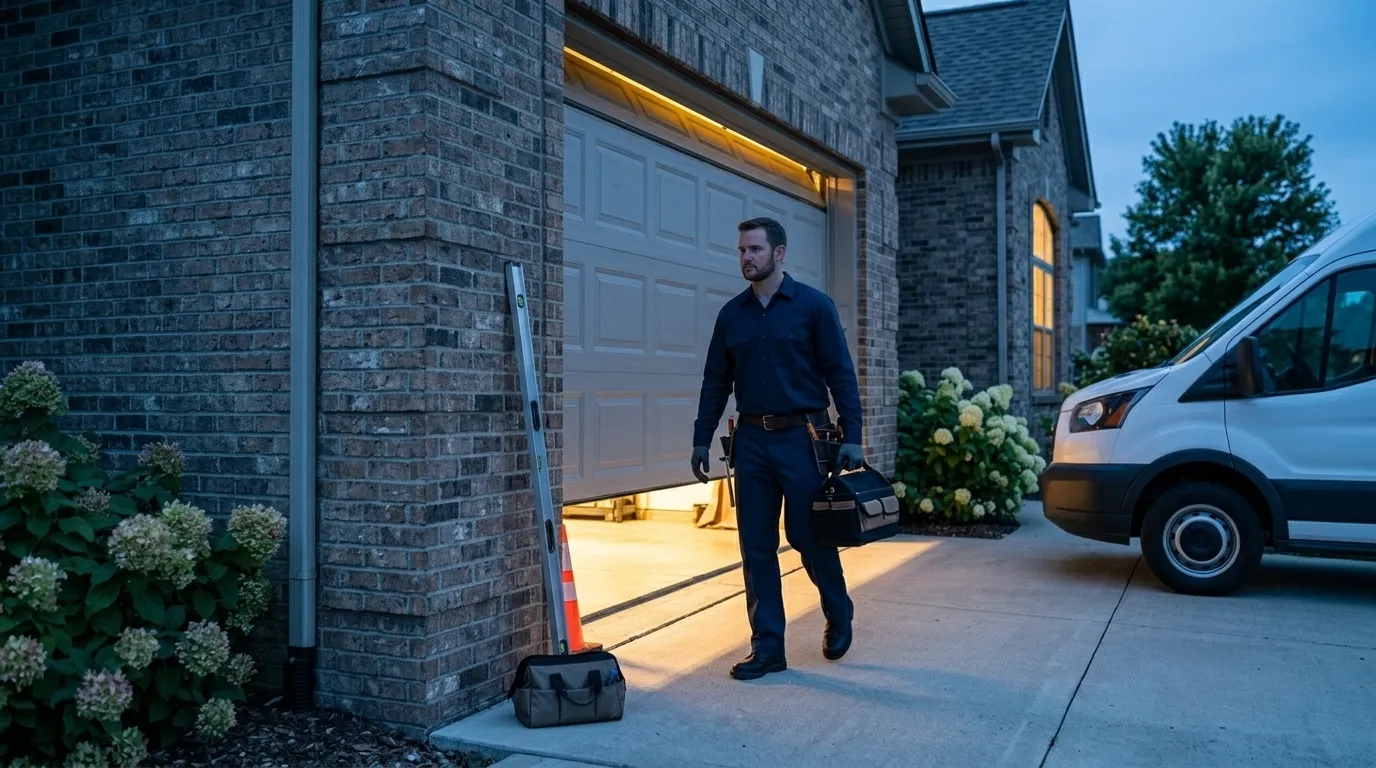
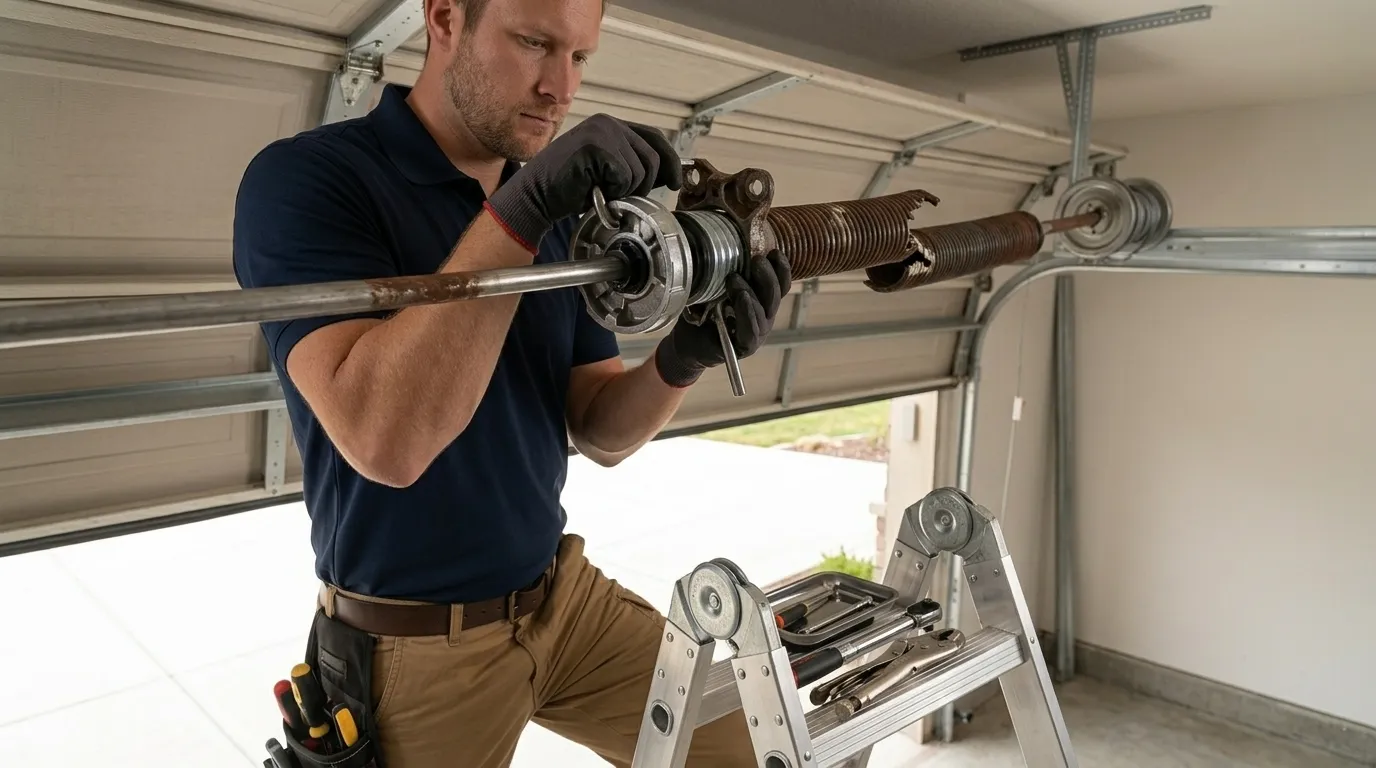
A proper install starts with pulling the old door and track off the studs and checking that the framing is still square - on houses from the 1965 median build year, wood shrinkage over sixty years is normal and sometimes the jamb needs shimming before a new door will seal right. We set new track, hinges, and rollers sized to the door weight, then match the torsion spring to both the door's weight and our winter temperature swings - an undersized spring here fatigues faster in cold than the same spring would in a milder climate. We test the opener travel limits and force settings after the door is hung, not before, because a door that's an inch off square will make even a good opener strain. Insulated panel doors are the standard recommendation for this climate band; a single-layer steel door built for a milder market won't hold up to repeated freeze-thaw cycling the same way. We haul the old door and hardware off-site - that's part of the job, not an add-on.
The Symptom
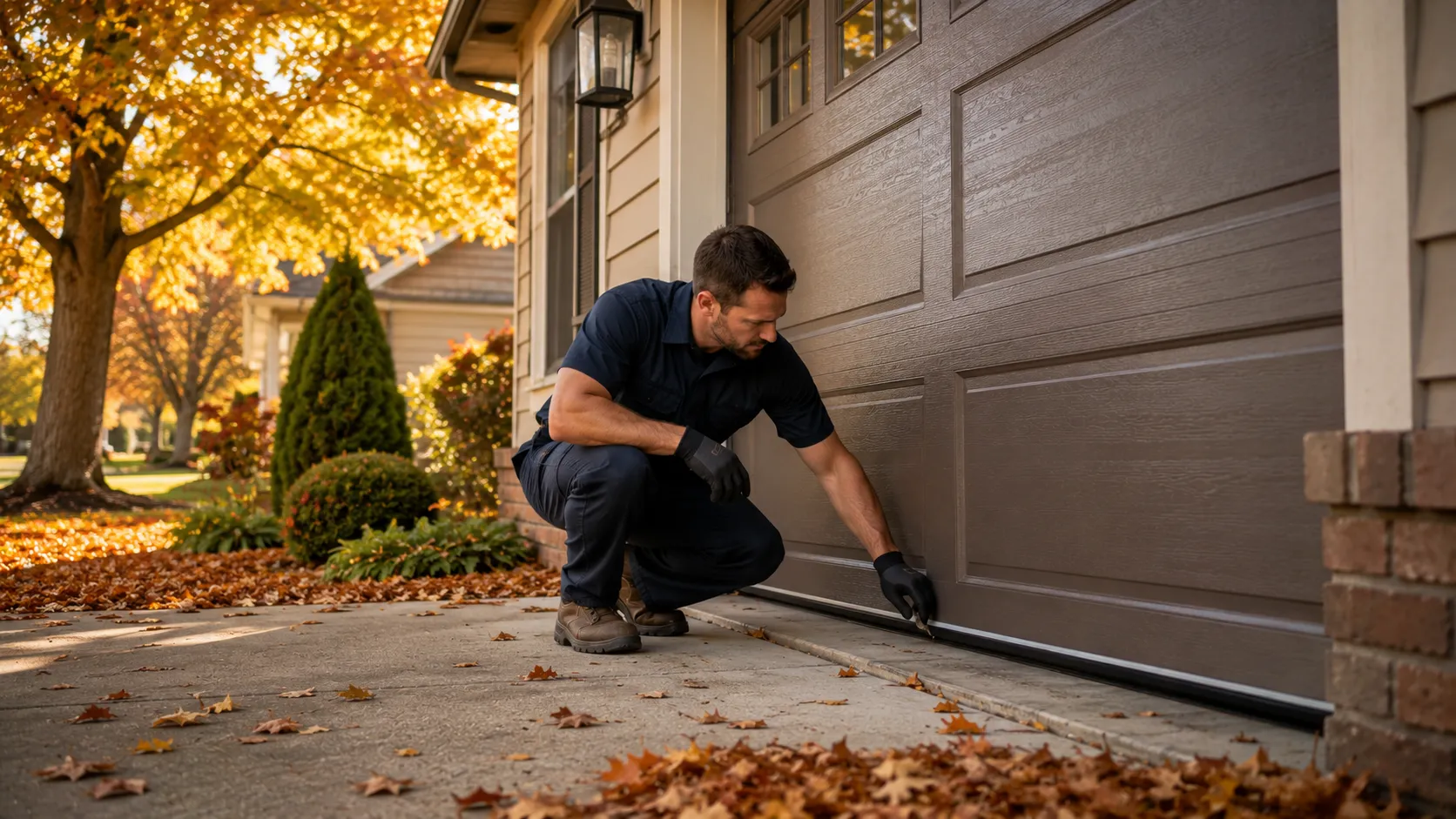
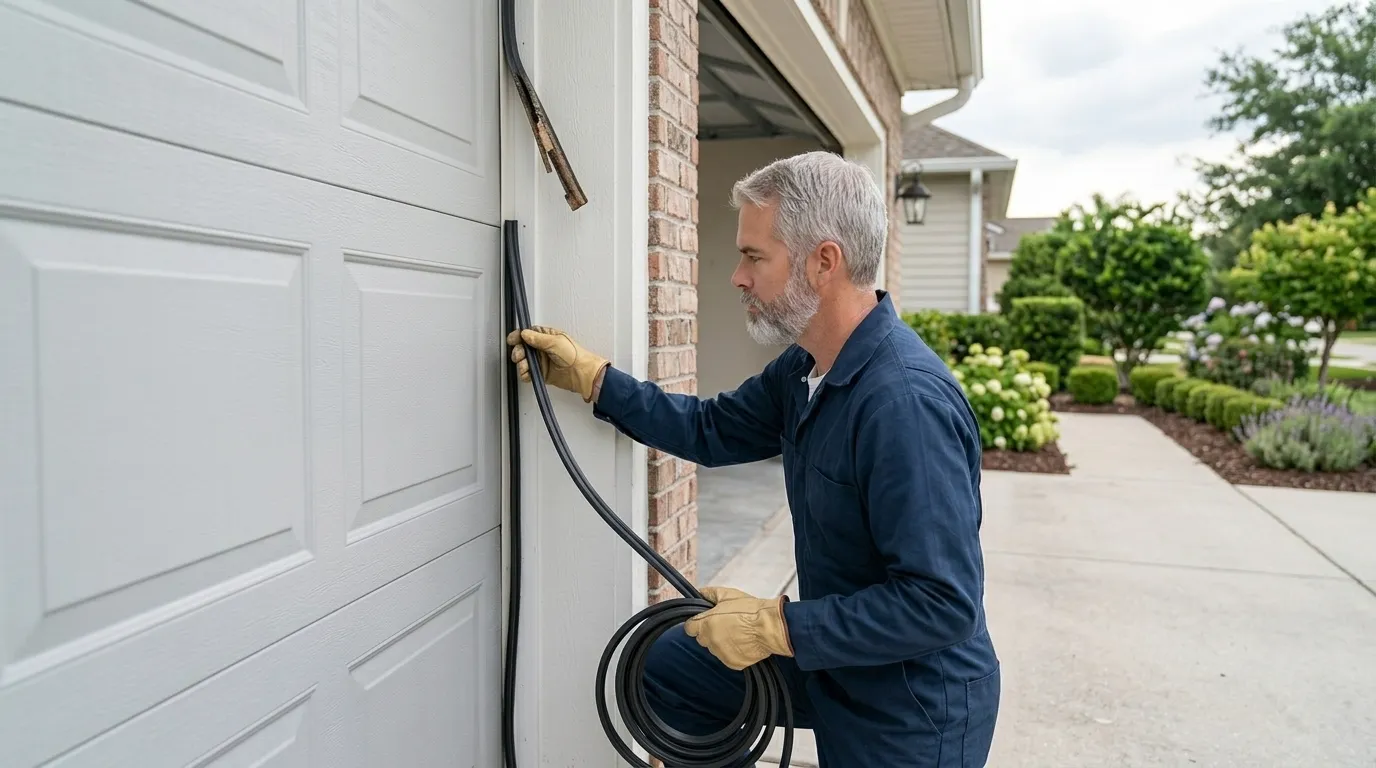
The calls we get are usually the same handful of things: a door that won't seal flush at the bottom even with new weatherstripping, panels that have started to bow or rust at the seams, or an opener that runs longer and hotter than it used to trying to lift a door that's swollen or warped. On houses built in the 1960s and 70s - which is most of what's around here - the original door is often a single steel panel with no insulation, hung on hardware that was never upgraded past the original torsion spring. That spring is now well past the cycle count it was rated for, and the door itself has usually taken enough freeze-thaw movement that the panels no longer sit flat in the track. None of that is a spring swap or a panel patch at that point - it's a door that's done its job for fifty-plus years and is asking to be replaced.