What Actually Happens During a Springfield Garage Door Service Call
In Springfield, MA, homes built 1938-1989 often hide original torsion hardware; a service call here also covers cold-weather wear specific to this climate.
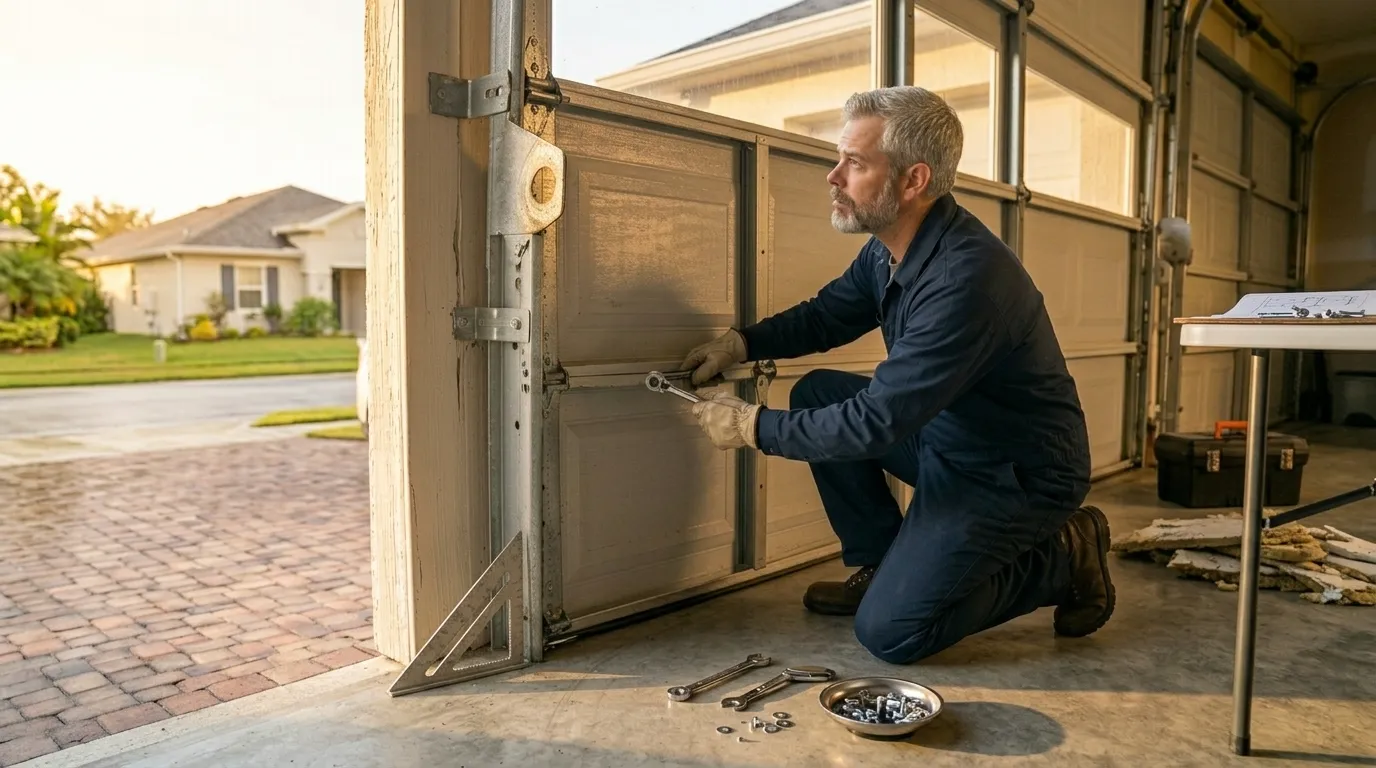
Springfield's housing stock mostly went up between 1938 and 1989, with the median build year sitting around 1965. That means a big share of the doors we get called on are original hardware from that same era - torsion springs sized for panel weights nobody makes anymore, tracks bolted to jambs that have shifted with the house over sixty years. Across the areas we cover, from Forest Park and Sixteen Acres to Indian Orchard and Liberty Heights, that 1960s-70s stock is the norm, not the exception. A service call here starts with figuring out what decade the door actually is, because the fix for a 1965 door and a door built in the last ten years are rarely the same job. Sometimes the panel itself is original and the hardware around it has been swapped piecemeal over the decades, which changes what we're actually diagnosing when we get there. We don't guess at that over the phone - we look at the door in front of us before we say what it needs.
Checking It Yourself
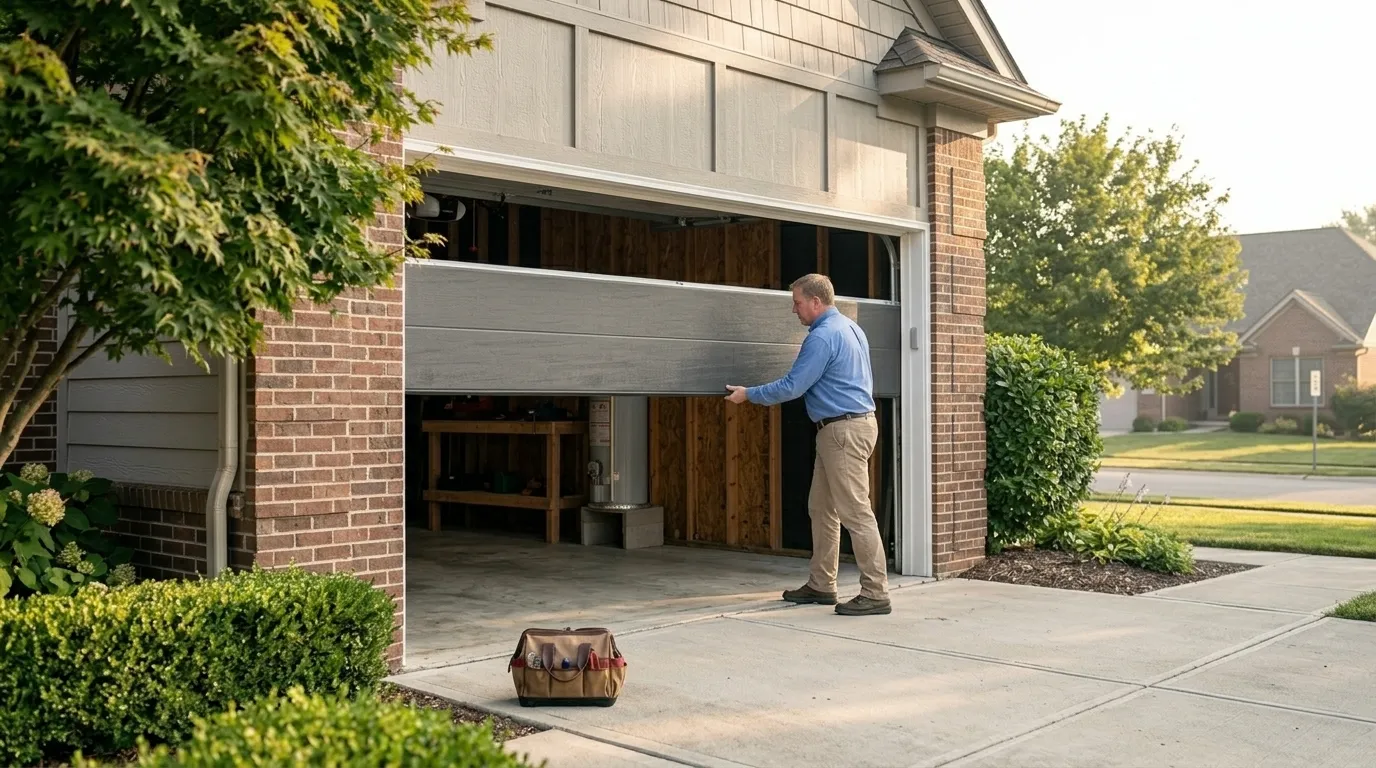
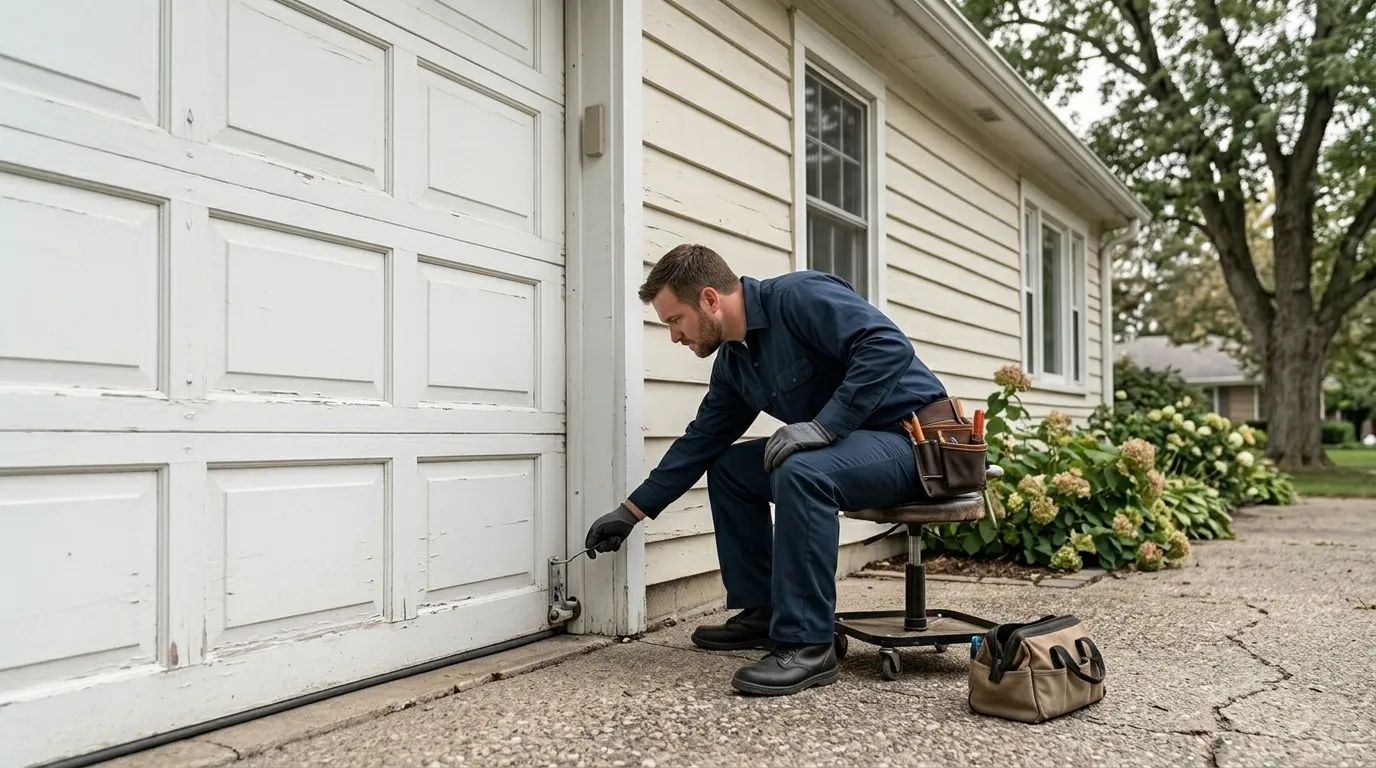
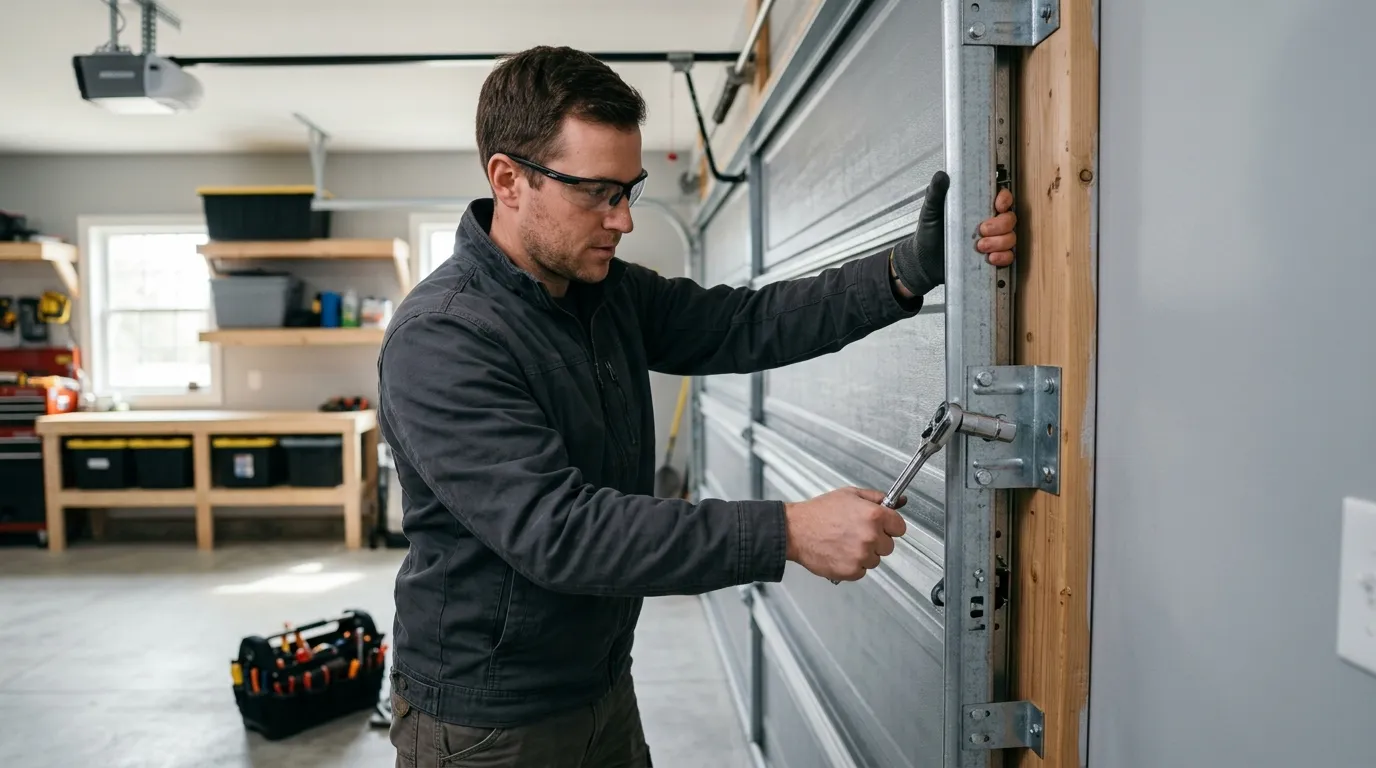
Before you call anyone, there's a few things worth checking, especially on a door as old as most of what's on the ground in Springfield. Pull the release handle and lift the door by hand about halfway - if it doesn't hold its position, the spring tension has drifted, which is common on torsion setups pushing fifty-plus years old. Look at the tracks for gaps at the wall brackets; on houses built in the 1960s and 70s, framing has settled enough over the decades that brackets work loose from the studs. Check the bottom weatherstrip too - on a door this age it's often still the original rubber, cracked and letting air through at the slab. Listen for grinding when the door travels; that's usually a roller, not the opener. None of this tells you exactly what's wrong, but it tells you whether you're looking at a five-minute adjustment or something that needs a truck and parts. Write down what you notice before the call - it saves time on the visit.
The Common Mistake
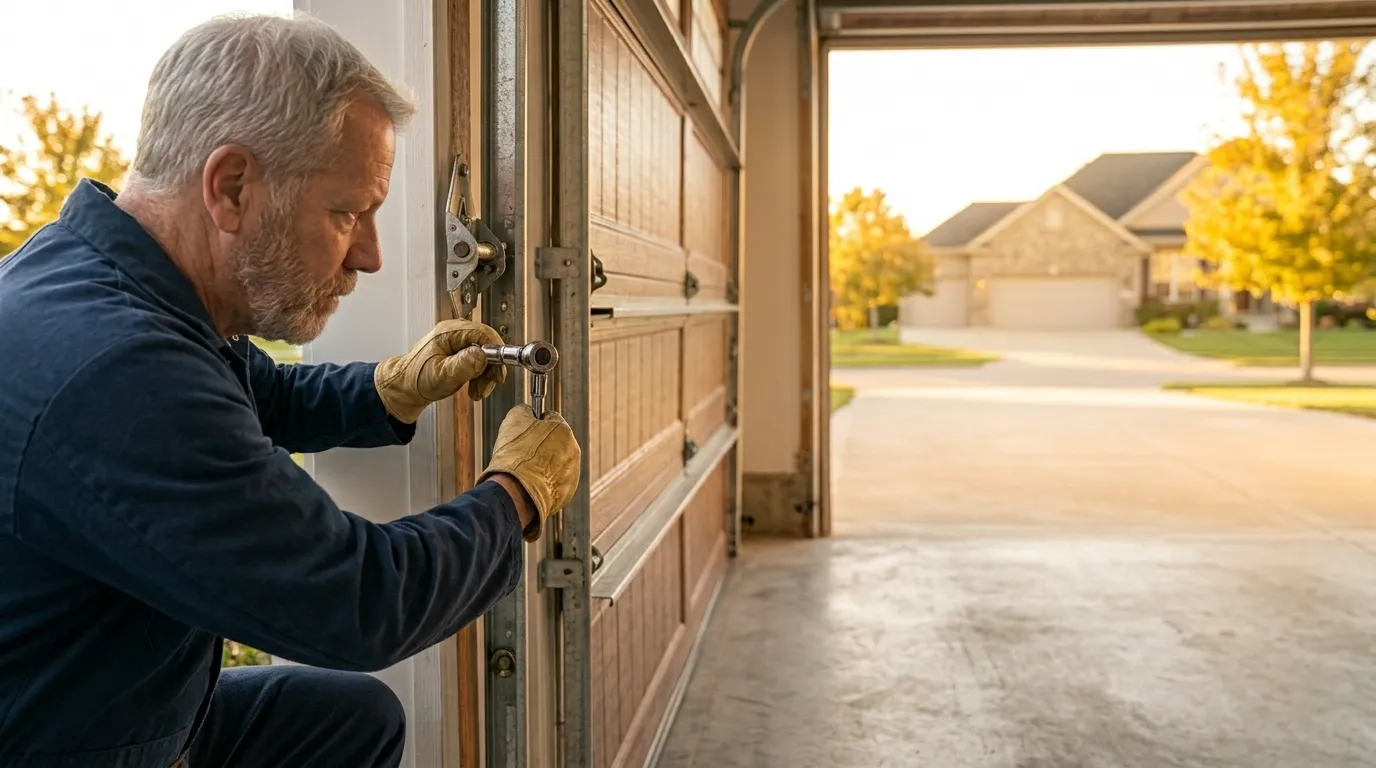
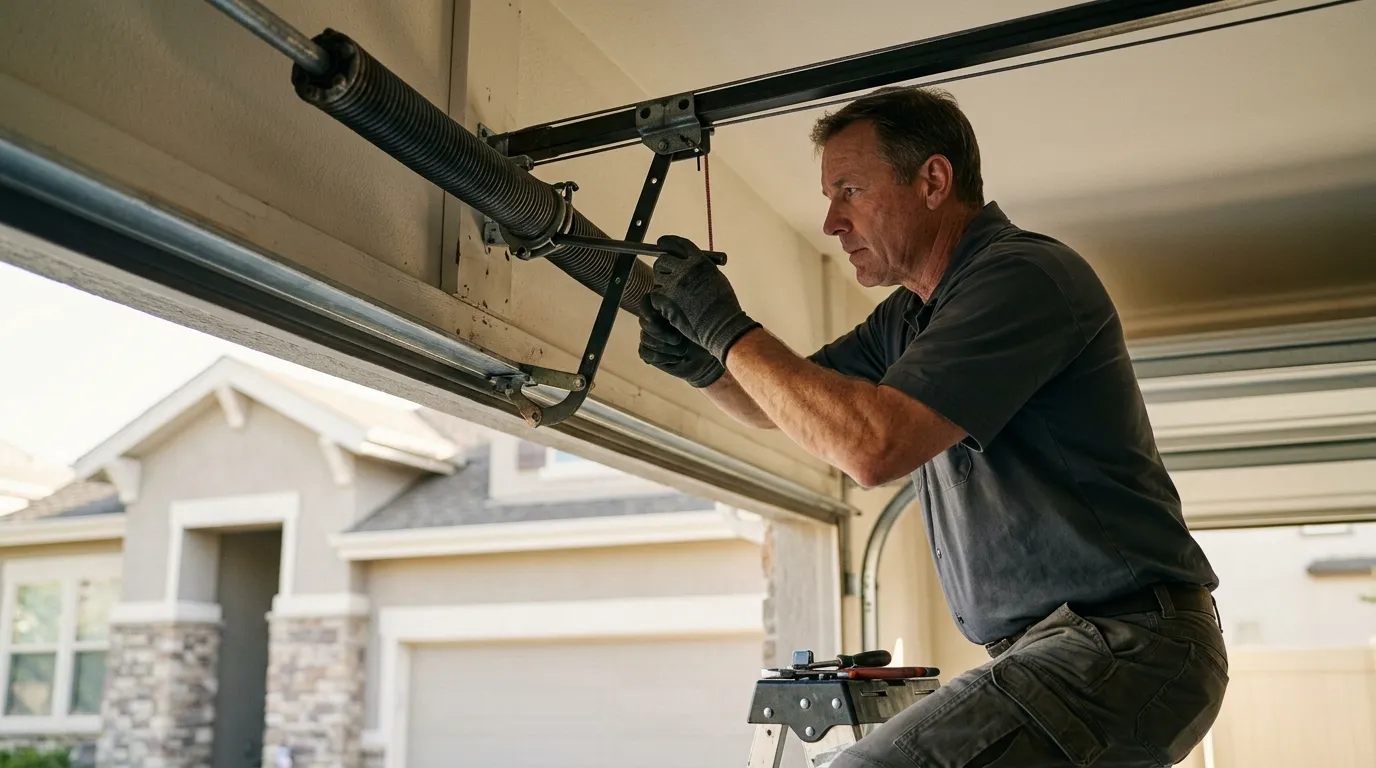
The mistake we see most is someone hearing a noisy opener motor and assuming that's the problem, when the opener is just straining against a spring that's lost tension - spring wear that shows up faster on the older torsion hardware still installed on most Springfield-area doors from the 1960s and 70s. Replacing the opener doesn't fix a spring problem; it just buys a few quieter months before the same strain wears out the new motor too. On a house from that build era, the opener is almost never the actual source of the trouble - it's usually the last part to fail, not the first. We check spring balance before we touch the opener on every call, because skipping that step means selling someone a part they didn't need.
What the Weather Here Does to It
Springfield sits in a severe cold climate band, and that matters more for garage doors than most people think. Steel springs and tracks contract in hard cold, which tightens tolerances that were already loose on 1960s-era hardware, and lubricant that's fine in warmer months turns thick enough in deep winter to slow rollers to a crawl. On older doors especially, that combination is what turns a minor imbalance into a snapped cable on the coldest morning of the year, not a summer afternoon. We can't restock some of the older track hardware that a lot of the 1938-1965 housing still carries - where an exact match isn't available, the honest call is usually a hardware upgrade rather than a patch repair, and we'll say that up front instead of forcing a fix that won't hold through another winter.
How it works
From “it’s stuck” to “it’s fixed”
1
Tell us what’s wrong
Describe the symptom - won’t open, loud bang, opener runs but the door won’t move.
2
On-site diagnosis
A technician tests the door under power and by hand and finds what actually failed.
3
Clear, up-front plan
You get the fix that’s needed and what drives the cost - before any work starts.
4
Repaired & tested
The repair is done, the door is set true and tested, and the work area left clean.
Serving Springfield, MA - tell us what your door’s doing and we’ll take it from there.
Straight answers about garage door repair in Springfield. Still unsure? Ask us directly.
How do I know if a service call will be a quick adjustment or something bigger?
It depends mostly on the age of the hardware and how long the imbalance has been going on. On original 1960s-70s torsion setups, a caught-early spring adjustment is quick. Left too long, the extra strain on tracks and rollers turns one small job into several. That's why we check balance and hardware condition together on the visit rather than quoting blind.
Does my door's age change what the technician brings on the call?
Yes. Springfield homes mostly date from 1938 to 1989, so a lot of doors still run original torsion springs and older track hardware. We come prepared for that era's hardware sizes rather than assuming a newer setup, which is part of why we look at the door before quoting parts over the phone.
Why is my door harder to lift in winter than in summer?
Springfield sits in a severe cold climate band. Cold steel contracts, tightening already-worn tolerances on older torsion hardware, and grease thickens enough to slow rollers. That combined strain is why winter is when older doors here are most likely to show a real problem instead of just a minor stiffness.
Can you match the original hardware on my older door exactly?
Not always. Some of the older track and bracket hardware common in Springfield's 1938-1965 housing isn't something we can source new. When that's the case, we tell you directly and talk through a hardware upgrade instead of trying to force a match that won't hold up through another winter.