Is Your Old Springfield Garage Door Worth Repairing?
Springfield homes mostly date to the 1960s and 70s. Here's how to tell if your original garage door and hardware are worth repairing or ready to replace.
Most of the houses on this side of Springfield went up between 1938 and 1989, with the median build year landing around 1965. That's true whether you're in East Forest Park, Sixteen Acres, Forest Park, or over in Indian Orchard - the housing stock across these 27 named areas is heavy on that same postwar-through-70s construction. A door from that era, or a first replacement door installed a couple decades later, is often still on its original track and hardware, even if the panel itself has been swapped once.
That matters because the garage itself usually wasn't built to modern tolerances. Openings settled a little over 60 years, framing shifted, and the tracks got bent back into rough alignment more than once by whoever owned the house before you. None of that means the door is junk. It means the question isn't "how old is it" but "what's actually wearing out on it." A steel door from 1970 with a shot spring is a repair. The same door with a rusted-through bottom panel and a warped track is a different conversation.
We don't replace a door just because it's old. We replace it when what's wrong with it costs more to fix piece by piece than to swap the whole unit.
Checking It Yourself
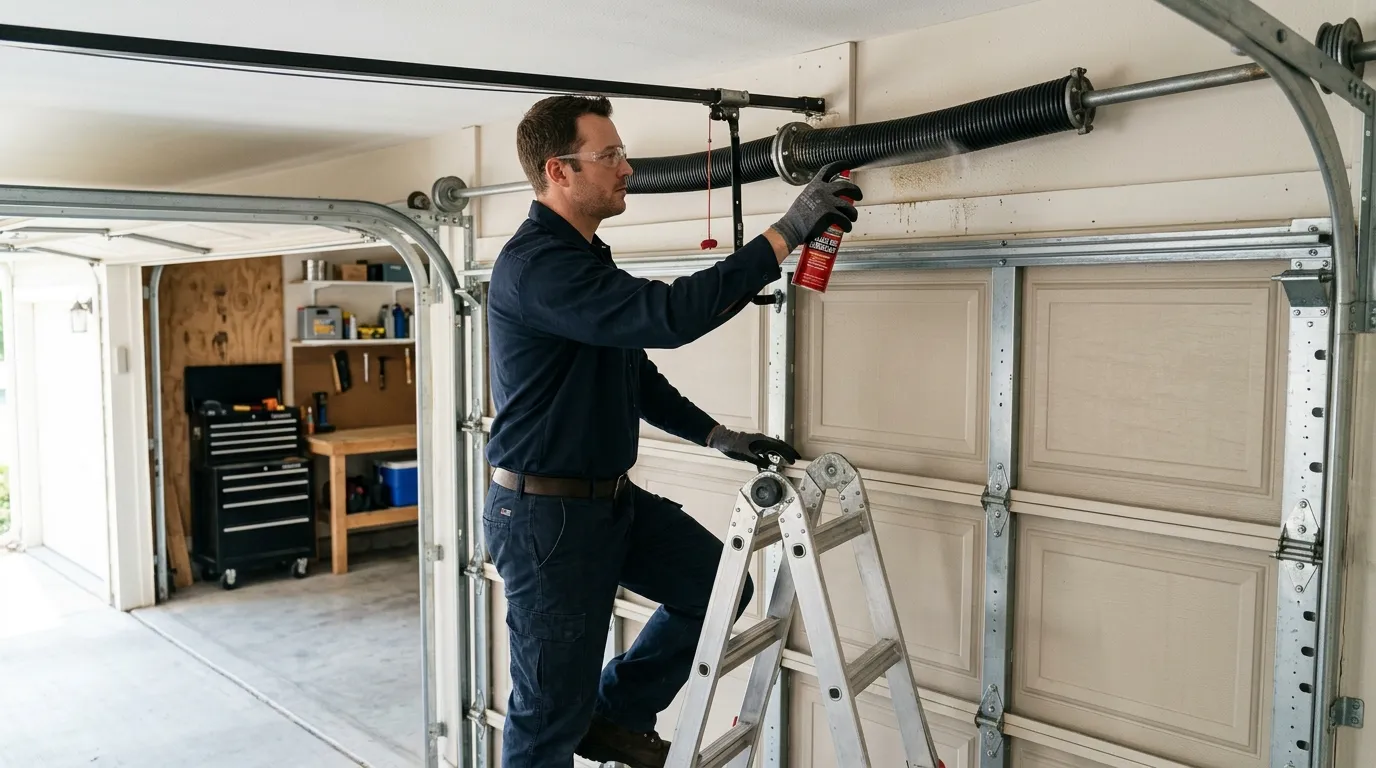
Start with the springs. Look at the torsion spring above the door - if it's original to a house built in the 1960s, it has likely already been replaced at least once, since springs are rated in cycles, not years. A spring that looks rusted, gapped, or stretched unevenly is close to done, but that's a straightforward repair on its own.
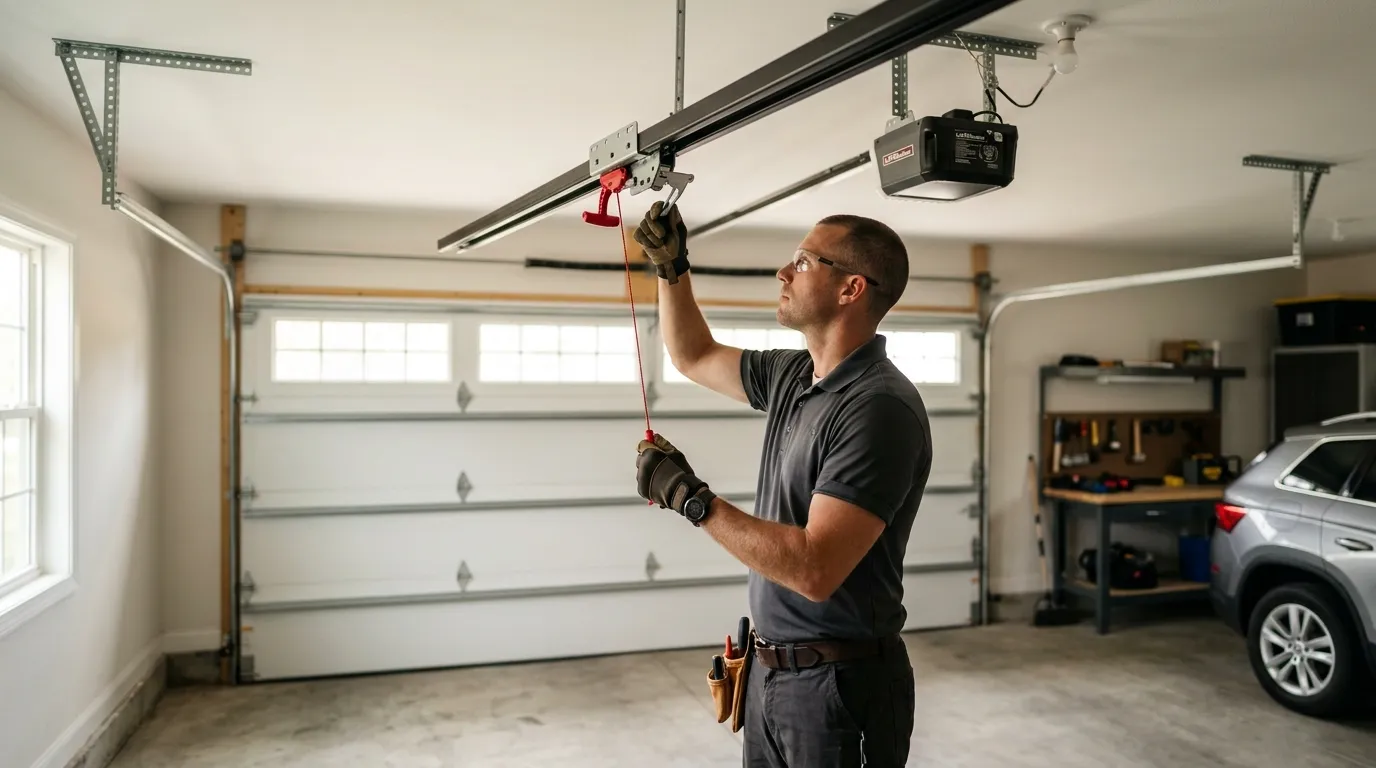
Next, grab the bottom of the door and lift it a foot by hand with the opener disconnected. It should move with light, even resistance and stay roughly where you leave it. If it's heavy, jerky, or drops on its own, something in the balance system - spring, cable, or pulley - is off, and that's worth a call before you force it further.
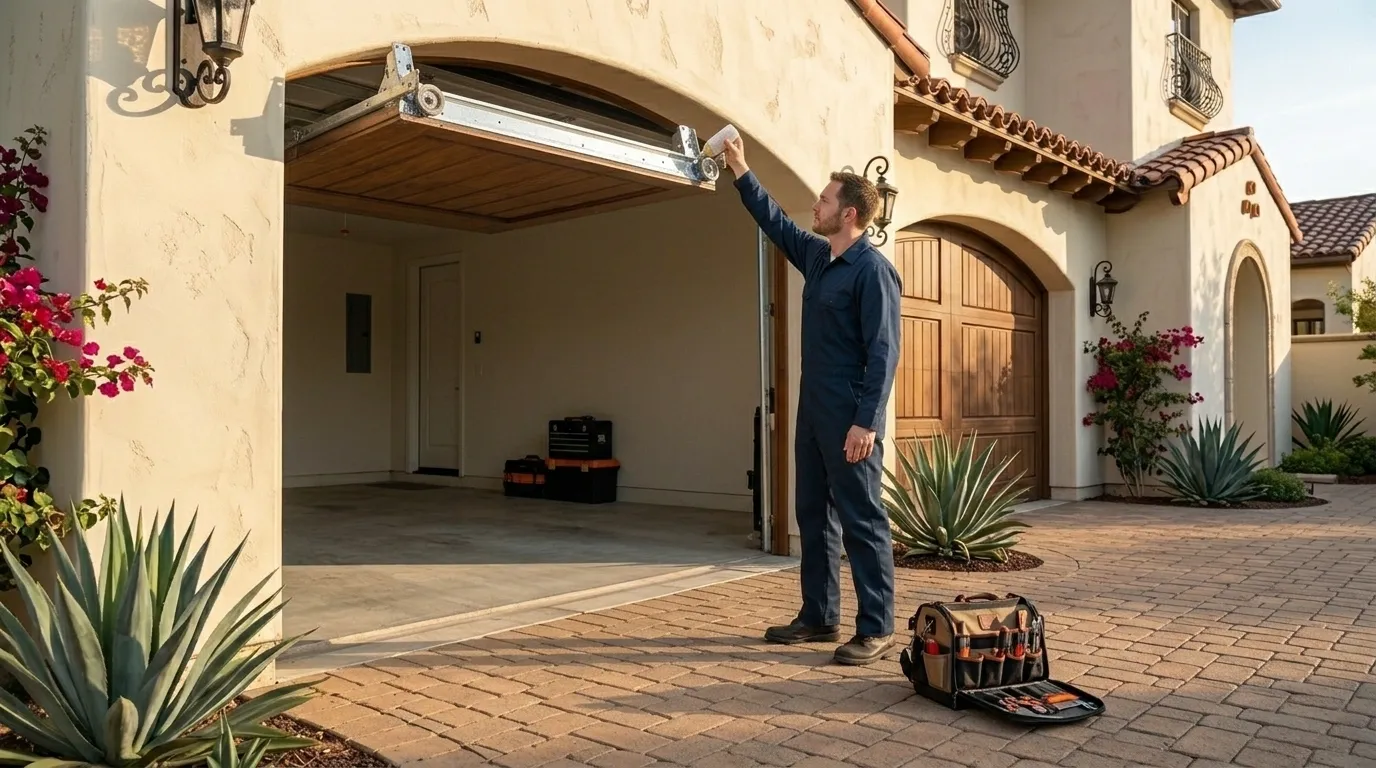
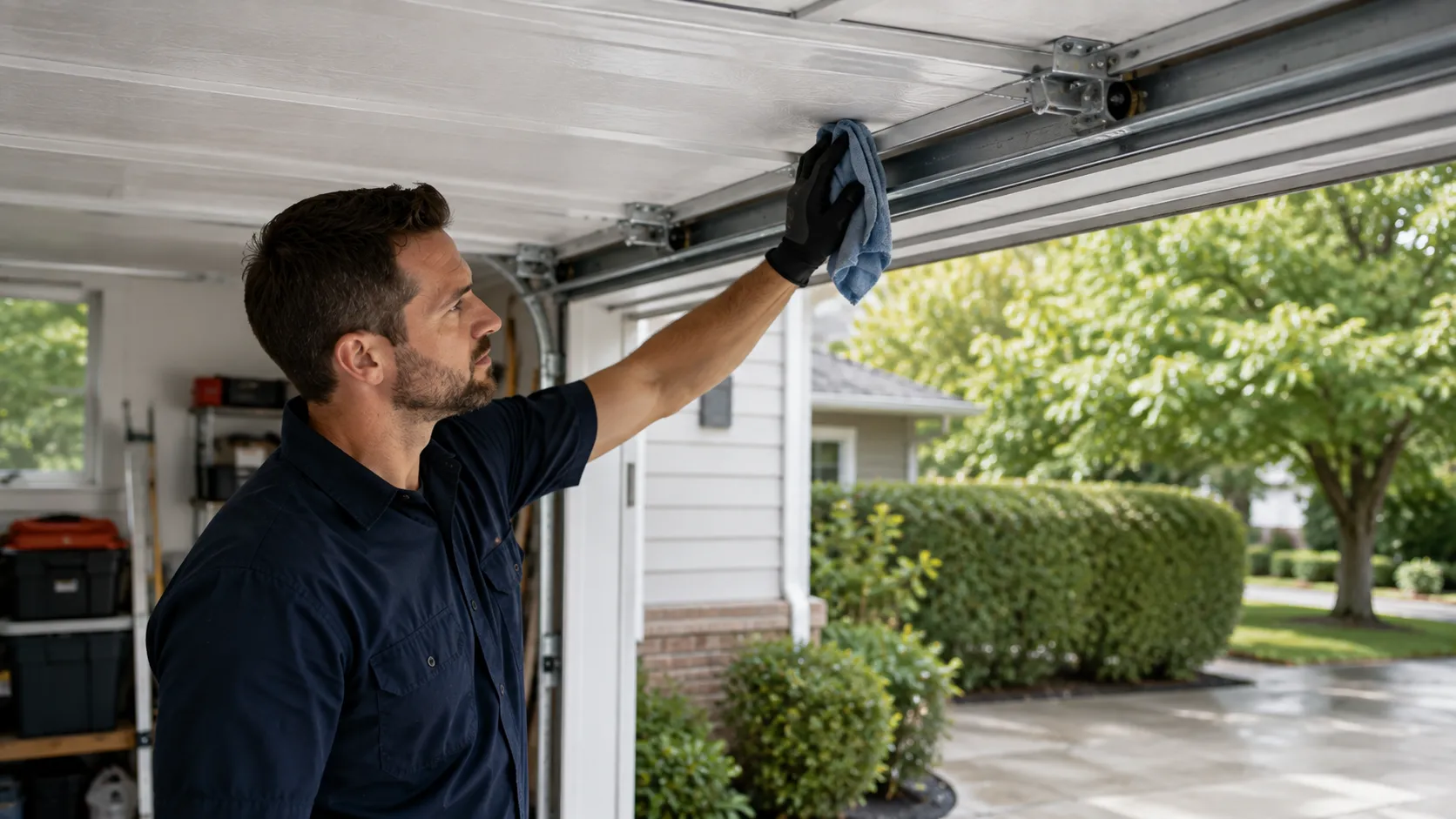
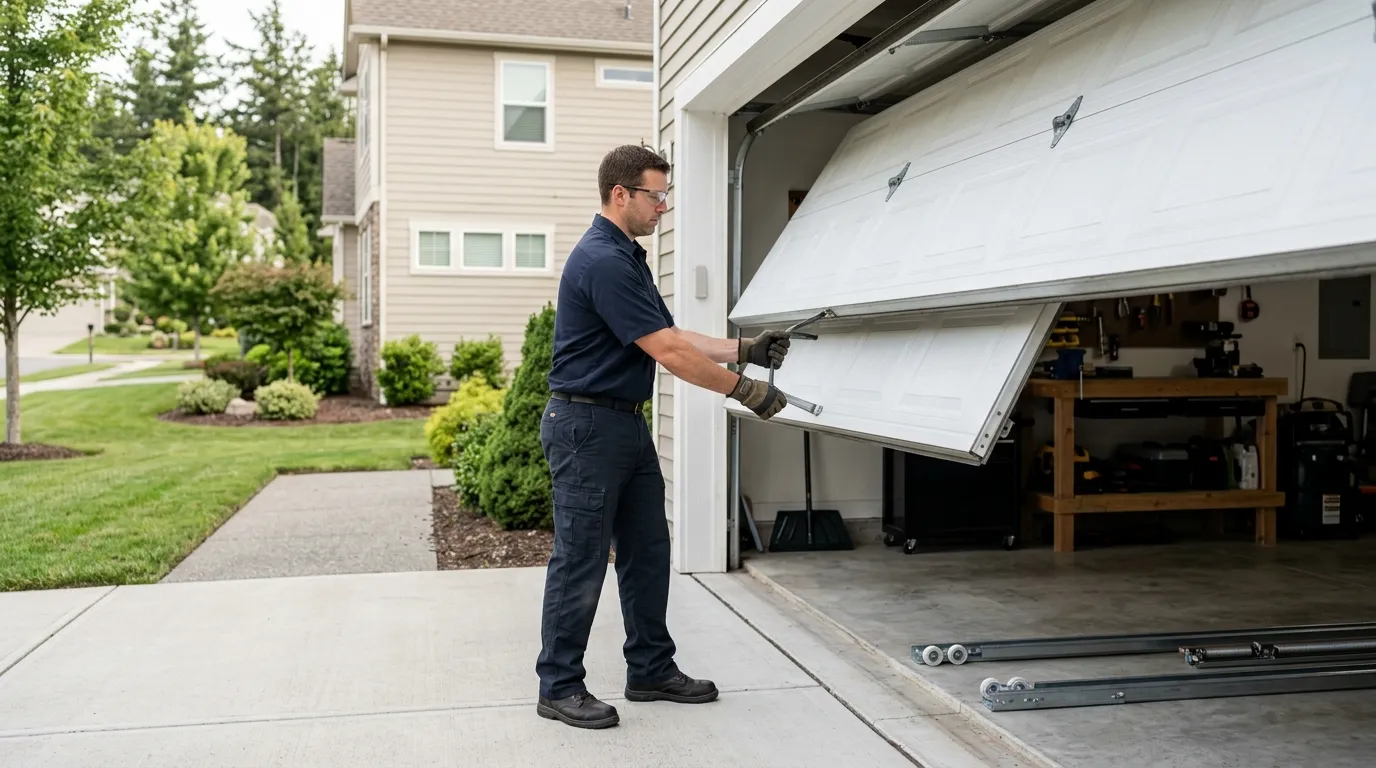
Check the tracks for rust pitting and the rollers for flat spots or cracked plastic. On houses in this age range, steel rollers with no lubrication for years are common, and they're cheap to replace before they seize and bend the track. Finally, look at the bottom panel and weatherstrip for water staining or crumbling - a sign the door has been sitting in standing water or ice at the threshold, which we'll get to below.
The Common Mistake
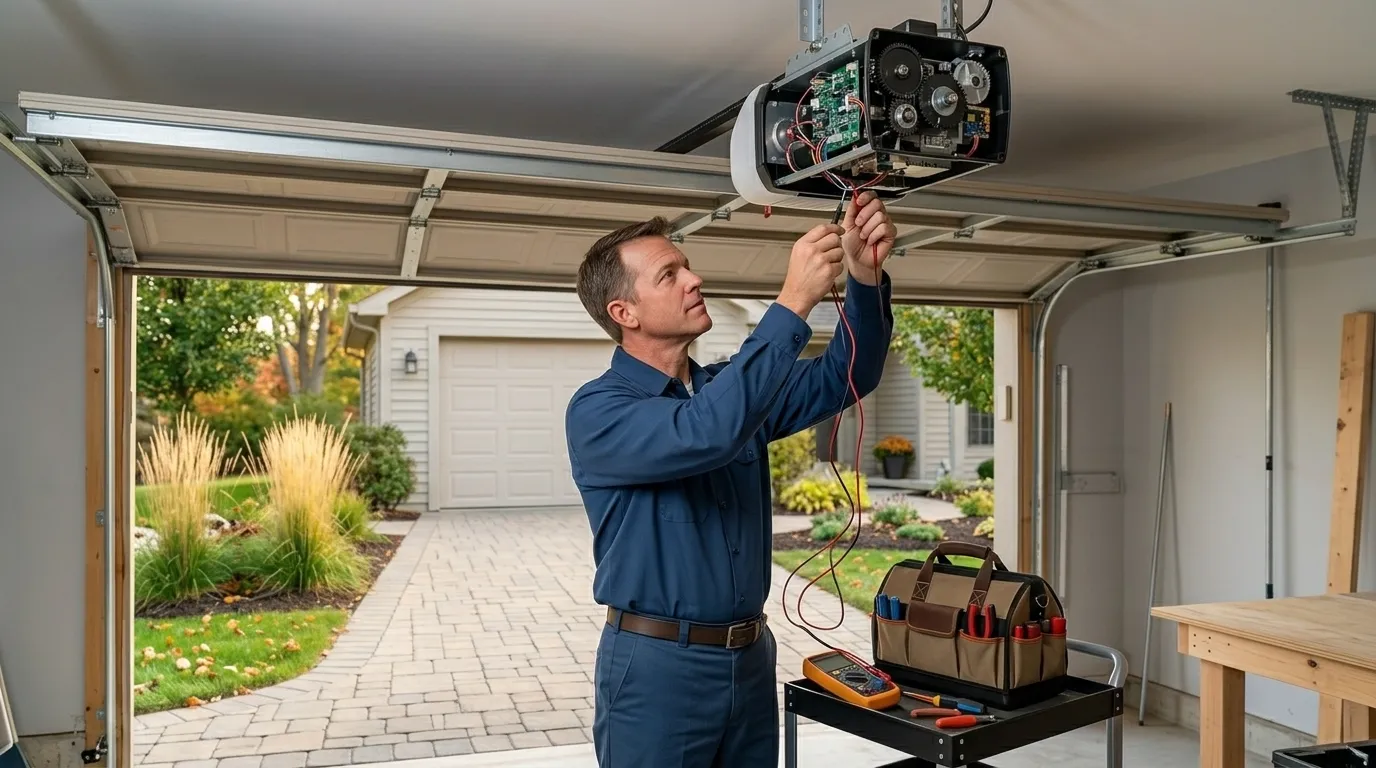
The mistake we see most in Springfield is someone replacing the opener and calling the door fixed, when the opener was never the problem. On a house from the 1960s or 70s, the opener is almost always newer than the door - it's been swapped once or twice already - while the door's original springs, cables, and track are still doing the heavy lifting. A new opener bolted to a door with a worn cable or an out-of-balance spring will strain immediately and can burn out the drive gear in months.
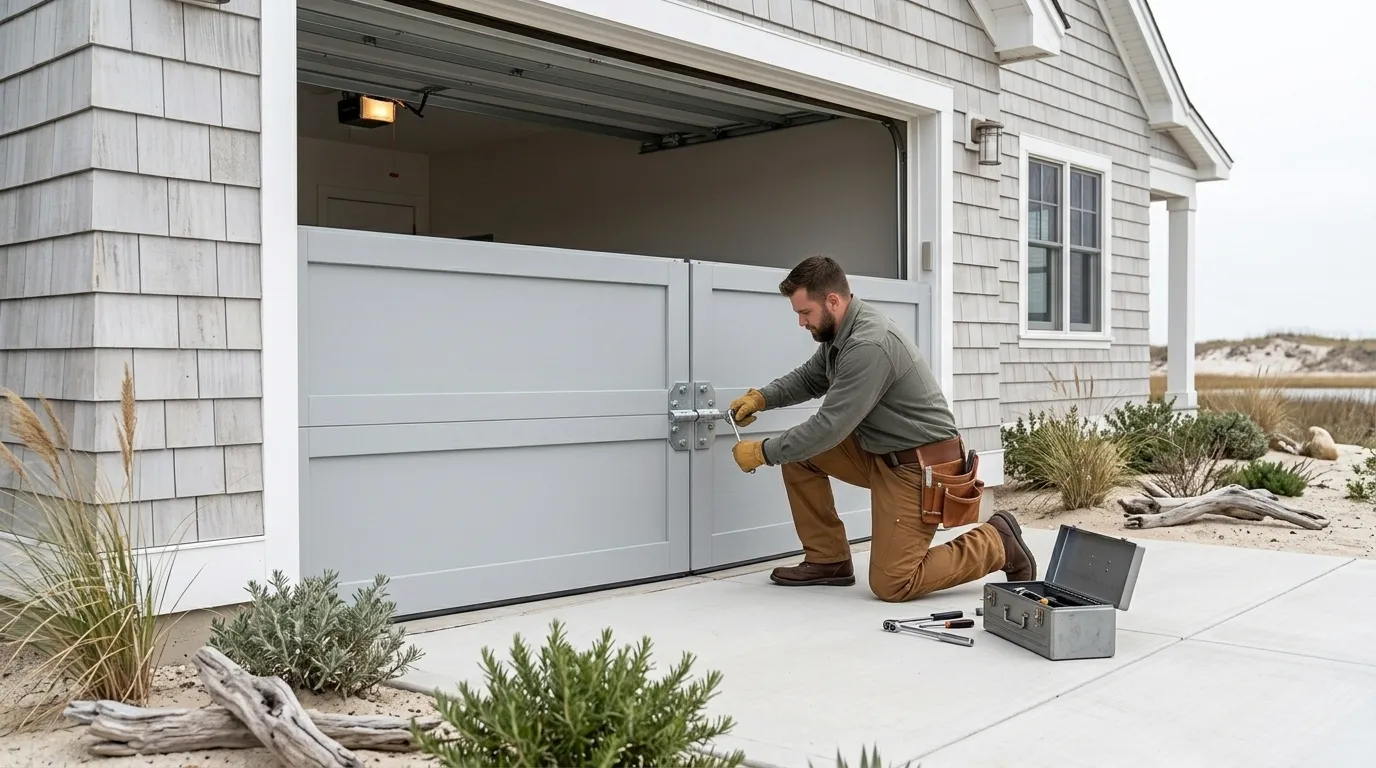
The second version of this mistake is patching a door that's structurally past it because the price tag on the repair looks smaller than replacement. On steel doors from this era, once rust has gone through a panel seam or the bottom section has absorbed enough water to delaminate, a spring or cable fix won't stop the door from racking sideways as it travels. At that point you're paying for a repair that buys a season, not a decade.
Our honest limit here: we don't repair a bottom panel that's rusted through structurally. Once the steel's gone, the fix is a panel or door replacement, not a patch.
What the Weather Here Does to It
Springfield sits in a severe cold climate band, and that shows up on the door in specific ways. Steel contracts hard in deep cold, which is what makes a marginal spring finally snap on the first single-digit morning of the season - the metal's already fatigued, and cold just removes the last bit of give. If your door is stiff or slow to close only when it's cold, that's a spring tension issue worth catching before it fails completely, not an opener problem.
The other pattern is at the bottom seal. Freeze-thaw cycling through a Springfield winter pushes water into any gap in the threshold, and it refreezes overnight. On older doors - the kind common across this age of housing stock - that repeated freezing splits weatherstripping and can bow the bottom panel over several winters. A new bottom seal is cheap; a bowed panel from years of ice isn't.
If you're hearing a new grinding or scraping sound only in cold weather, don't assume it's just "the cold" and ignore it. That's usually a roller or bearing that was already marginal, and severe cold is what's finally exposing it.
How it works
From “it’s stuck” to “it’s fixed”
1
Tell us what’s wrong
Describe the symptom - won’t open, loud bang, opener runs but the door won’t move.
2
On-site diagnosis
A technician tests the door under power and by hand and finds what actually failed.
3
Clear, up-front plan
You get the fix that’s needed and what drives the cost - before any work starts.
4
Repaired & tested
The repair is done, the door is set true and tested, and the work area left clean.
Serving Springfield, MA - tell us what your door’s doing and we’ll take it from there.
Straight answers about garage door repair in Springfield. Still unsure? Ask us directly.
My garage door is original to a house built in the 1960s. Is that too old to repair?
Age alone doesn't decide it. What matters is the condition of the spring, cables, track, and panels. A steel door from that era with sound panels and a worn spring is a normal repair. If the bottom panel has rusted through or the track is bent from years of settling, replacement usually makes more sense.
Why does my door only act up in cold weather?
Springfield's winters put real stress on garage door hardware. Cold makes steel contract and springs lose flexibility, which is often what finally reveals a spring that was already fatigued. It's also when frozen weatherstripping causes the bottom panel to bind. It's rarely just "the cold" - it's usually something already marginal getting exposed.
Should I replace the opener or the whole door?
Depends what's actually failing. If the door lifts smoothly by hand with the opener disconnected, the opener is probably the issue. If the door is heavy, uneven, or drops on its own, the spring or cable system needs attention first - replacing only the opener won't fix that and can burn out the new unit.
How do I know if my bottom panel is too far gone to patch?
Look for rust that's gone through the metal, not just surface staining, and press on the panel near the bottom edge - if it flexes or feels soft, water has likely gotten into the steel. That's a structural issue, not a cosmetic one, and we don't patch a panel once it's rusted through.