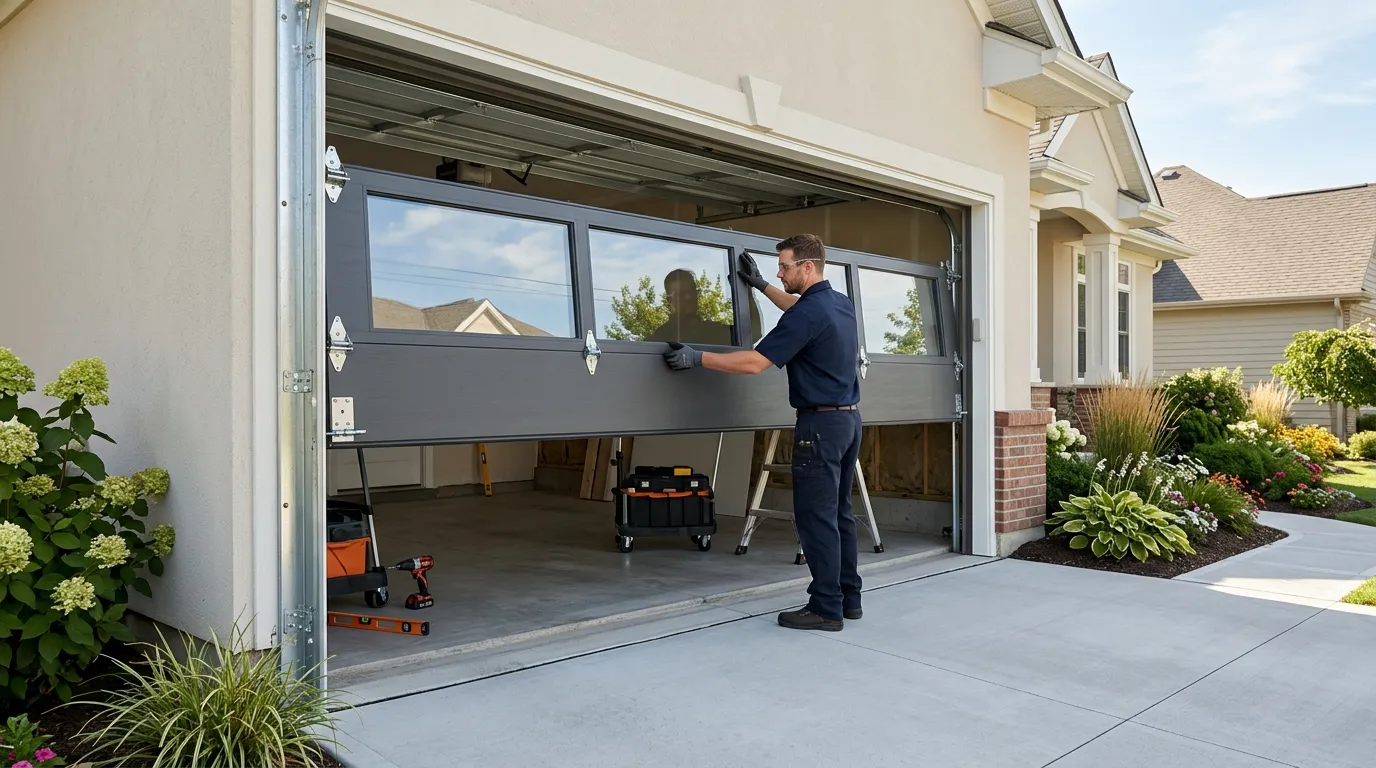
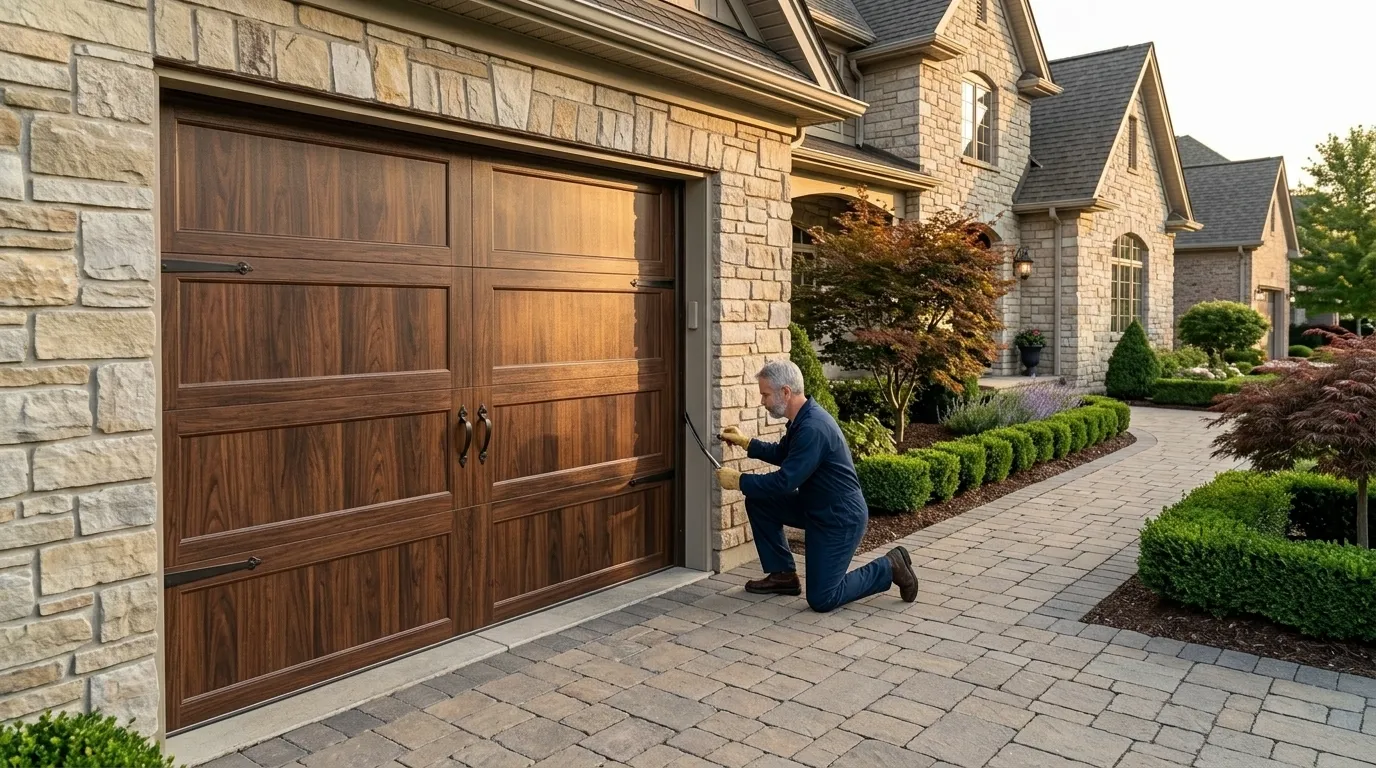
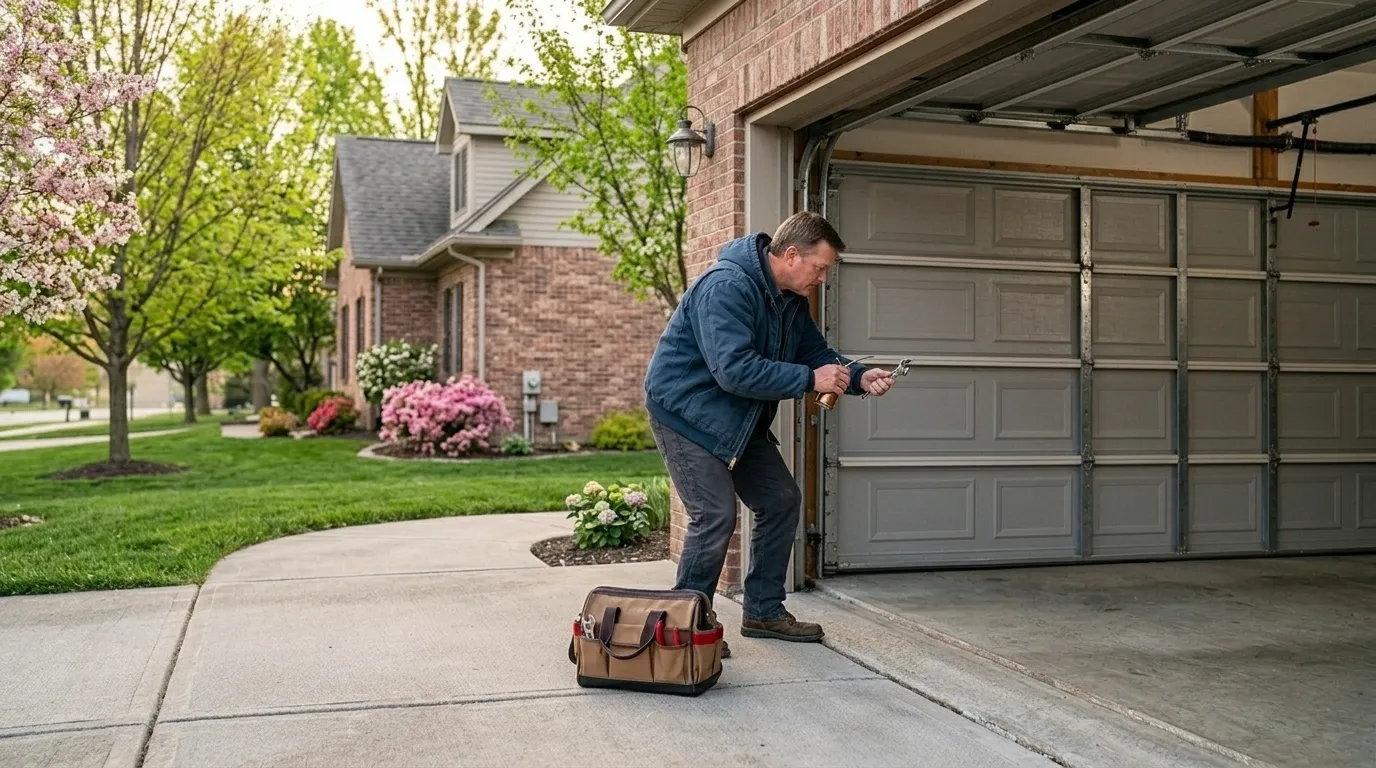
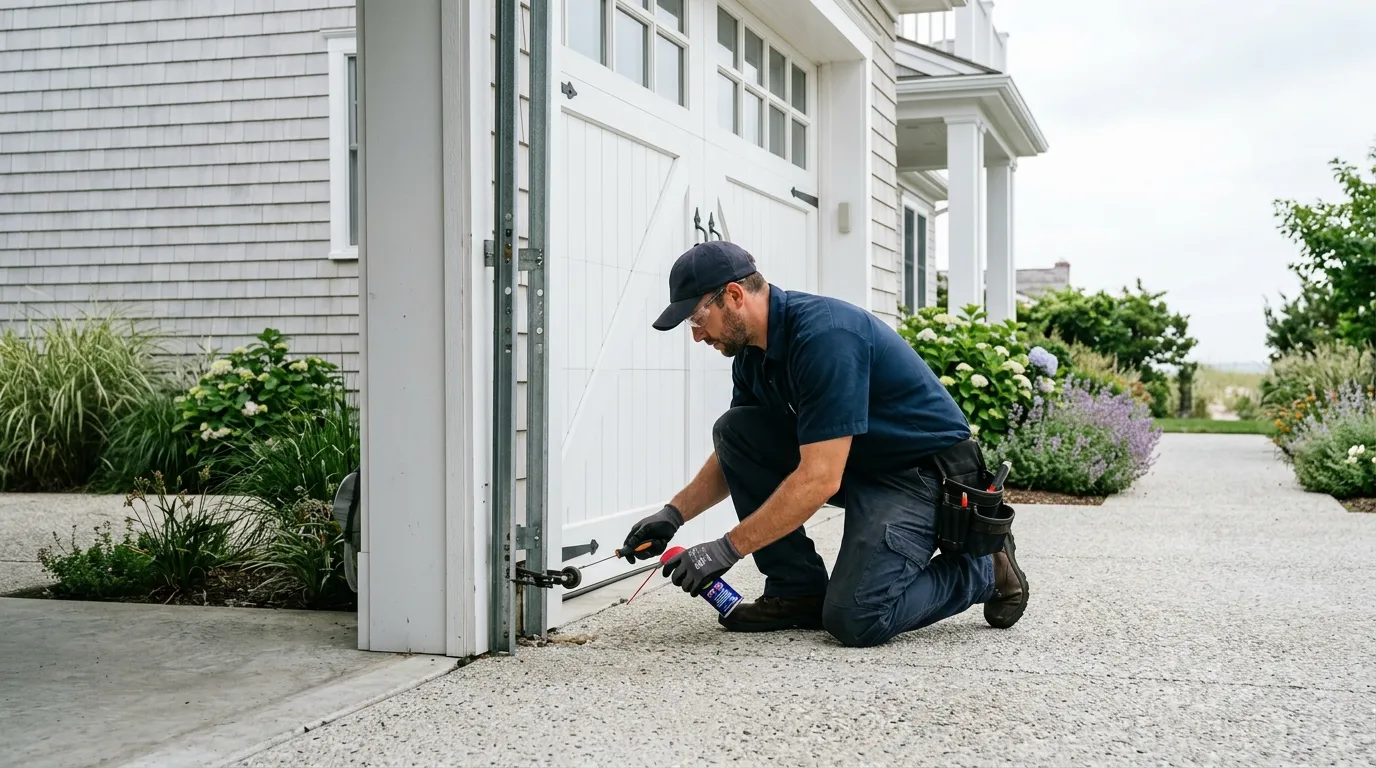
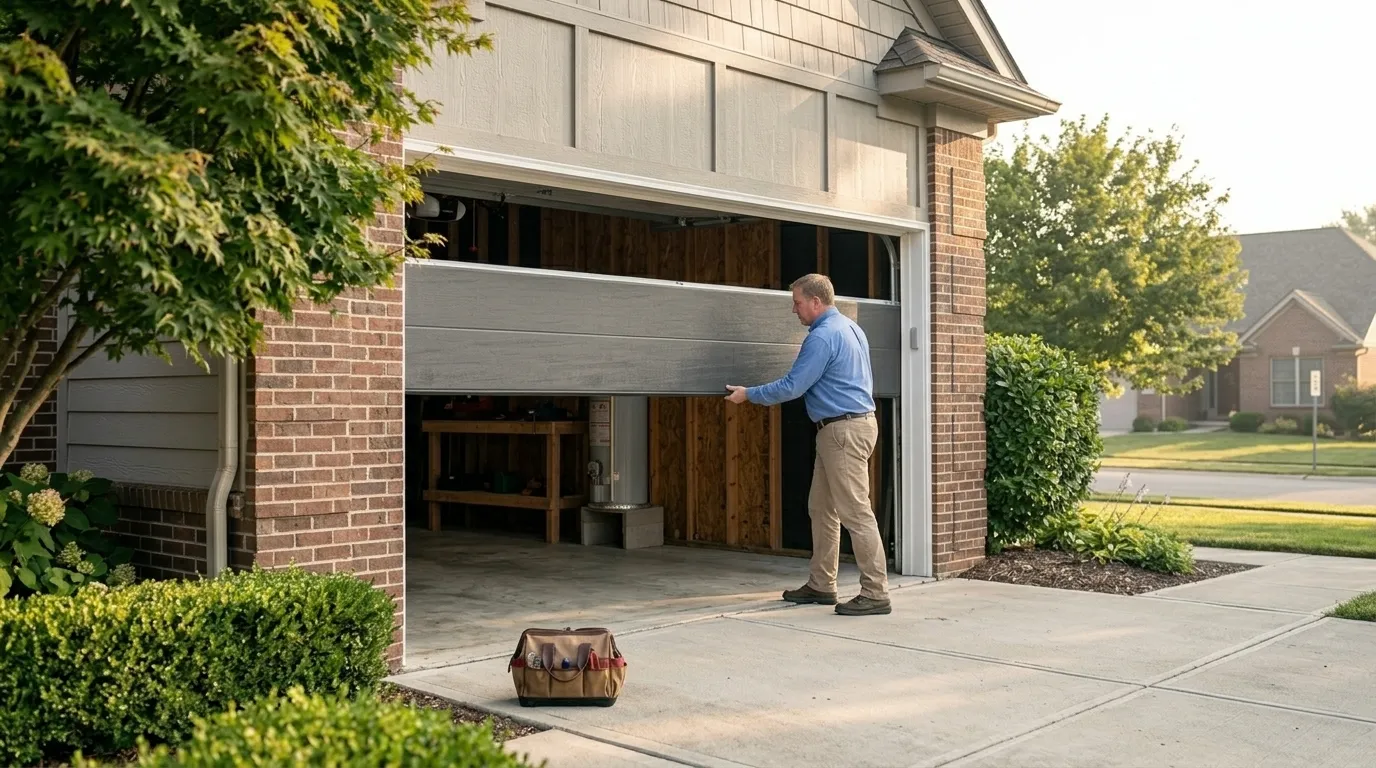
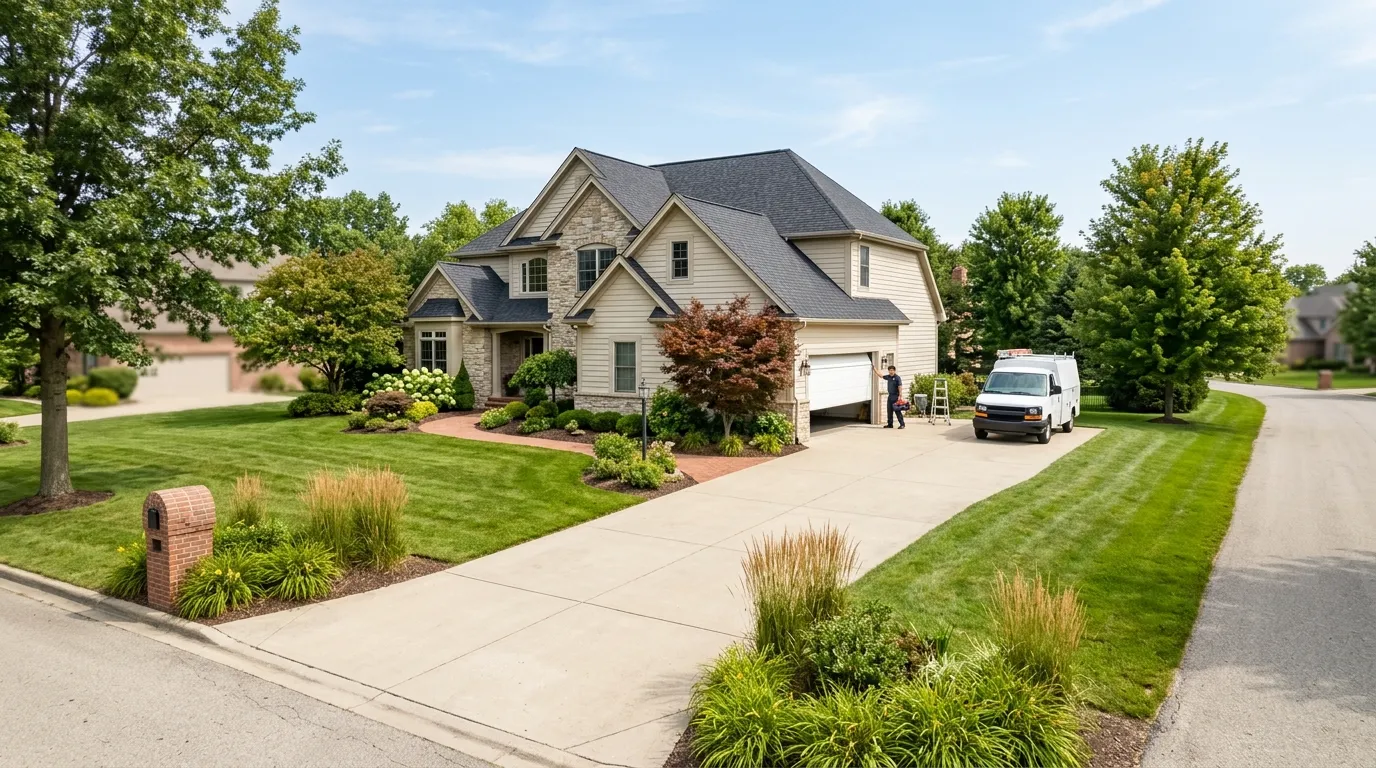
Garage door repair and replacement for Feeding Hills, 8 miles WSW of Springfield. We know the mid-century housing stock and what the cold does to old hardware.
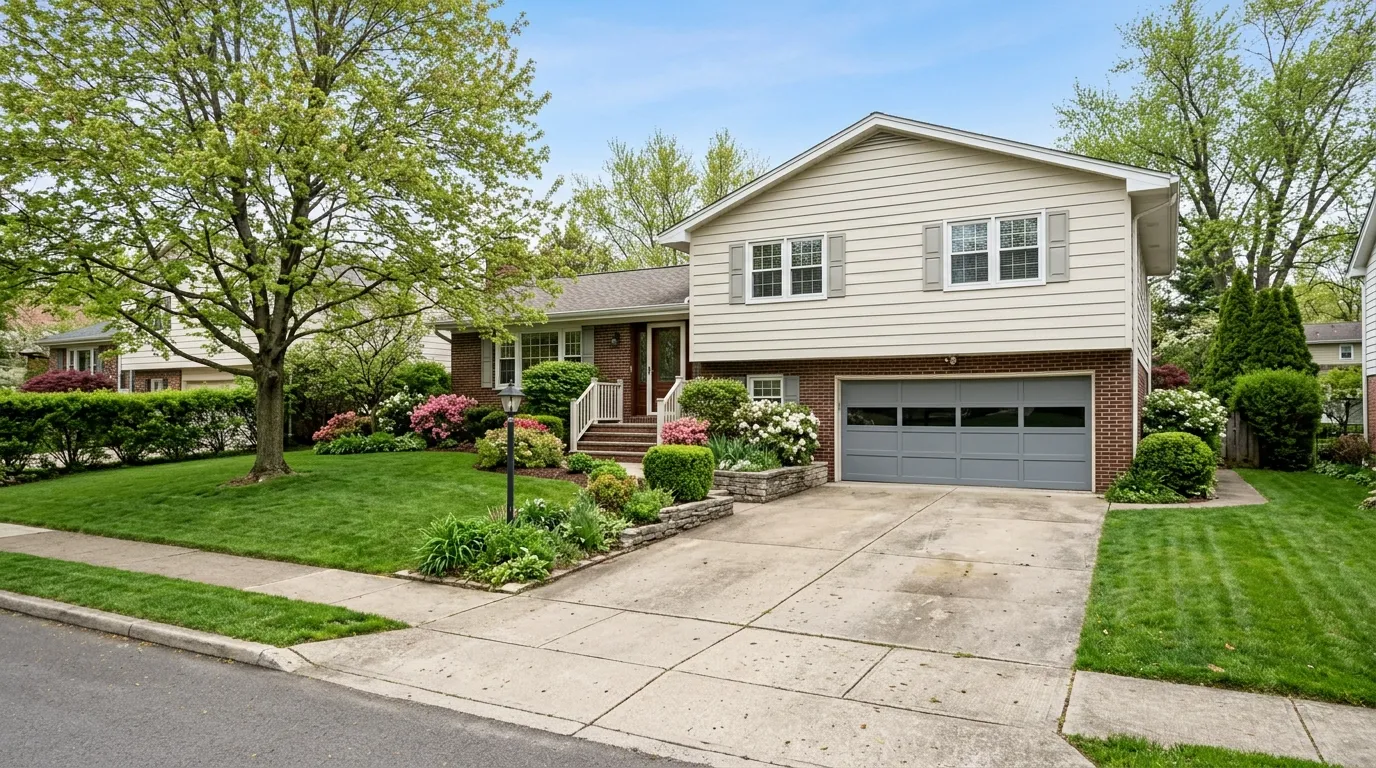
Feeding Hills sits on the western edge of Springfield's service area, and the houses reflect it. Across this part of the region, most homes went up between 1938 and 1989, with the median build year landing around 1965 - squarely mid-century. That means a lot of original garage openings sized for single doors, torsion springs that have outlived a few owners, and openers that got swapped out once in the 90s and never touched again.
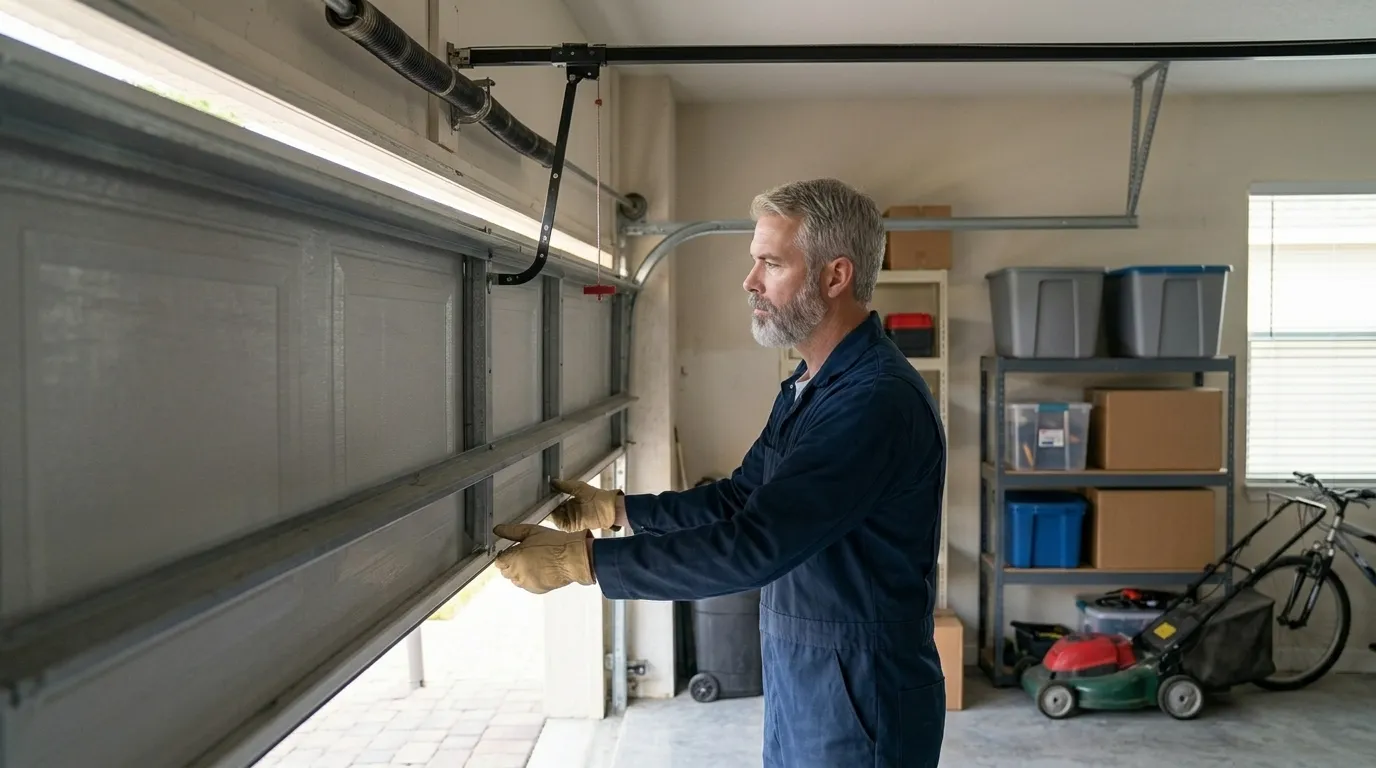
We don't have a street-by-street list for Feeding Hills, so we won't pretend to know which block has which door. What we can say is that houses from this era tend to share the same weak points: steel doors with no insulation, tracks that were never re-leveled after the slab settled, and hardware sized for a lighter door than whatever aluminum or steel replacement got put in later. If your door came with the house, it's probably older than you think.
We won't tell you your specific door is failing - we haven't seen it. But if it's from the original build era, the spring is closer to the end of its cycle count than the middle.
Where This Is
Feeding Hills is about eight miles west-southwest of downtown Springfield, on the far side of the city from the older core neighborhoods. It's one of the outer points in our service area, further out than East Longmeadow, Longmeadow, or Wilbraham, and roughly on par with Westfield and Monson in terms of drive time.
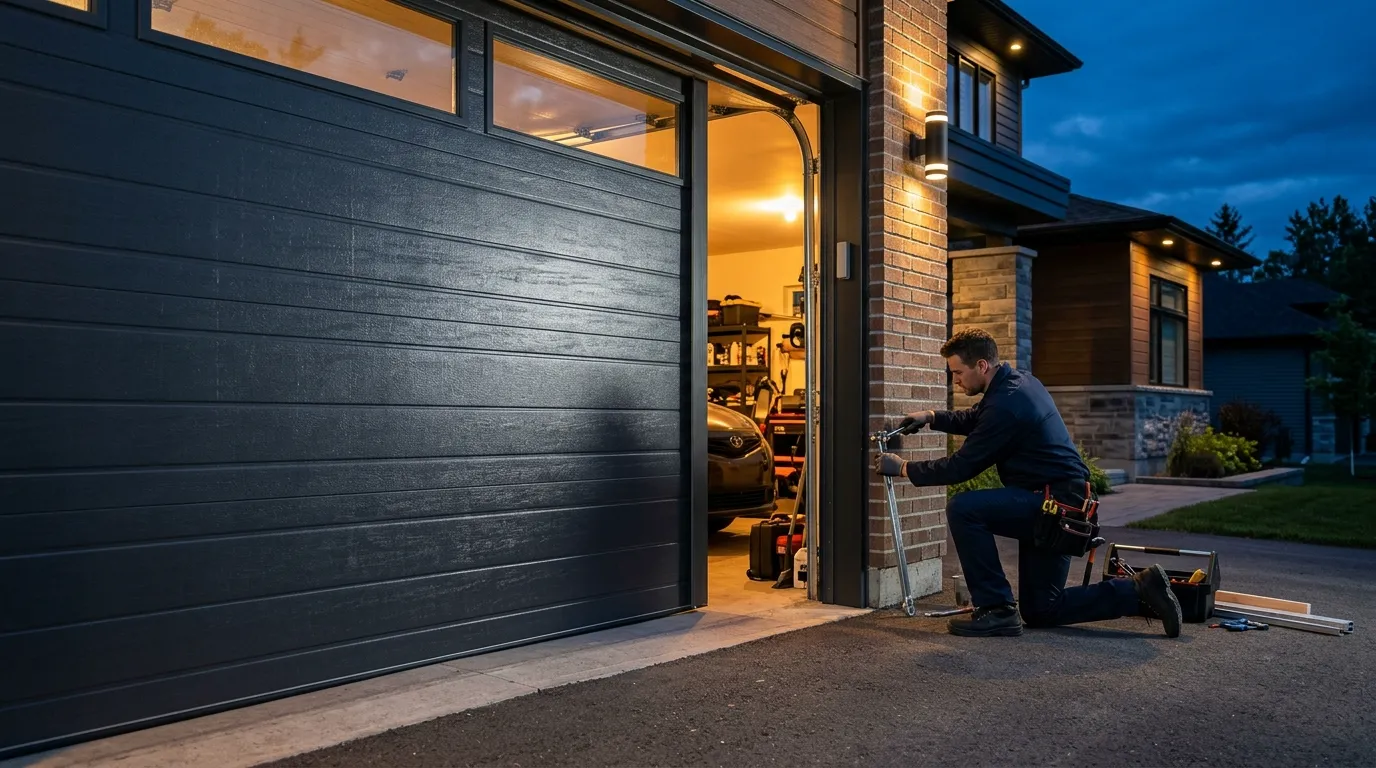
Being eight miles out doesn't change how we work a job, but it does mean scheduling matters more here than it would for a call two miles from the shop - a same-day request still means routing a truck across town, not around the corner. We serve it the same as anywhere closer in; it just sits at the edge of the map rather than the middle of it.
Typical Work
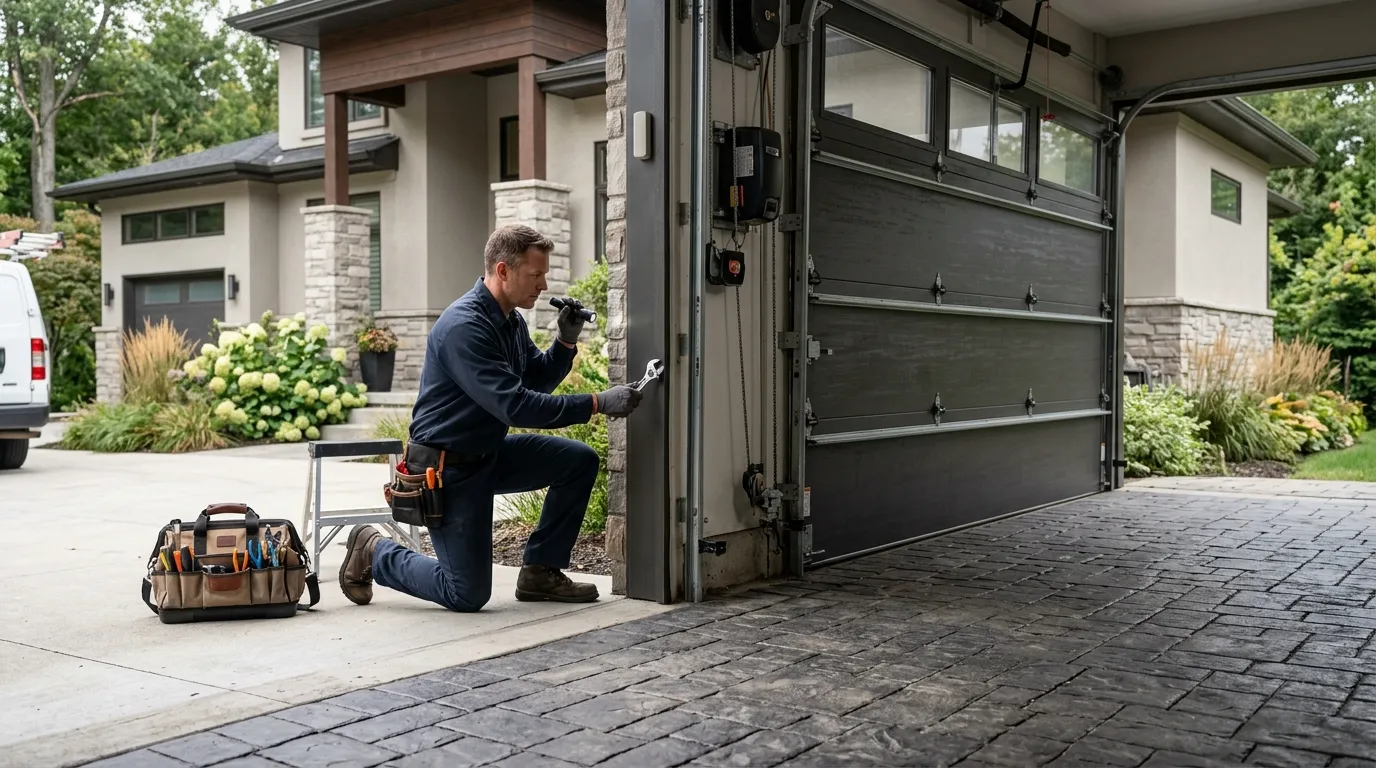
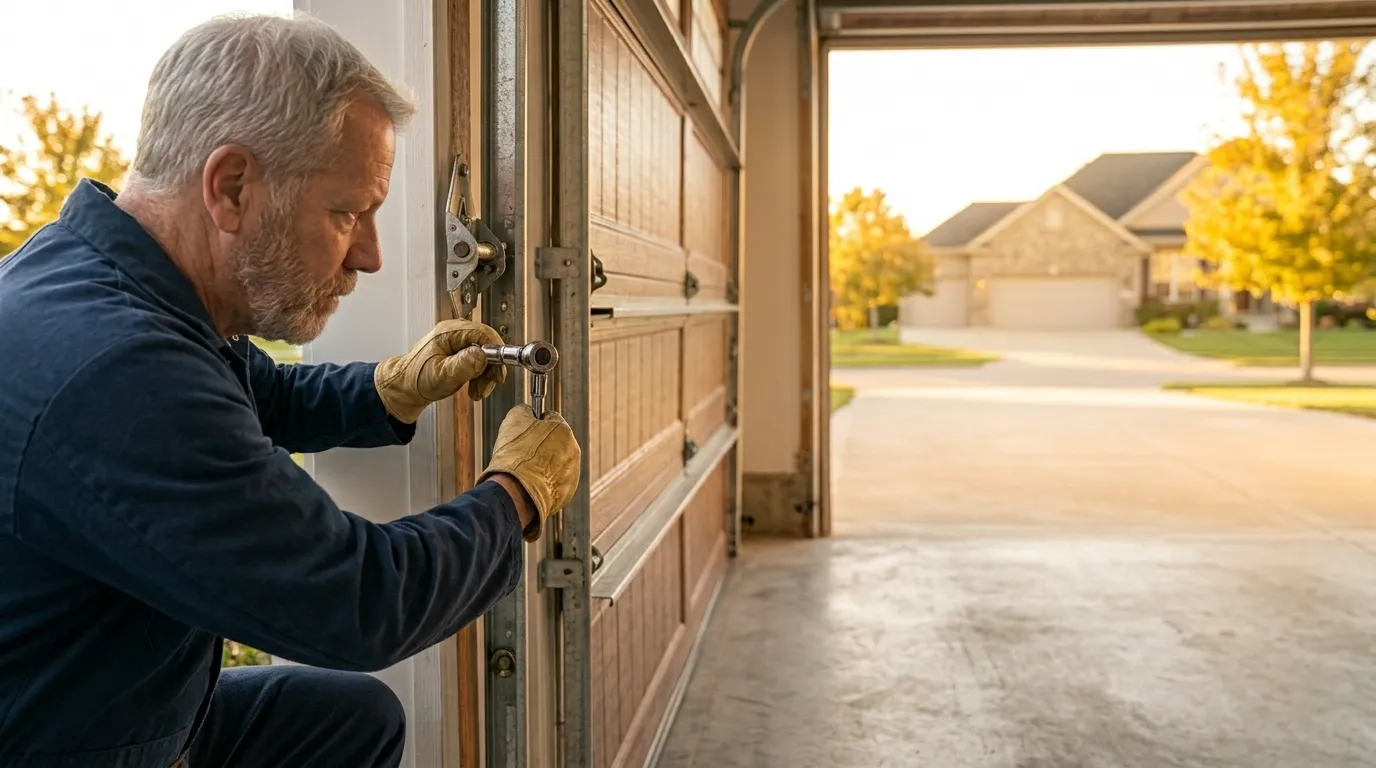
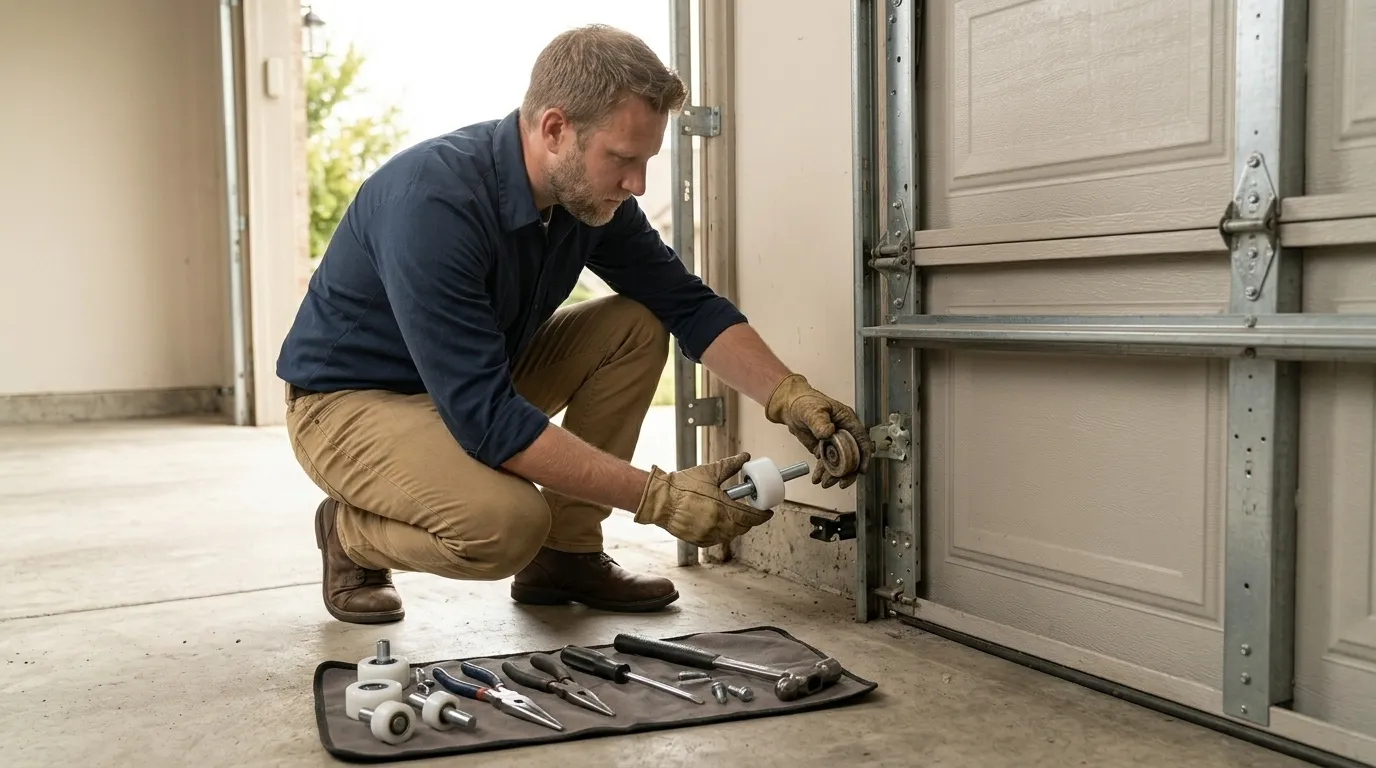
The calls we get from this side of the service area follow a pattern tied to the age of the housing. Torsion springs on doors installed in the 60s and 70s are past their rated cycle count, and when they let go, they take a cable or a bottom bracket with them more often than not. Openers from the 80s and 90s - chain drive, no rolling code, no battery backup - are still common, and parts for the oldest of them simply aren't made anymore. When that's the case, replacement is the honest answer, not a repair quote padded to look like one.
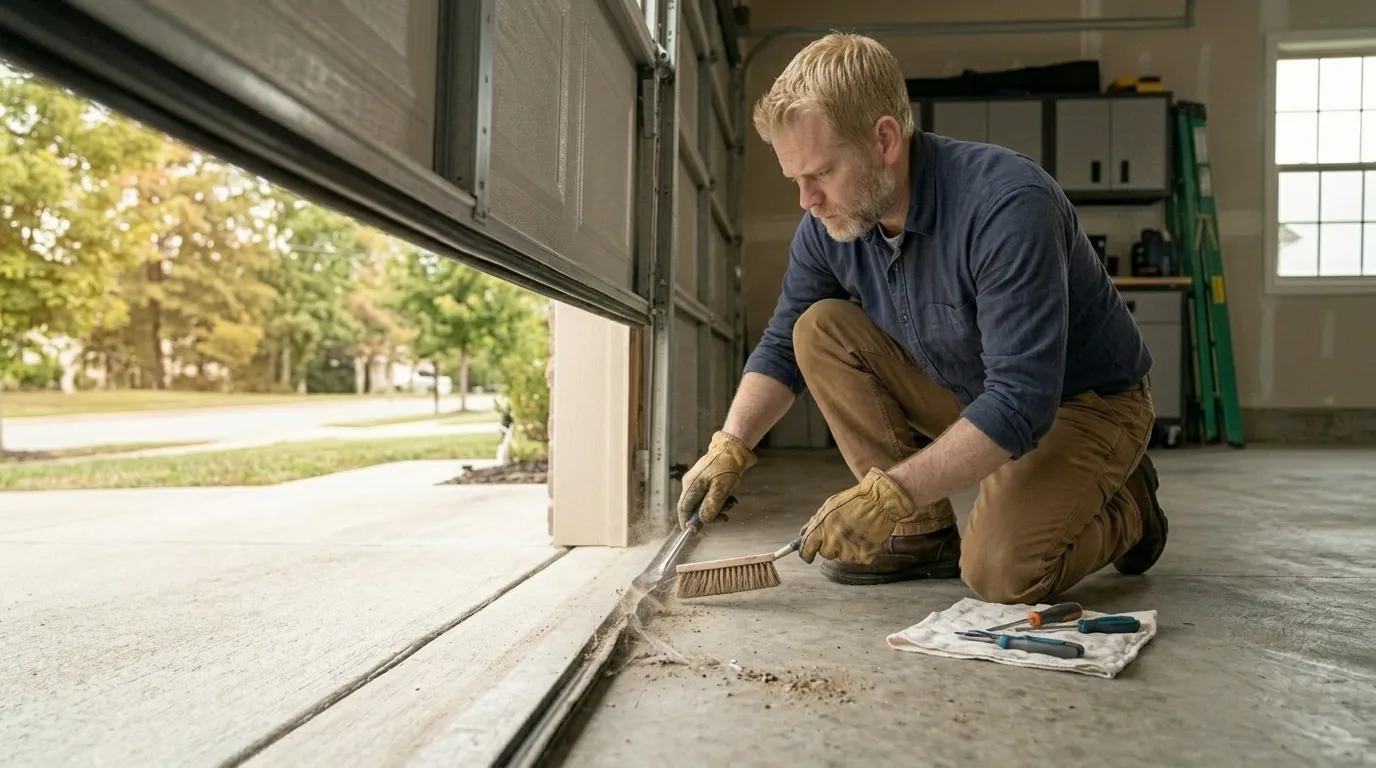
Winter is a factor too. This region sits in a severe cold climate band, and a steel door with no insulation loses its seal fast once the weather turns - rollers stiffen, tracks bind, and a door that worked fine in September starts sticking by December. We see more of those calls in this kind of housing stock than in newer construction, simply because the doors are older and the tolerances were never tight to begin with.
The Doors Around Here
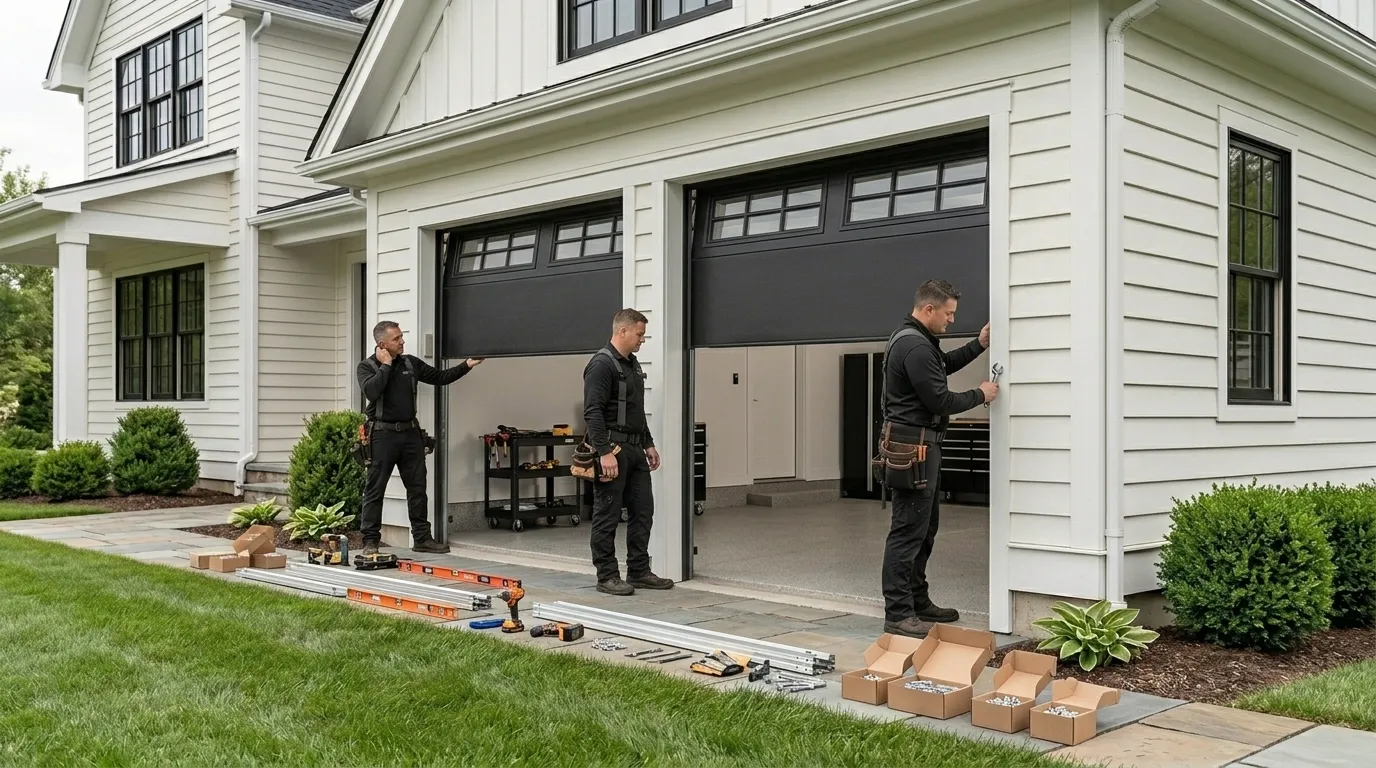
Given the build era and the climate, insulated steel doors are usually the better long-term call over uninsulated replacements, even though they cost more up front. With winter lows classified as severe cold for this area, an insulated door keeps condensation off a slab that's often fifty-plus years old and already showing its age at the seams.
The median household income across the service area is $93,808, which tracks with what we see on the ground: more owners choosing a full door replacement with better R-value over a patch job that buys another year or two. That's not a sales pitch - it's just the calculation that tends to make sense once a door's original hardware is past due anyway.
One limit worth being upfront about: we can't get every legacy panel style anymore. If a door from this era needs a single replacement panel and the manufacturer discontinued the line, full replacement ends up being the only real option, not a preference.
How it works
From “it’s stuck” to “it’s fixed”
1
Tell us what’s wrong
Describe the symptom - won’t open, loud bang, opener runs but the door won’t move.
2
On-site diagnosis
A technician tests the door under power and by hand and finds what actually failed.
3
Clear, up-front plan
You get the fix that’s needed and what drives the cost - before any work starts.
4
Repaired & tested
The repair is done, the door is set true and tested, and the work area left clean.
Serving Springfield, MA - tell us what your door’s doing and we’ll take it from there.
Straight answers about garage door repair in Springfield. Still unsure? Ask us directly.
How far out is Feeding Hills for a service call?
It's about eight miles west-southwest of downtown Springfield, one of the further points in our coverage area. We still run it the same day when we can, but it's a longer trip than a call from somewhere closer in, so it can affect how the schedule fills up.
Why does my garage door stick every winter?
This area falls in a severe cold climate band, and older steel doors without insulation lose their seal and stiffen up as temperatures drop. Rollers bind, tracks contract slightly, and a door that ran fine in fall starts dragging by December. Insulated doors and fresh lubrication both help.
Is my door too old to repair?
Depends on the part. Springs and cables are almost always repairable regardless of age. Openers from the 80s and 90s often aren't worth fixing once a board fails, since parts for them are discontinued. We'll tell you honestly which side of that line your door is on.