Belchertown Garage Door Repair, 13 Miles From Springfield
Springfield Garage Door Pros services Belchertown, MA, where homes built mostly in the 1980s sit 13 miles from Springfield - spring, opener, and panel work.
Belchertown's housing stock centers on 1985, which puts it a good two decades newer than the 1965 median that anchors the broader Springfield Garage Door Pros coverage area. Most of the older neighborhoods we work in closer to Springfield were built between 1938 and 1965, but out here the doors and hardware belong to a different era entirely.
With around 1,251 households in Belchertown, this is a smaller, lower-density call area than the denser sections nearer Springfield. Median household income here runs $68,393, well under the $93,808 median across the wider service territory - a gap that shows up in what people ask for: keep the existing door running rather than replace it outright.
The region overall sits in a severe cold climate band, and that matters for any door built in the mid-1980s. Insulation standards and weatherseal design from that period were lighter than what you'd find on a door installed in the last ten years, so cold-weather stiffness and hardened lubricant are common complaints on original units still in service on these houses.
Common Jobs Here
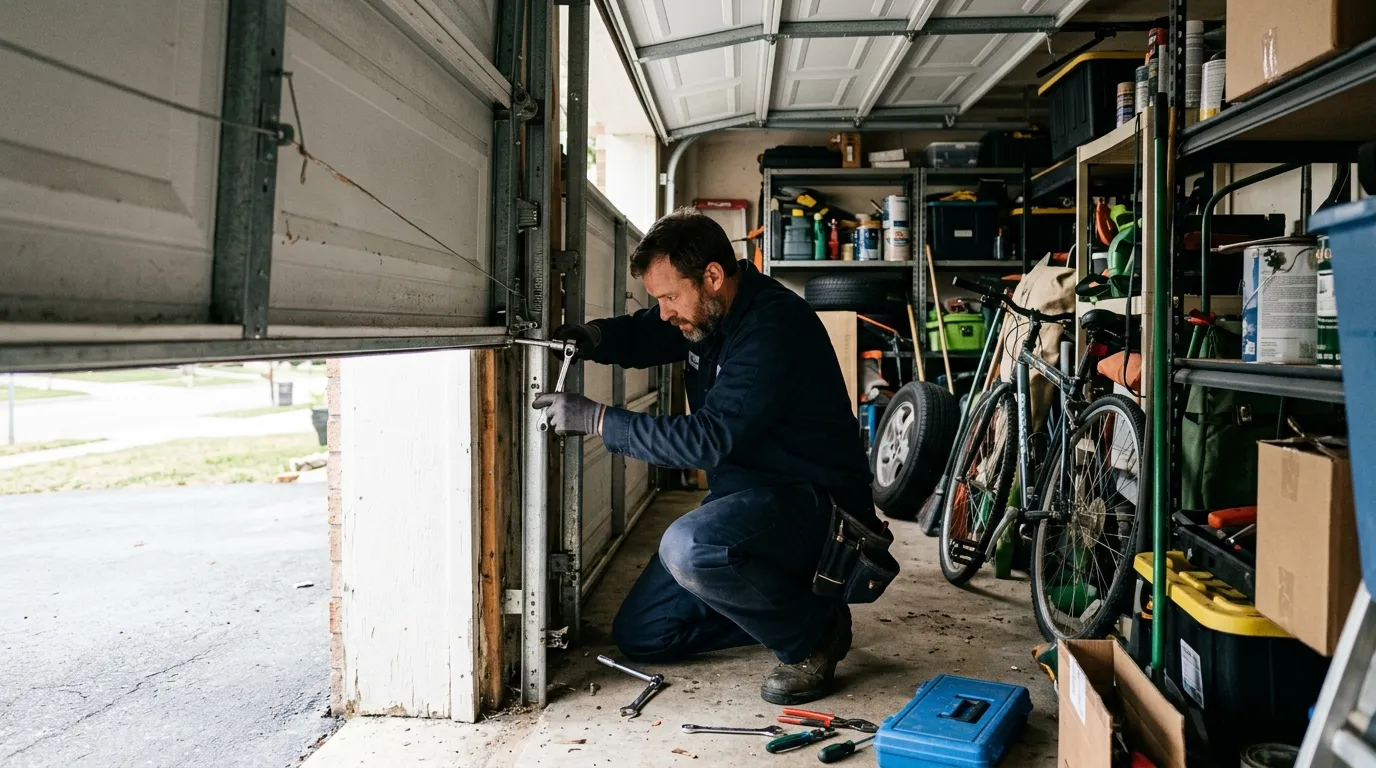
Doors from the mid-1980s in Belchertown were mostly steel, raised-panel, and built for lighter-duty extension spring systems rather than the torsion setups that became standard later. That means the calls we get out here skew toward extension spring replacement, worn-out pulley and cable assemblies on the side of the track, and openers that are original or close to it - chain-drive units from an era before soft-start and soft-stop were common.
Roller wear is another recurring issue. Steel rollers on nylon or steel track from a 1980s install don't hold up the way sealed-bearing rollers do, and after enough winters in a severe cold climate they start binding or grinding, especially on the first cold morning after a warm stretch.
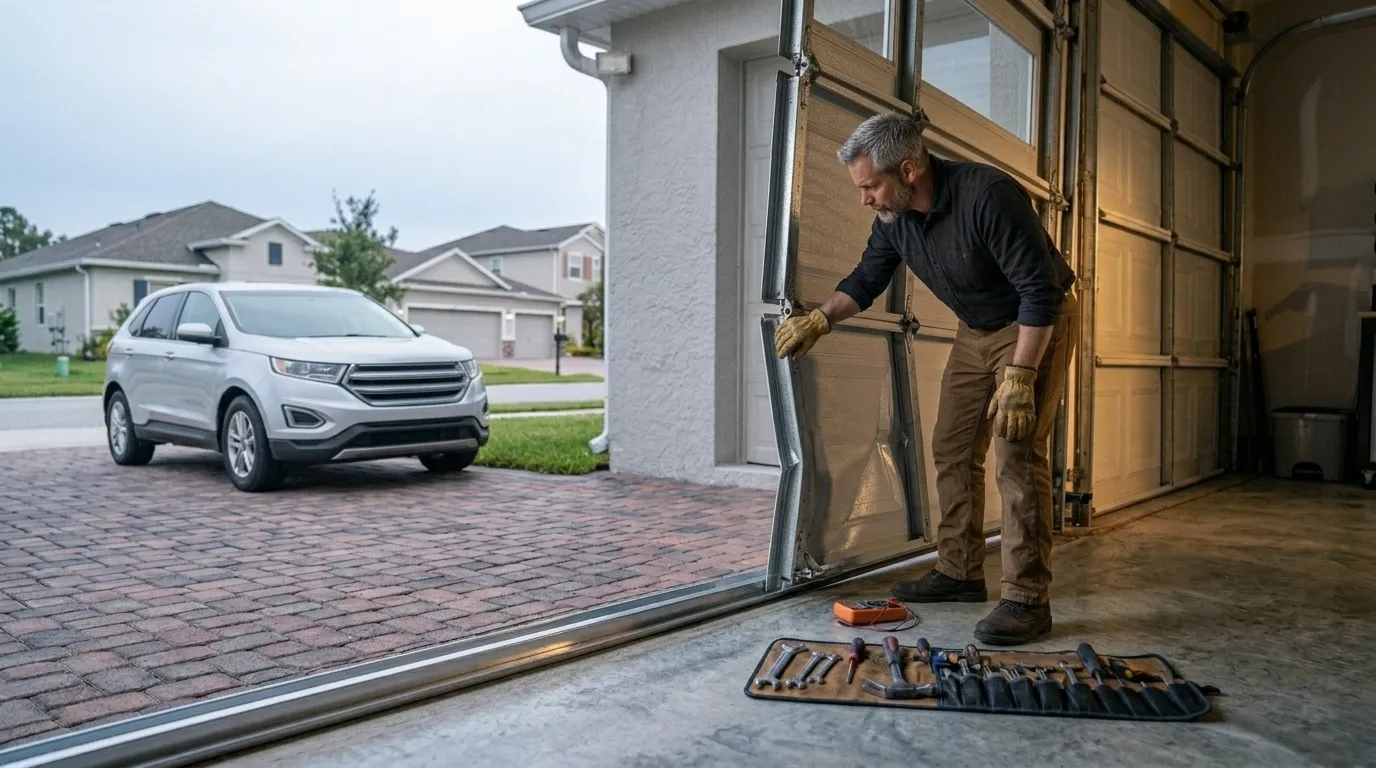
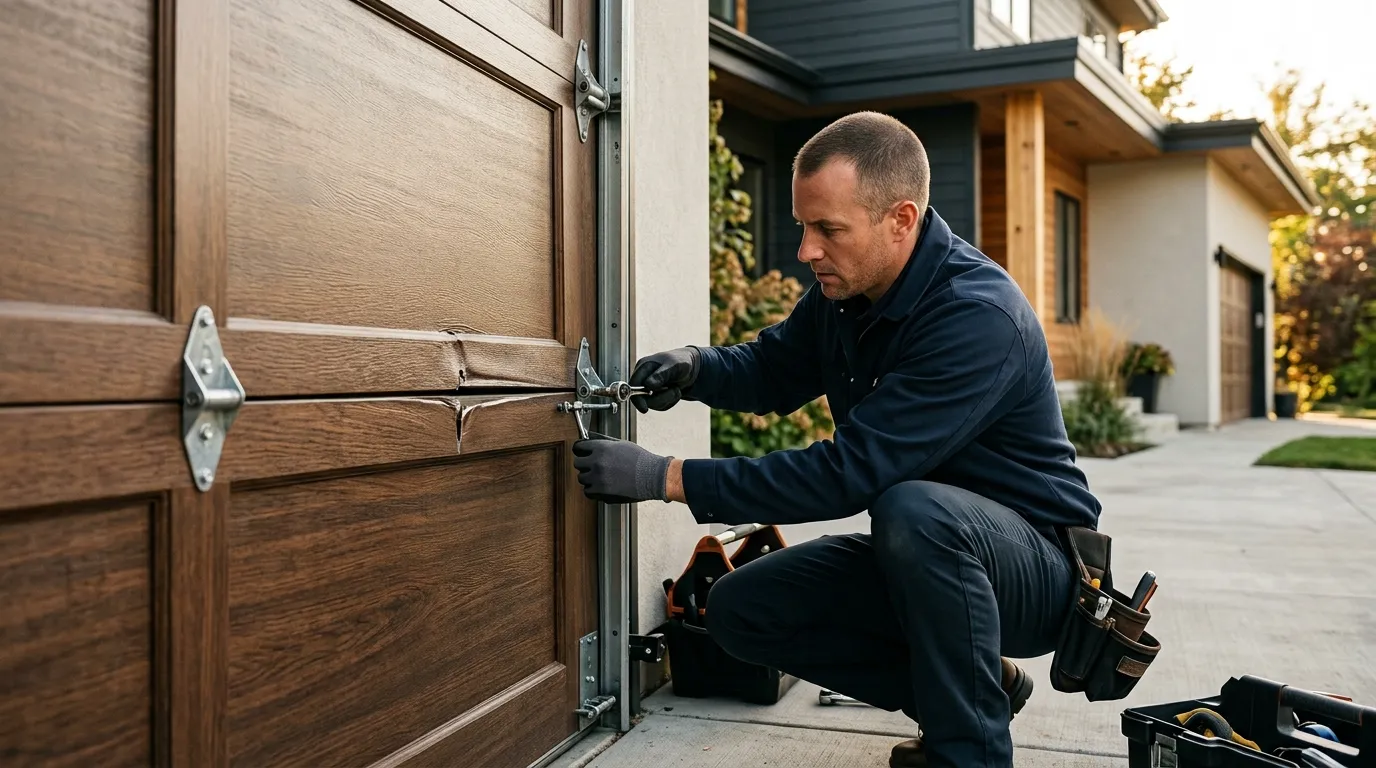
We also see a fair number of panel replacements rather than full door swaps - a single dented or rusted-through section on an otherwise sound 1980s steel door, where matching or replacing just that panel keeps the job smaller and the cost down, which fits the income profile of the area better than a full unit swap.
What We Do Not Do
We don't force a torsion conversion onto a door engineered around extension springs just because torsion is more common on newer installs. If the door and track were built for extension hardware, retrofitting torsion often means new brackets, new header reinforcement, and a bill that outsizes the actual problem. Sometimes the honest answer is to replace the whole door rather than fight its original design.
We also don't run a depot or a standing crew based in Belchertown. Springfield Garage Door Pros works out of Springfield, and a call here is a 13-mile trip each way. That doesn't change the quality of the repair, but it does mean we're not the outfit to call for a same-hour emergency with no flexibility on timing - we schedule the drive like any other job on the route that day.
And we don't guess at parts. If a 1980s-era extension spring or an original chain-drive opener part isn't something we're carrying on the truck that day, we say so rather than swap in something that doesn't match the door's original setup.
How That Shows Up in the Door
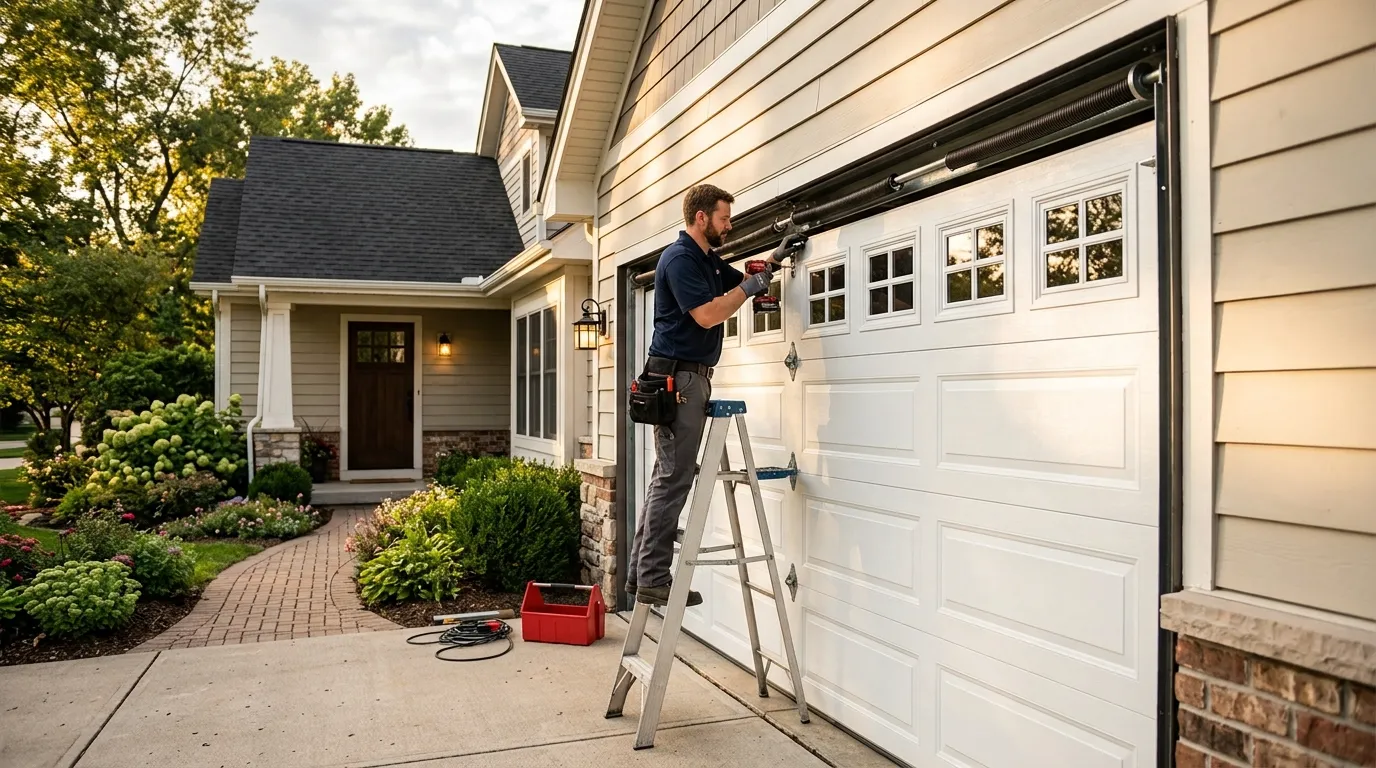
Walk out to a Belchertown garage built around 1985 and the tell is usually the spring setup: two extension springs running along the horizontal track above the door, not a torsion bar centered over the opening. That's the single biggest difference from the torsion-standard doors common on newer builds closer to Springfield, and it changes how a spring failure behaves - an extension spring snap tends to be sudden and loud, with the door dropping unevenly on one side if only one spring goes.
The opener is often the second tell. A chain-drive unit from that period runs louder and skips the soft-start ramp-up you'd get on anything installed in the last decade, so a grinding or clunking start is often just the opener's age rather than a sign something's broken.
Steel panels from 1985 hold up structurally better than the doors get credit for, but seams and bottom sections take the brunt of a severe cold winter - moisture gets into a seam, freezes, and widens it a little more each season. On these houses, that's usually the first visible sign something needs attention, well before the spring or opener acts up.
How it works
From “it’s stuck” to “it’s fixed”
1
Tell us what’s wrong
Describe the symptom - won’t open, loud bang, opener runs but the door won’t move.
2
On-site diagnosis
A technician tests the door under power and by hand and finds what actually failed.
3
Clear, up-front plan
You get the fix that’s needed and what drives the cost - before any work starts.
4
Repaired & tested
The repair is done, the door is set true and tested, and the work area left clean.
Serving Springfield, MA - tell us what your door’s doing and we’ll take it from there.
Straight answers about garage door repair in Springfield. Still unsure? Ask us directly.
Do you have a crew based in Belchertown?
No. Springfield Garage Door Pros runs out of Springfield, and Belchertown is about a 13-mile drive from there. We schedule Belchertown calls onto the day's route rather than staffing a separate location in town.
Why does my 1980s door in Belchertown use extension springs instead of torsion?
Torsion spring systems became the standard later than 1985. Most homes built around that median year in Belchertown were fitted with extension springs running along the horizontal track, which is a different repair than the torsion setups common on newer doors.
Is it worth replacing a whole 1980s steel door for one dented panel?
Not always. A single damaged section on an otherwise sound steel door from that era can often be replaced on its own, which keeps the job and the cost smaller than a full door swap.