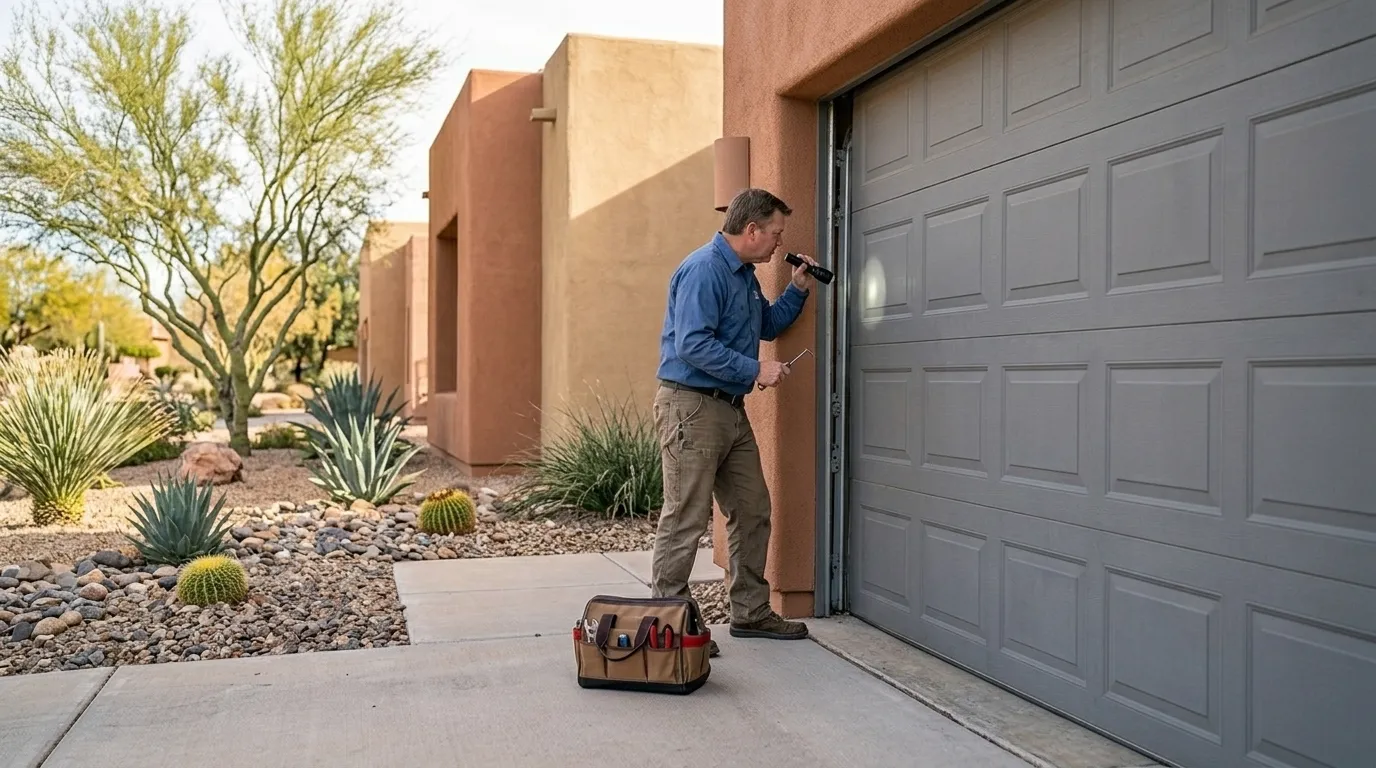
You hit the opener button and the door doesn't move, or it moves an inch and stops, or it slams down like the cable let go. Nine times out of ten on a morning like that, it's the torsion spring. Steel contracts when it's cold, and a spring that's already near the end of its cycle count picks the coldest morning of the week to let go, because that's when the metal is least forgiving. Springfield sits in a COLD severe climate band, and most of the housing stock through this area went up between 1938 and 1989, with a lot of it concentrated in the 1960s and 70s. That means a big share of the doors on these streets are running original or first-replacement torsion hardware sized for a house built before anyone thought about insulated steel doors or nylon rollers. Old spring, cold snap, one loud bang - that's the whole story more often than not.
Checking It Yourself
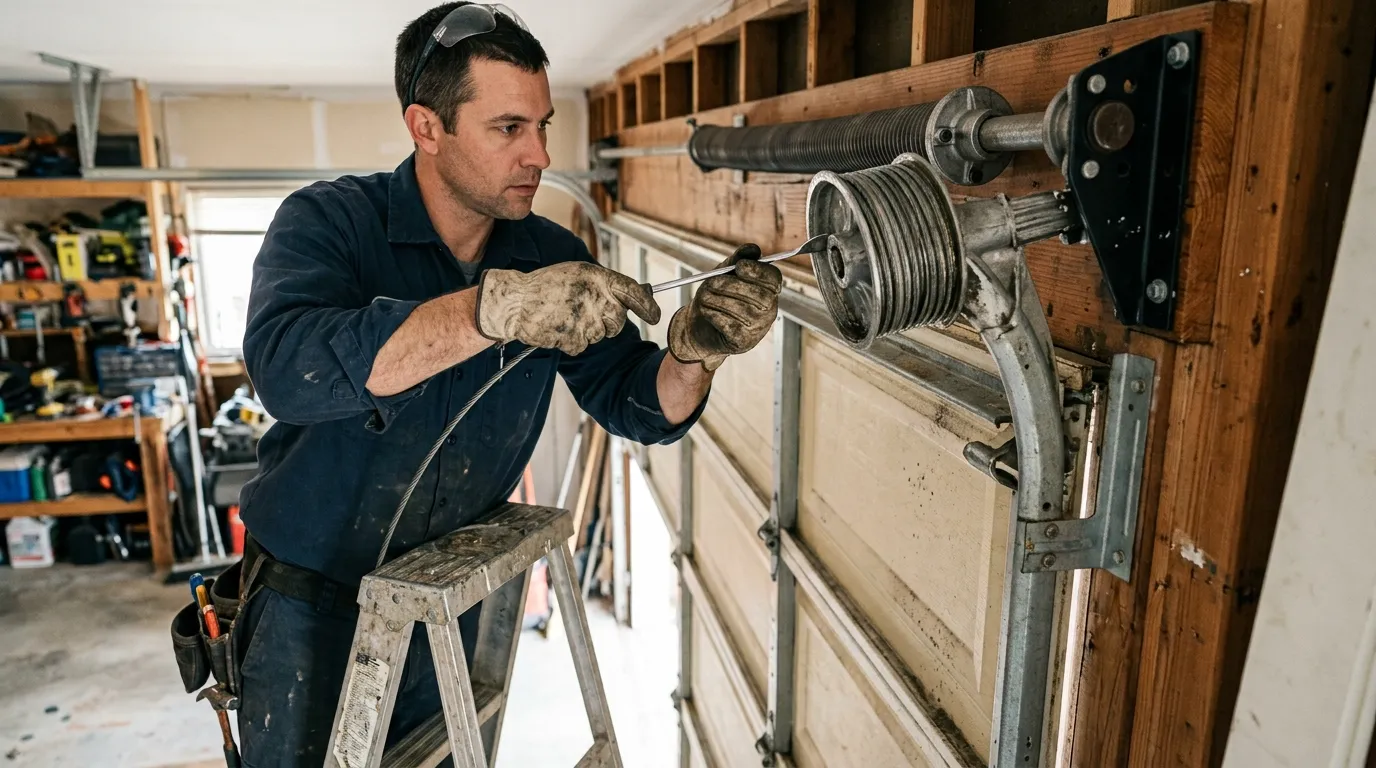
Before you call anyone, look at the spring itself - it sits on a shaft above the door, usually one or two of them depending on the door width. If you see a gap in the coil, you have your answer, and the door is not safe to run on the opener until it's replaced. Do not disconnect the opener and try to lift the door by hand to "test" it; with a broken torsion spring the door can weigh what it actually weighs, which is more than most people expect, and it can drop fast. Check the cables next to the bottom brackets too - a frayed or slack cable on one side often shows up at the same time as a spring failure, especially on doors that have been cycling through New England winters for a few decades. If the door is quiet, moves evenly, and the springs look intact, the failure is somewhere else - a sensor, a limit switch, an opener - and that's a different repair.
The Common Mistake
The mistake we see most in this area is someone hearing the bang, checking the spring, seeing it's broken, and then ordering a spring off a general parts site without checking the door's actual specs. Torsion springs are matched to the door's weight, height, and drum size, and on a house from the 1960s or 70s that's had one replacement door installed since, the spring on the shaft may not match what the original builder-grade door called for. Put the wrong wire size or wind count on there and the door either won't balance or the new spring wears out again in a year or two, sometimes less in a hard winter. The second mistake is winding a torsion spring yourself. It's under enough stored force to break a wrist or worse, and that's true whether the house is in Springfield or anywhere else - we're not going to walk anyone through that part.
What the Weather Here Does to It
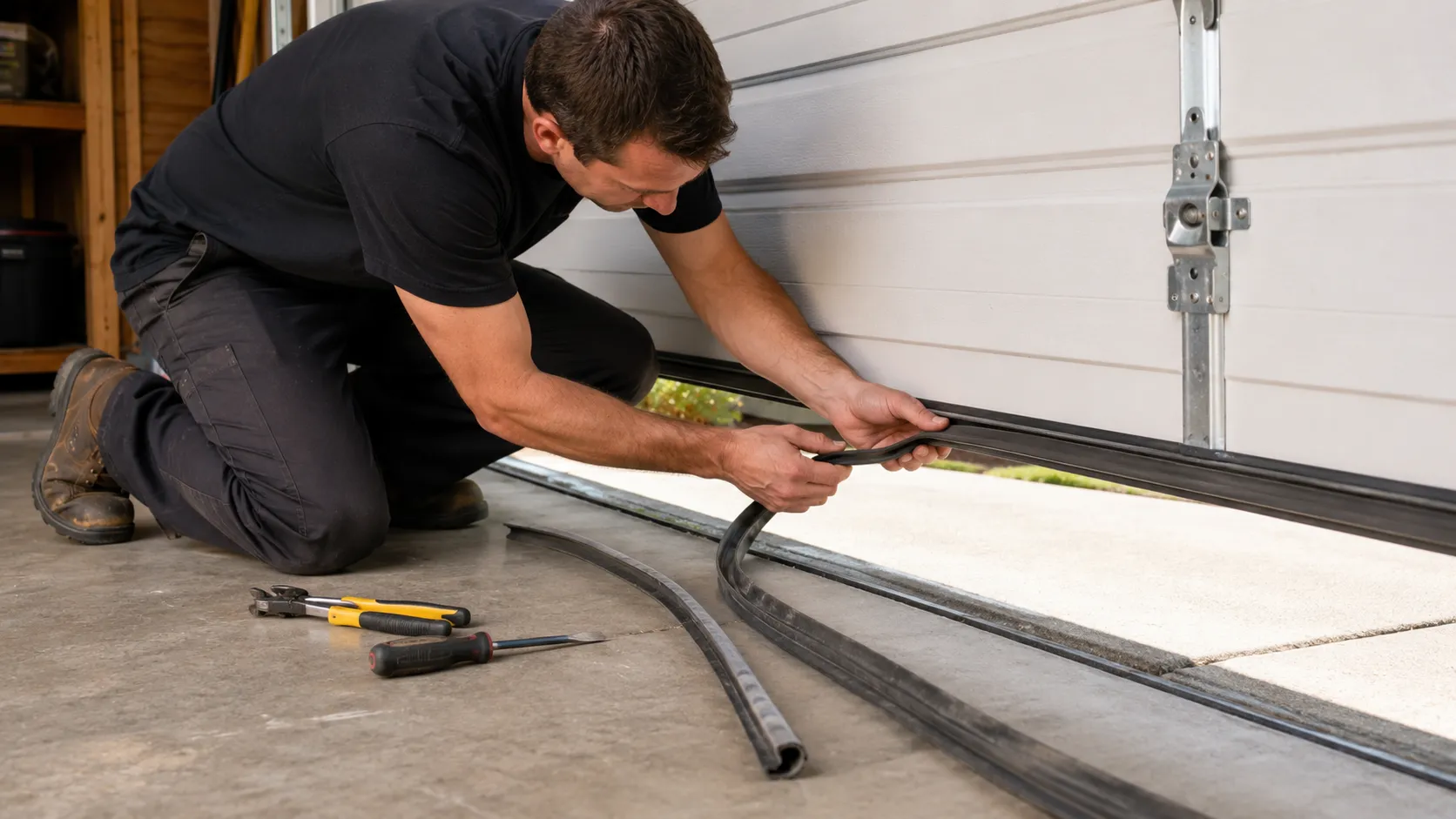
A severe cold climate band doesn't just make steel brittle - it also means more freeze-thaw cycles working on the slab and the bottom seal, which changes how much resistance the door meets at the floor. On an older torsion setup, sized decades ago for a lighter or differently balanced door, that extra resistance is exactly the kind of load spike that finishes off a spring that was already fatigued. We see the pattern repeat through the older sections of town and into the nearby areas with similar-age housing - East Longmeadow, Longmeadow, Wilbraham, Ludlow - where the building stock runs the same 1960s-70s vintage. One thing we won't do is talk anyone into a full door replacement when a spring and cable service will get the door back to balanced and safe; replacement only makes sense when the door itself is warping or the track is bent beyond adjustment.
How it works
From “it’s stuck” to “it’s fixed”
1
Tell us what’s wrong
Describe the symptom - won’t open, loud bang, opener runs but the door won’t move.
2
On-site diagnosis
A technician tests the door under power and by hand and finds what actually failed.
3
Clear, up-front plan
You get the fix that’s needed and what drives the cost - before any work starts.
4
Repaired & tested
The repair is done, the door is set true and tested, and the work area left clean.
Serving Springfield, MA - tell us what your door’s doing and we’ll take it from there.
Straight answers about garage door repair in Springfield. Still unsure? Ask us directly.
Why did my spring break on the coldest morning of the year?
Steel gets more brittle as it gets cold, and a spring near the end of its cycle life is most likely to fail right when that stress is highest. Springfield's cold severe climate band means these cold-morning failures are a regular pattern here, not a fluke.
Is it safe to open the door by hand after a spring breaks?
Not with the opener still connected, and not by forcing it. A garage door with a broken torsion spring has no counterbalance, so it's heavier than it looks and can drop suddenly. Leave it closed and disconnected until the spring is replaced.
Does my older house need a different spring than a new build?
Often yes. A lot of Springfield-area housing dates to the 1960s and 70s, and doors on those homes may have been replaced once since the original build without the torsion spring being resized to match. Matching the spring to the actual door, not just the opening, matters.