Can You Do This Yourself
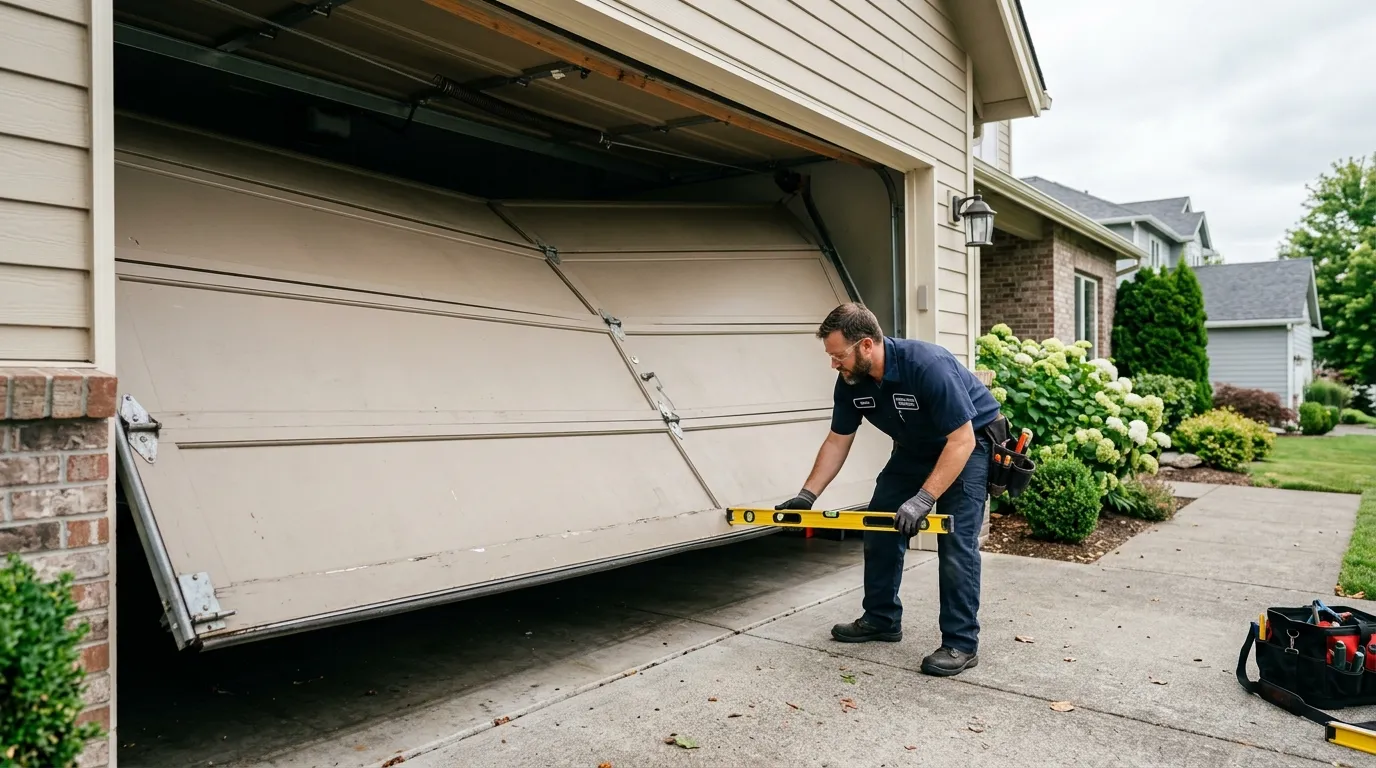
An off-track door is not a DIY fix, and this isn't us being cautious for the sake of it. A door under spring tension that's already left its track can drop without warning, and on the older tilt-up hardware still found on some Longmeadow houses, the pivot brackets carry weight in a way that isn't obvious until one lets go. If the door is only slightly off at one corner and the opener is disconnected, you can sometimes ease it back by hand - but if it's binding, if a cable is visibly loose, or if the door won't move at all, stop there. We'll say plainly: some of this we won't try to walk you through over the phone, because the failure mode on a pivot-hinge door is different enough from a roller-track door that generic advice does more harm than good. What you can safely do is disconnect the opener, leave the door where it sits, and not force it back onto the track yourself.
Parts We Carry
We stock the rollers, cables, and hinges that cover most sectional doors installed across the wider Springfield service area since the 1970s and 80s, which is the bulk of what we see. Longmeadow's earlier median build year means we also run into original tilt-up hardware - pivot brackets, horizontal track sections, and the spring-loaded arms specific to that door style - more often here than in some of the newer pockets we cover. That older hardware isn't something every supplier keeps on the shelf. On a call where the track or bracket is a discontinued or oddball size, we'll tell you straight rather than force a part that doesn't fit; sometimes the honest fix is a section of standard track adapted to the opening, sometimes it means the repair isn't worth chasing and replacement is the better call. We'd rather say that up front than have you pay for a part that fails again in six months.
Why This Fails Locally
Two things push up off-track calls in Longmeadow specifically. The first is the housing age: a 1957 median build year means a meaningful share of homes are carrying garage door hardware that predates the sectional-and-torsion-spring setup most newer suburbs standardized on, and older pivot hardware simply wears differently - brackets loosen, track bolts pull, and the failure shows up as the door leaving its track rather than a spring snapping cleanly. The second is the winter climate this whole area sits in. Cold, severe winters mean repeated freeze-thaw cycles at the slab and door bottom, and on a door that's already a little loose at the track or bracket, that seasonal movement is often what finally pushes it off. Longmeadow's households have a median income well above the wider area's, which tends to mean owners catch and fix small issues before they become emergencies - but the housing stock's age doesn't care about income. It's the year the hardware went in, not who owns the house now, that decides how this fault shows up.
Time on the Job
We come from Springfield, about 5 miles out, so travel isn't the long pole on a Longmeadow call - the diagnosis is. A sectional door with a jumped roller and a clean track is often a shorter job than a tilt-up door with a bent pivot bracket, where we may need to check alignment on both sides of the opening before we're confident rehanging it will hold. We won't quote a fixed time before we've seen which hardware type is actually on the door, because guessing on that point is how a job runs long or a repair fails again in a month. What we can tell you is that we test the full cycle before we leave, every time, regardless of which style of door we're working on.