Commercial garage door repair in Springfield, MA: torsion springs, tracks, and openers fixed for warehouses and loading docks in our severe cold climate.
Call and tell us what the door is doing - dragging, stuck halfway, opener humming but not lifting, or dead on arrival. We ask for the door type (sectional, rolling steel, high-lift) and roughly how old the opener is, because commercial units in this area run a wider range of horsepower and cycle ratings than a home garage door, and that changes what's on the truck. If the bay is down and blocking a loading dock, say so first - that moves you up the list ahead of routine service calls. You can also start the conversation through the site rather than the phone if that's easier for your schedule. We don't quote a firm price over the phone for anything beyond a basic spring or cable job, because commercial doors vary too much in size and drive type to guess sight unseen - a tech has to look at the header height, the track gauge, and the opener before we commit to a number. That's not us stalling; it's the honest answer for equipment this size. Once we've seen it, you get a real number before any work starts, and we don't start work on a commercial account without that number signed off.
What the Fix Involves
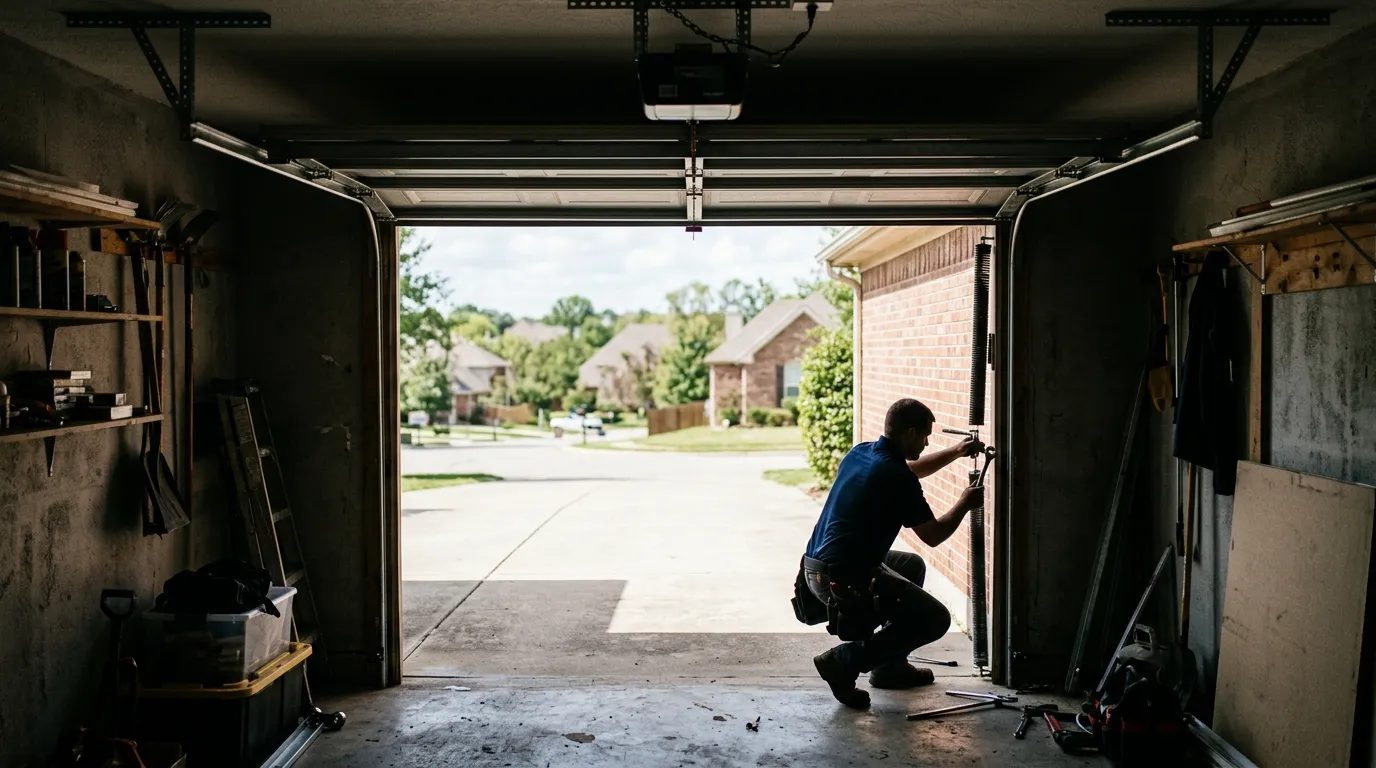
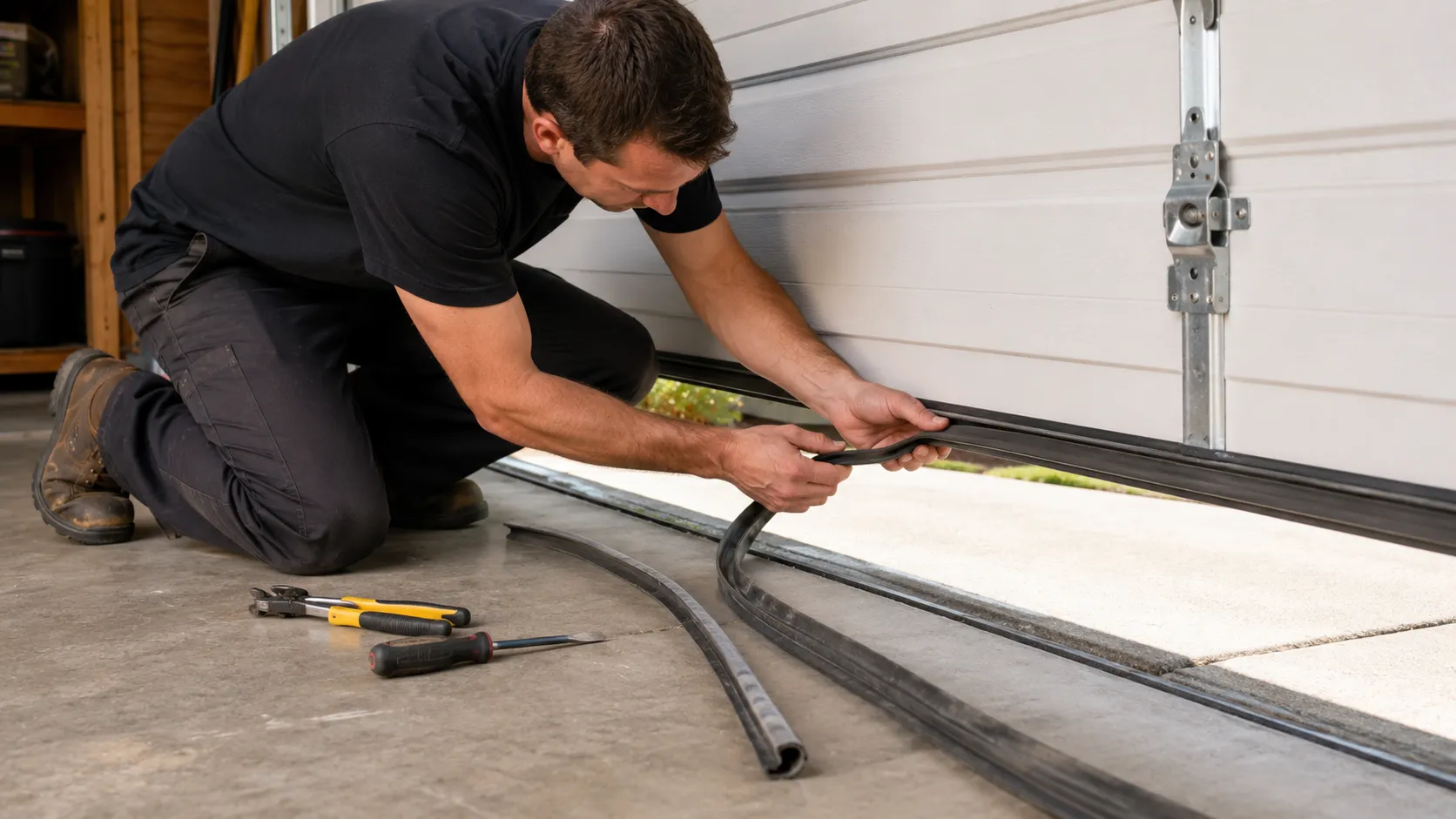
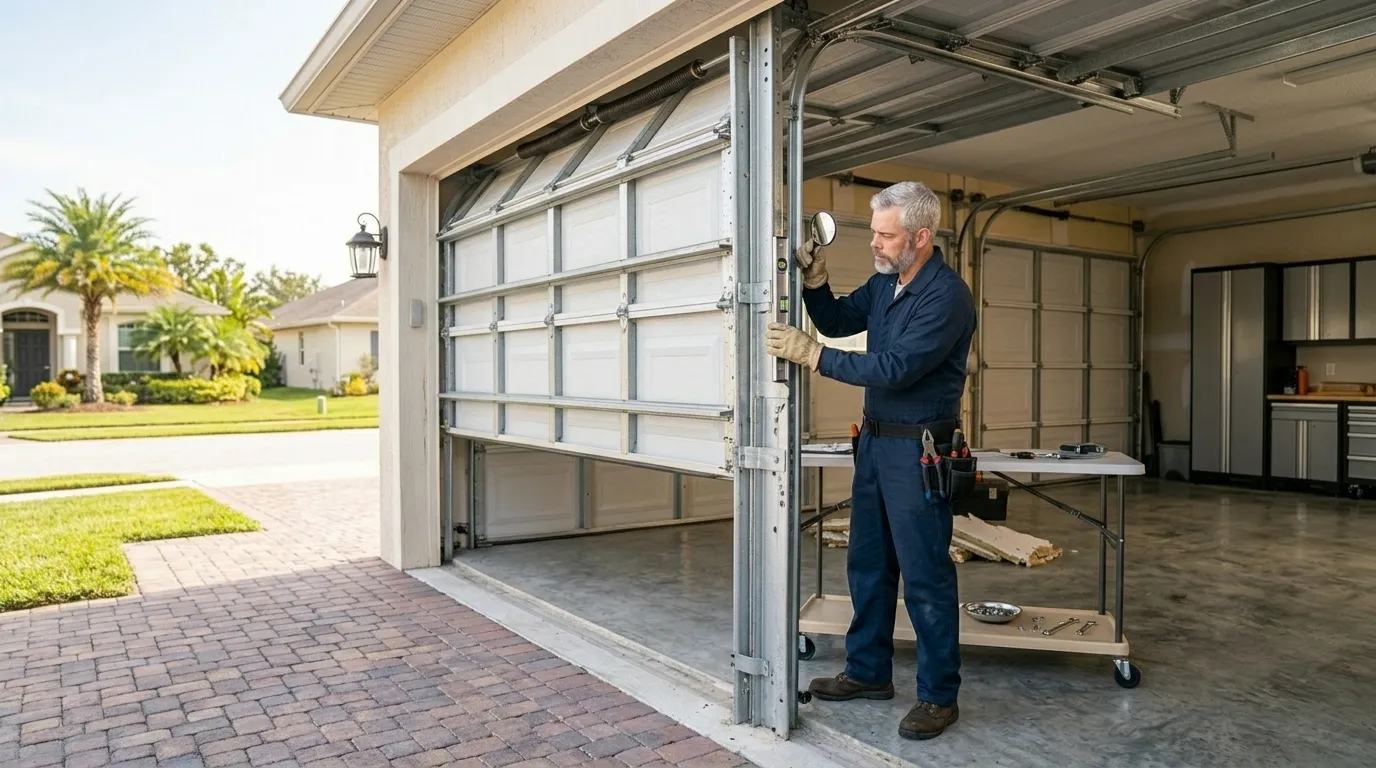
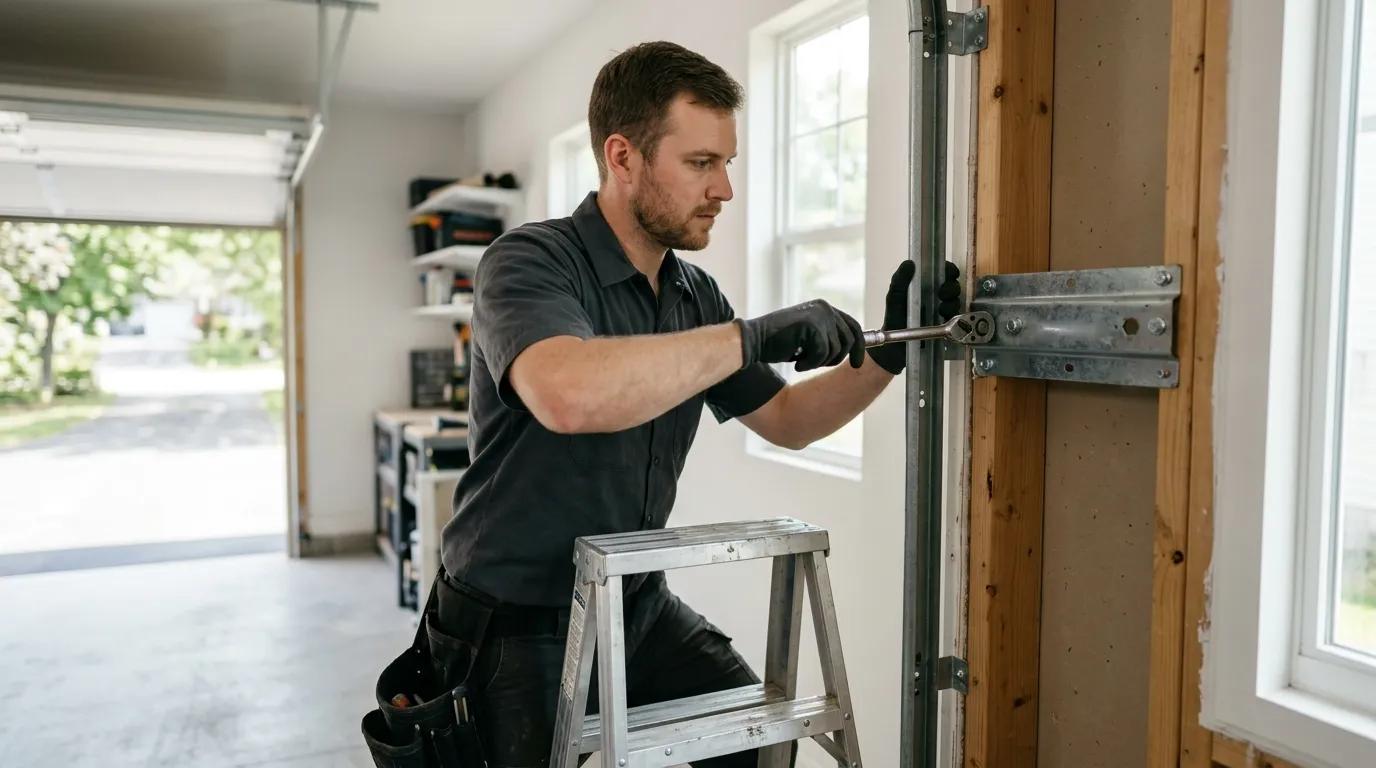
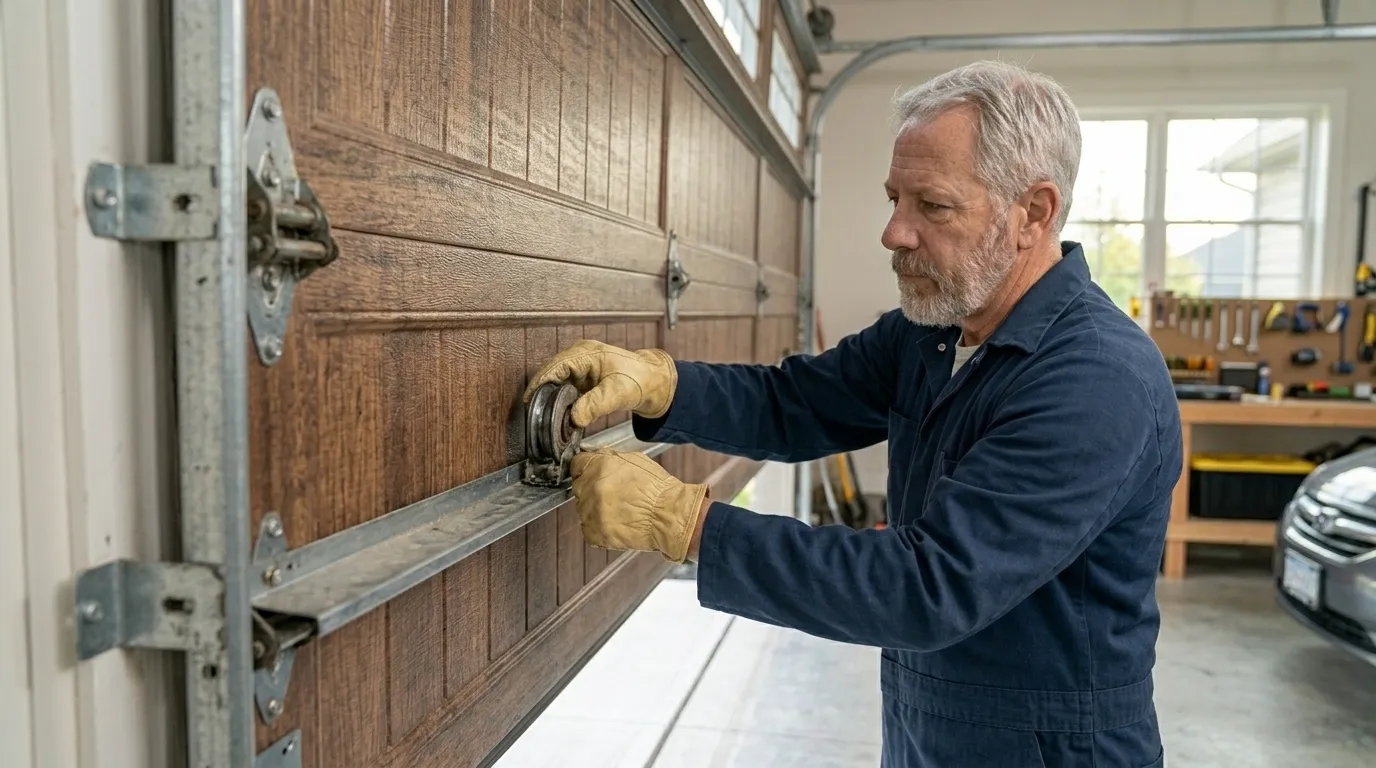
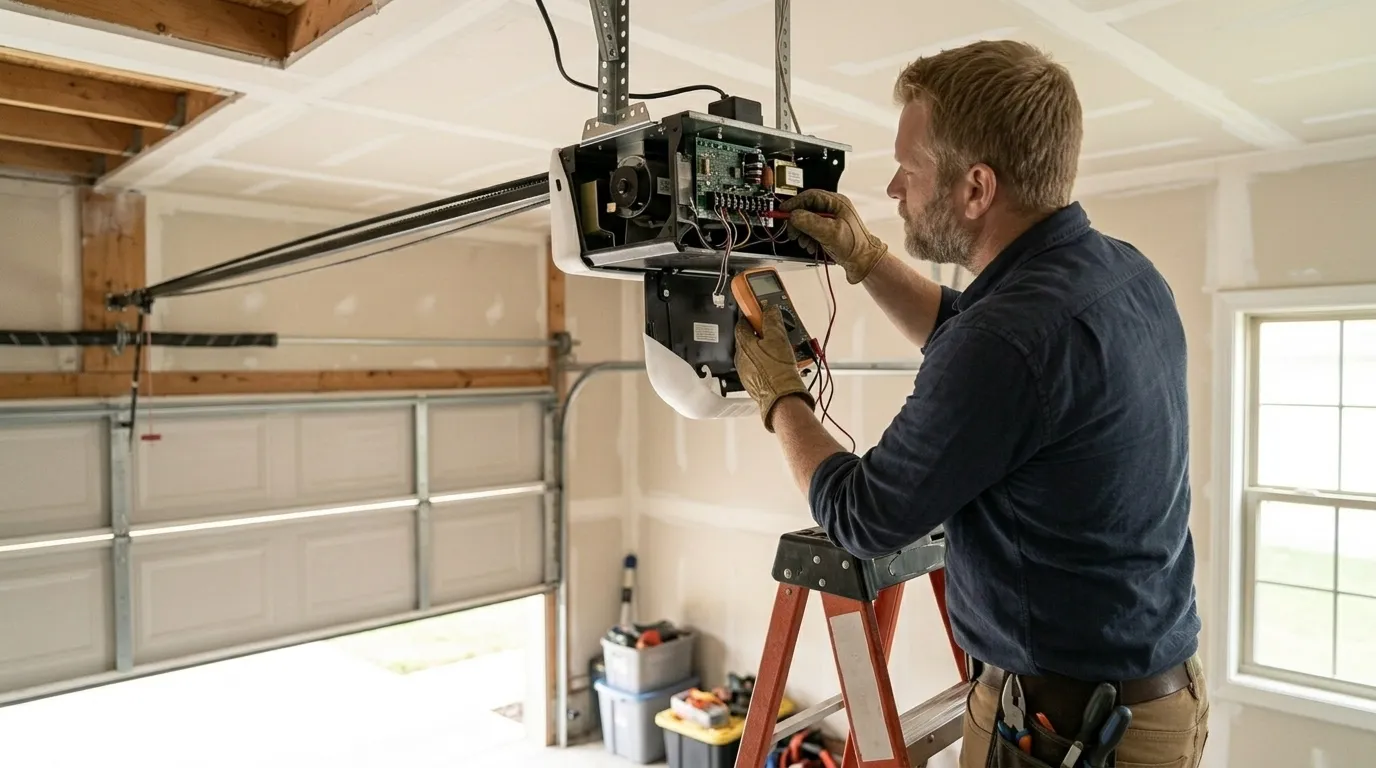
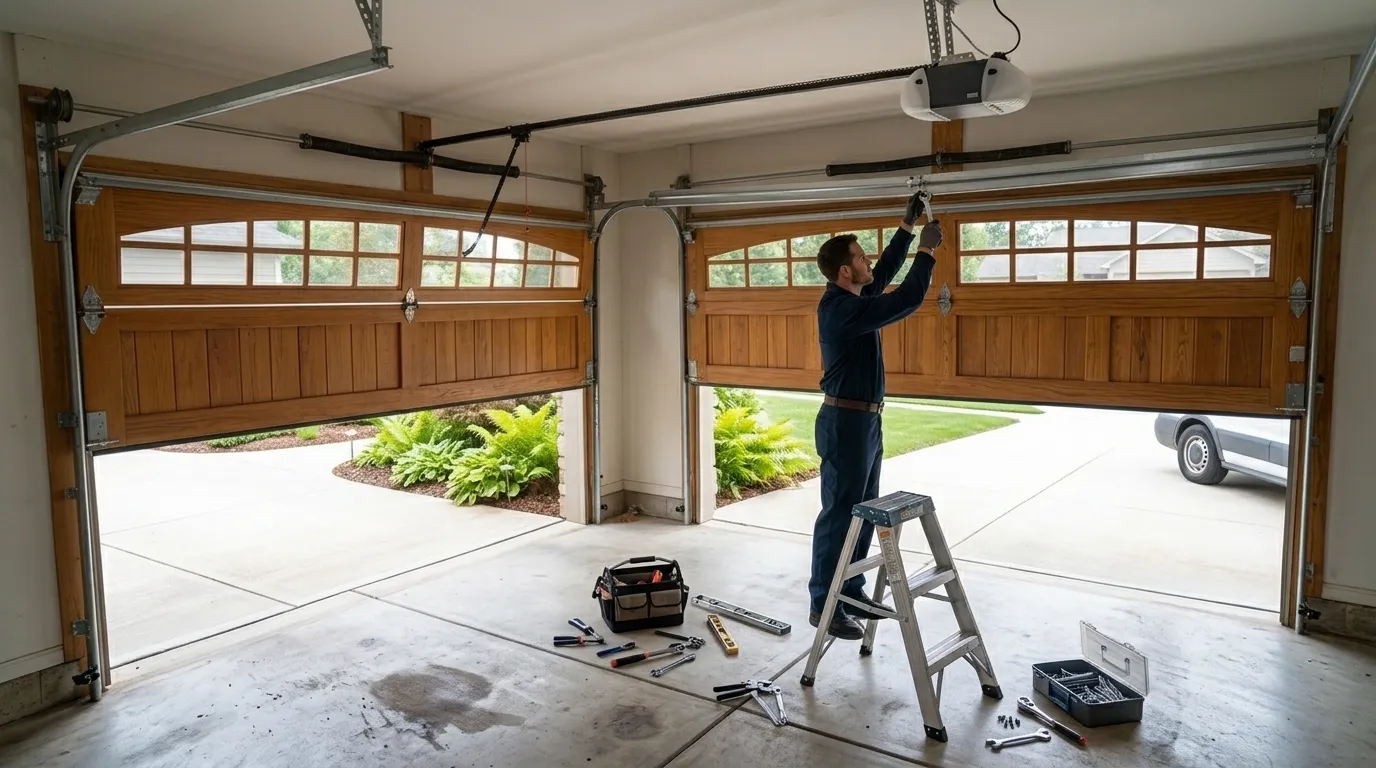
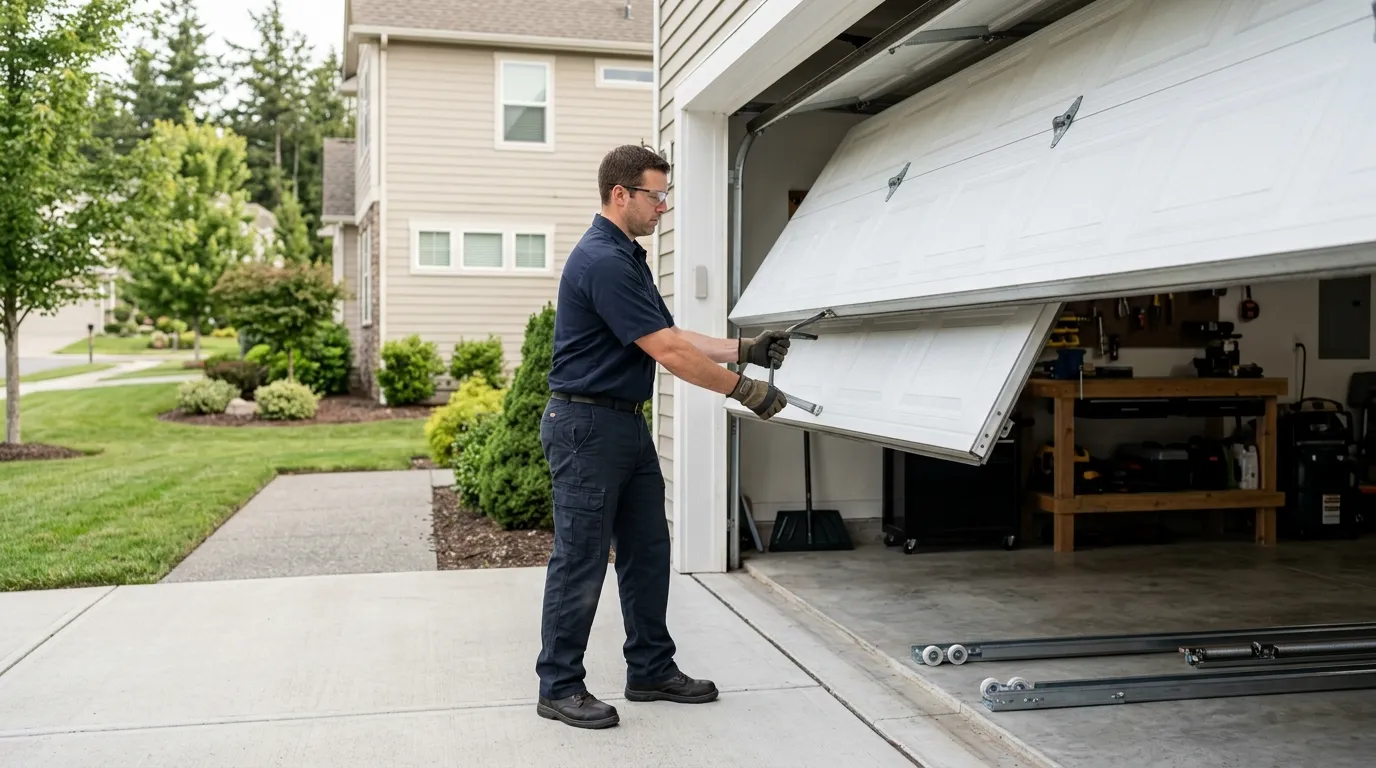
Most commercial calls in this area come down to one of three systems: the torsion spring assembly, the track and roller set, or the opener drive. Commercial sectional doors carry heavier torsion springs than a residential double door, wound to a higher cycle count because a warehouse or fire bay door opens far more times a day than a house door ever will. When a spring goes on one of these, we're not swapping a household part - we're matching wire gauge, wind direction, and drum size to a door that may be 12 or 14 feet wide. Track work on commercial doors means checking the vertical and horizontal sections for the kind of wear that shows up faster with high-cycle use: worn rollers binding in the track, hinges loosening at the panel joints, cable fraying at the drum. Opener work is its own category - chain and jackshaft operators rated for commercial duty need the right horsepower for the door weight, and an undersized unit will burn itself out trying to lift a door it was never sized for. One honest limit: some older commercial spring and drum sizes aren't something we keep on the truck, and a specialty part can mean a short wait while it's ordered - we'll tell you that up front, not after we've started.
The Symptom
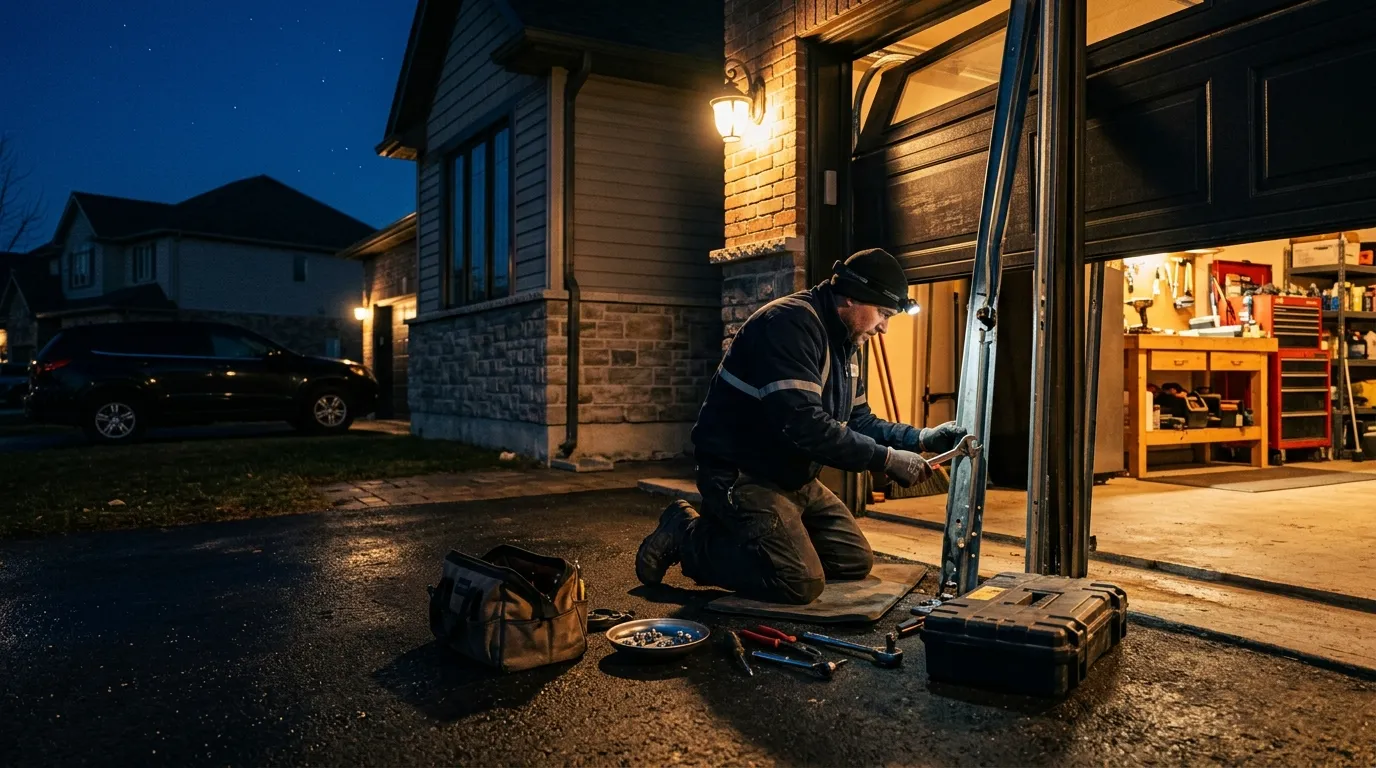
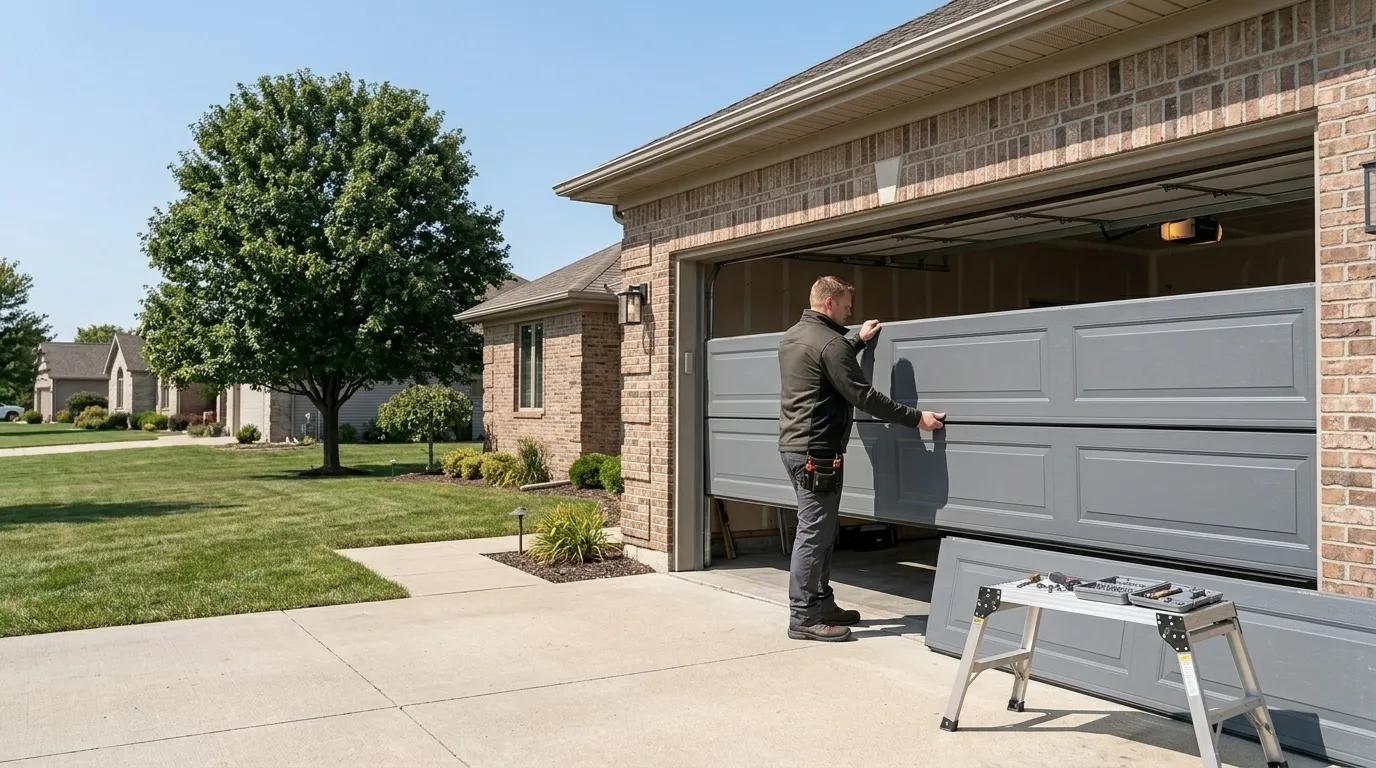
The call usually starts the same way: the door was fine yesterday, and this morning it's fighting the opener, or it's stopped halfway and won't go up or down without someone forcing it by hand. On commercial doors that get used dozens of times a day, that binding shows up first thing in the morning far more than midafternoon - the door sat overnight, the steel and the hardware are at their coldest point of the day, and whatever slack or wear was building up quietly finally catches. Sometimes it's a grinding or popping sound from the spring side right before the door stops moving at all. Sometimes the opener runs but the door barely lifts, which usually means a spring has lost enough tension that the motor is doing a job it wasn't built to do alone. On rolling steel doors the symptom is different - a curtain that stutters or jumps in the guide rather than binding cleanly - but the timing is the same: worse at the first lift of the day, worse in the cold months than the warm ones.
Why This Fails Locally
Springfield sits in a climate band the federal data marks as severe cold, and that's the single biggest reason commercial door hardware here fails on a schedule different from a milder region. Steel torsion springs lose tension through ordinary cycling no matter where they're installed, but repeated freeze and thaw speeds that up - the metal contracts overnight, grease inside bearings and rollers thickens in the cold, and a spring that had another six months left in a mild climate can snap in a Springfield January instead. Track hardware sees the same effect: cold steel is less forgiving of the small misalignments that build up over thousands of cycles, so a roller that would have squeaked along for another season somewhere warmer binds hard here first. The wider region's building stock adds to it - most of the housing near the commercial strips and light-industrial bays we service went up between 1938 and 1989, with a lot of it concentrated in the 1960s and '70s, and the properties built out and wired for garage and bay doors during that stretch weren't speced for cycle counts commercial use puts on a door decades later. None of that means the fix is exotic. It means the spring and track failing on a February morning here is doing exactly what severe-cold-climate steel does under commercial-grade use.
How it works
From “it’s stuck” to “it’s fixed”
1
Tell us what’s wrong
Describe the symptom - won’t open, loud bang, opener runs but the door won’t move.
2
On-site diagnosis
A technician tests the door under power and by hand and finds what actually failed.
3
Clear, up-front plan
You get the fix that’s needed and what drives the cost - before any work starts.
4
Repaired & tested
The repair is done, the door is set true and tested, and the work area left clean.
Serving Springfield, MA - tell us what your door’s doing and we’ll take it from there.
Straight answers about garage door repair in Springfield. Still unsure? Ask us directly.
Do you work on rolling steel doors as well as sectional commercial doors?
Yes, we handle both. Rolling steel curtain doors have a different failure pattern than sectional doors - the symptom is usually stuttering or jumping in the guide rail rather than binding at the spring - but the underlying causes we see locally, cold-stiffened hardware and high cycle counts, affect both types.
Why does our bay door only act up in the mornings?
Overnight cold is the reason. Steel springs and track hardware sit at their coldest and stiffest right before the first lift of the day, which is exactly when built-up wear or a weakening spring finally shows itself. By midafternoon the same door often runs fine, which is why the fault seems intermittent when it isn't.
Can you match the spring size on an older commercial door?
Usually, yes - we measure wire gauge, wind direction, and drum size on site before ordering. Some older or unusual sizes aren't something we carry on the truck, so there can be a short wait for that specific part. We'll tell you that before starting the job, not after.
How far out from Springfield do you go for commercial calls?
Our service area covers Springfield and the surrounding towns, including East Longmeadow, Longmeadow, Wilbraham. Call and give us the location and we'll confirm coverage before dispatching.