Can You Do This Yourself
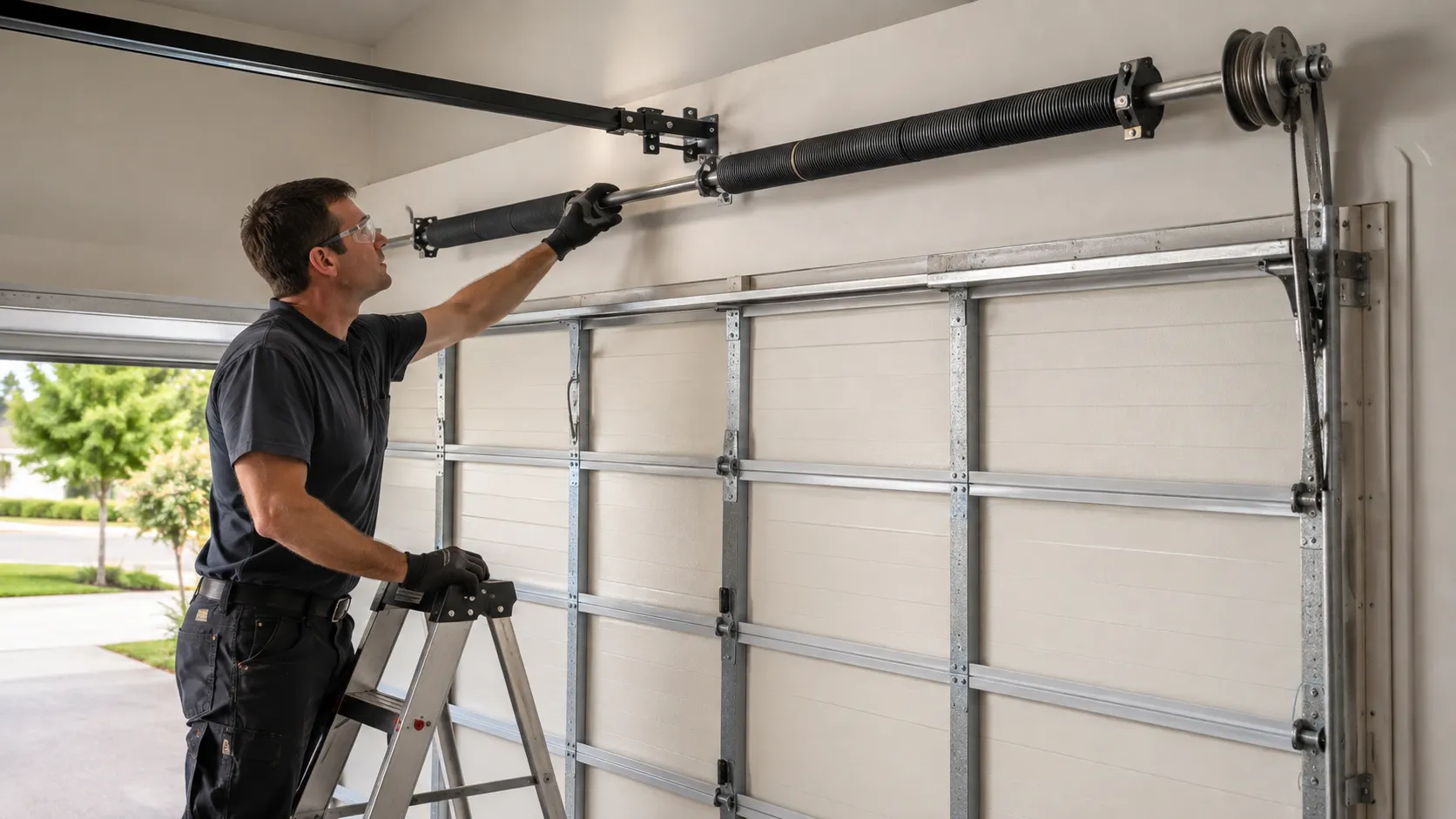
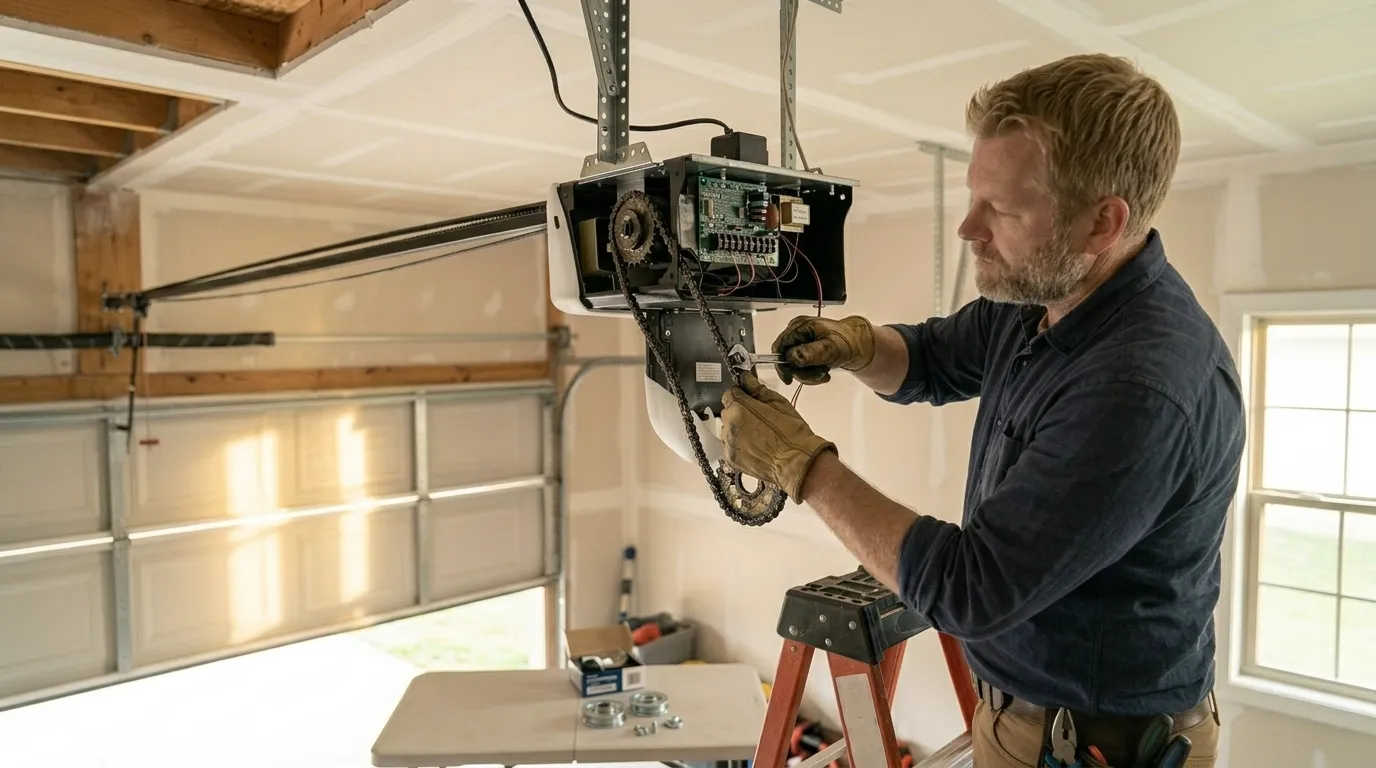
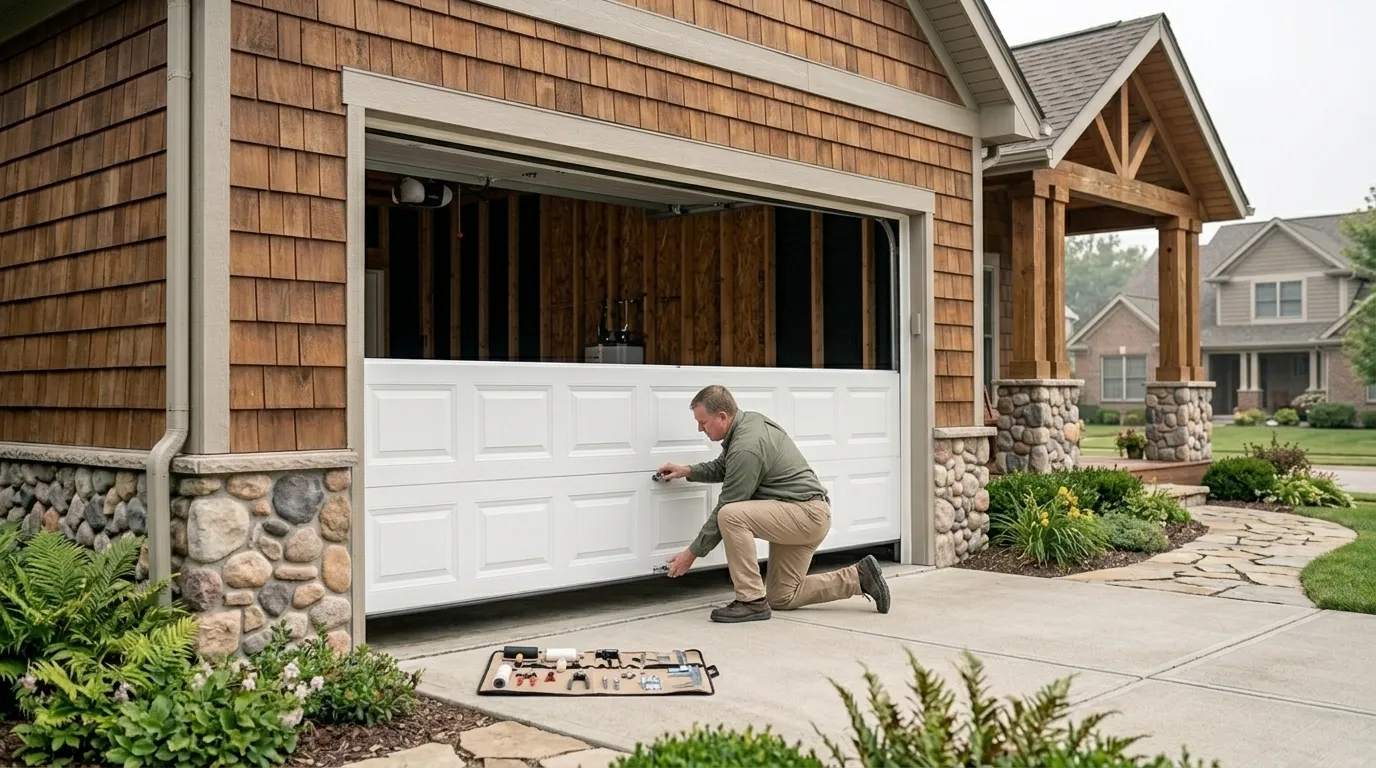
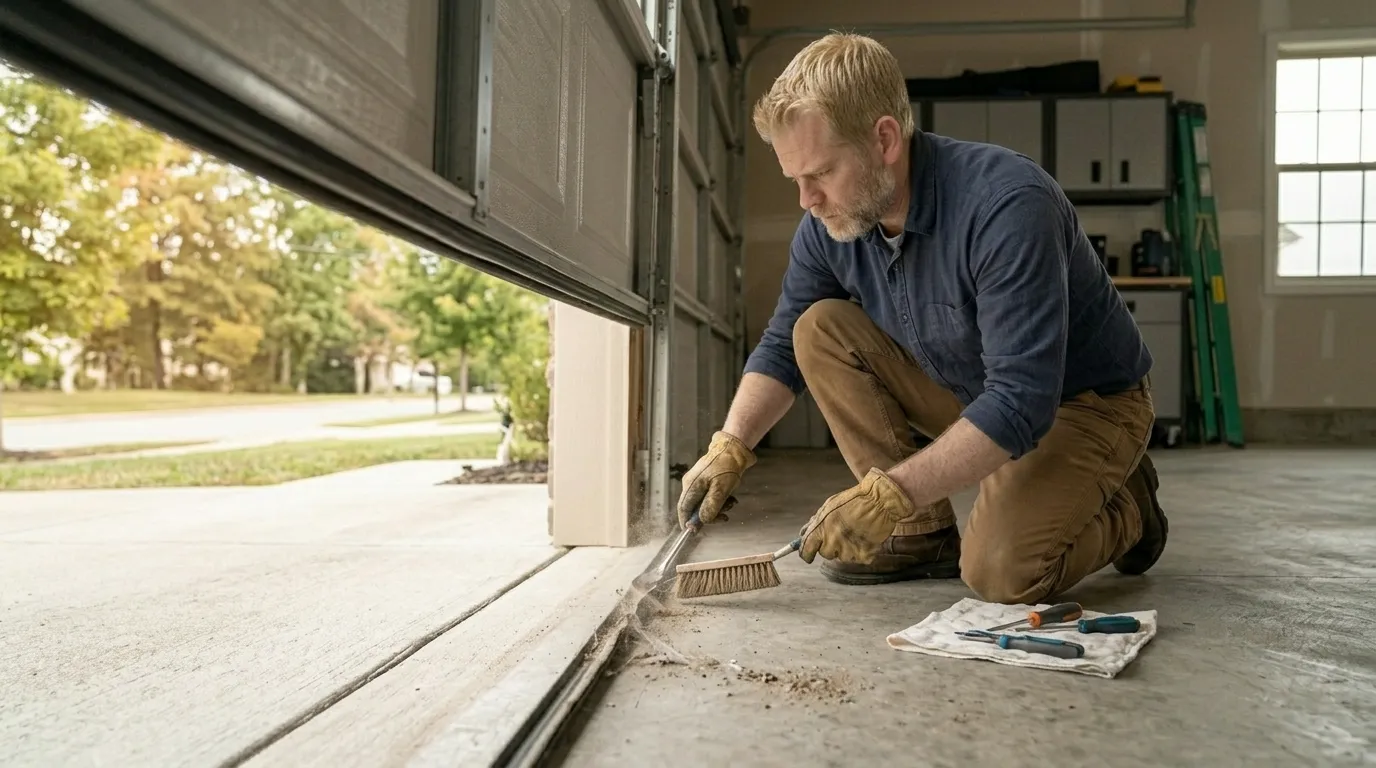
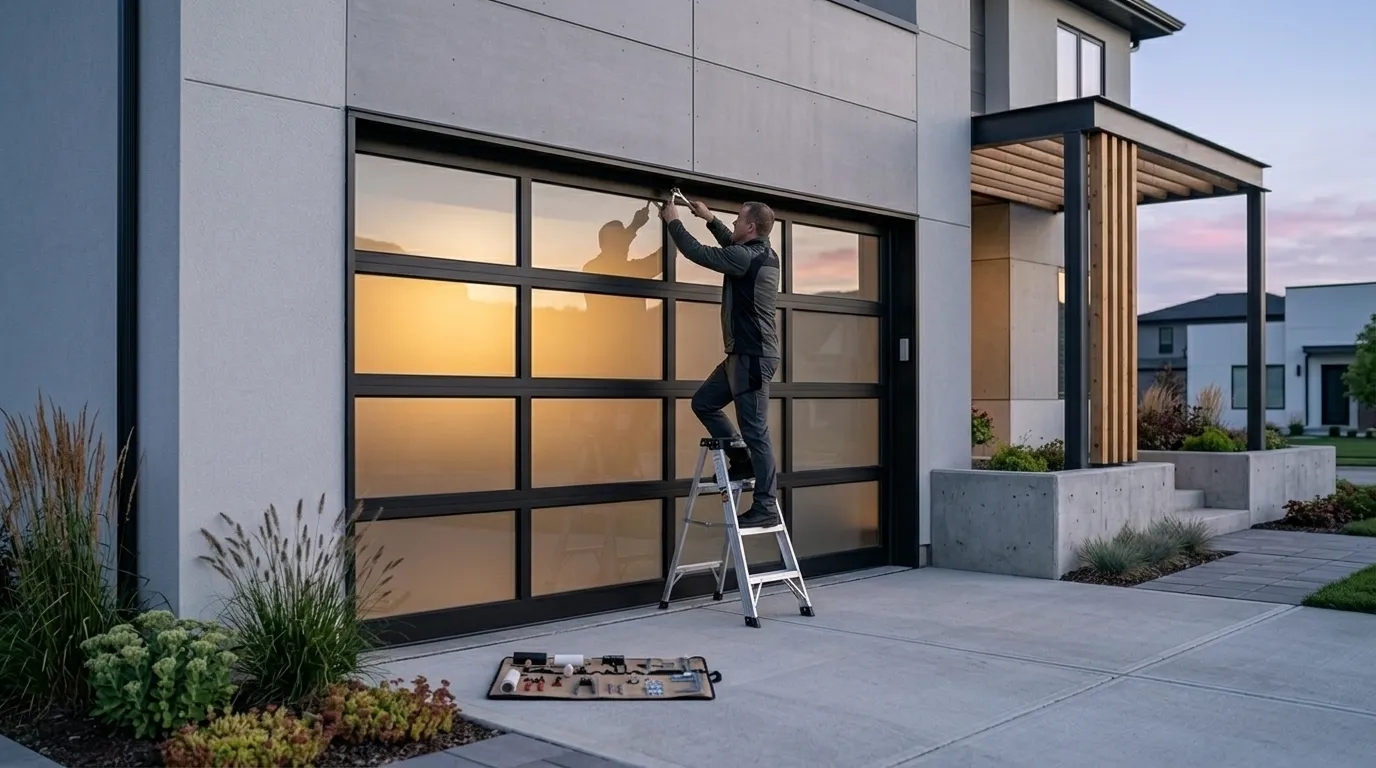
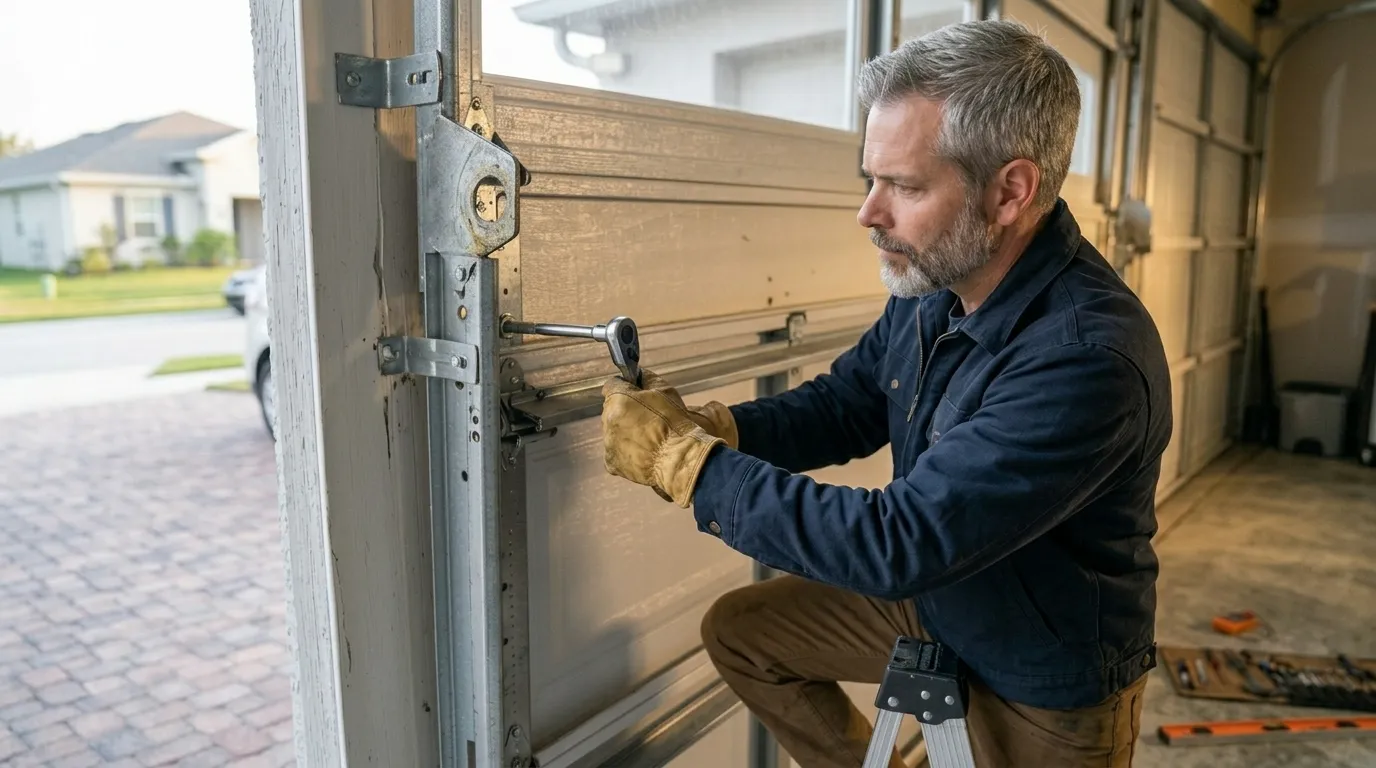
Some of it, yes. Lubricating rollers and hinges, tightening loose hardware, clearing the track of debris - all reasonable weekend jobs on any door, this town's stock included. What we don't recommend touching yourself is anything involving a wound spring, whether it's the extension type common on these older 1950s installs or a torsion spring on a later retrofit. Extension springs under tension can whip hard enough to break a hand or a window, and on an older bracket that's already fatigued, the failure point isn't always where you'd guess. If your opener is original to a house built before 1960, the wiring and the safety reversal sensor - if it even has one - may not meet current expectations, and that's not a DIY rewiring job. Know the limit: adjustment and cleaning, yes; anything under spring tension or involving the opener's electrical side, call it in.
Parts We Carry
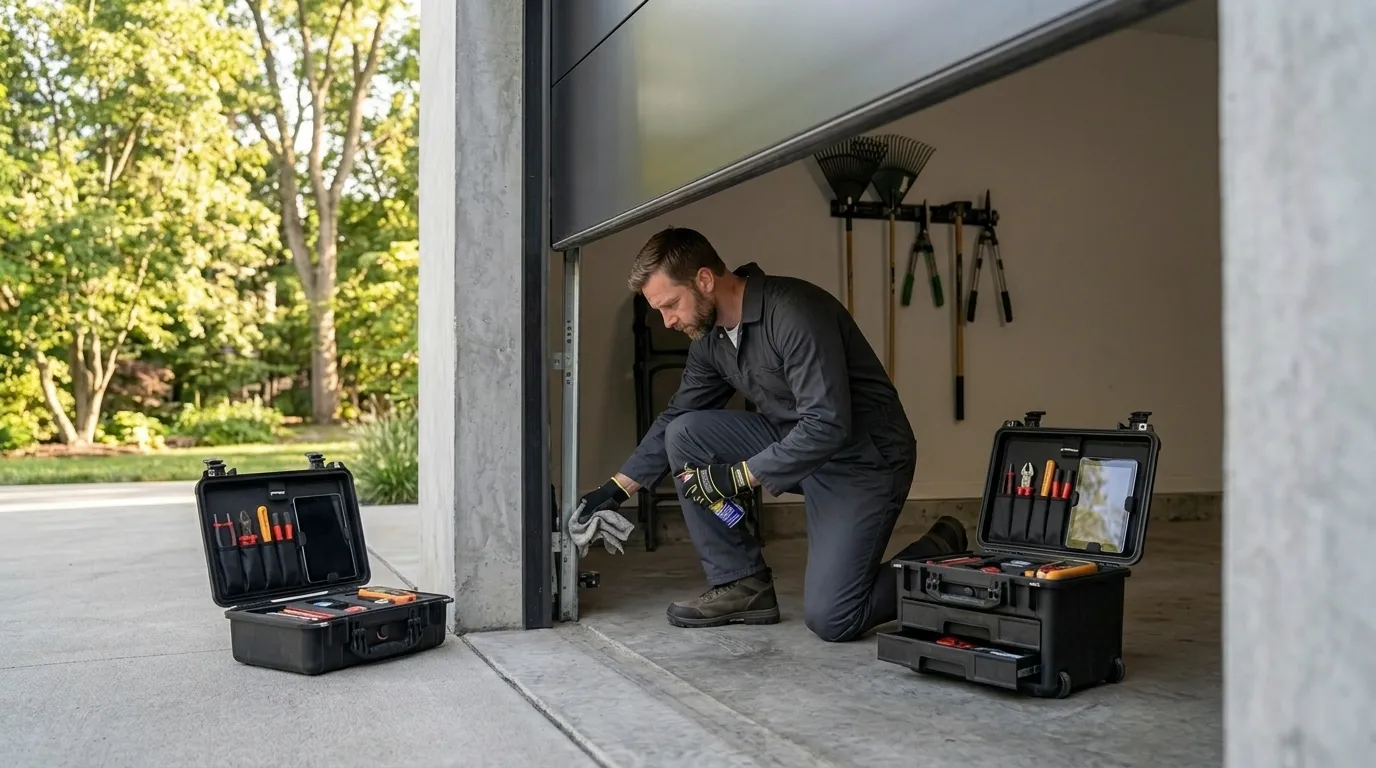
We stock hardware that fits both eras you'll find in this area - later torsion setups and the older extension-spring systems still running on houses built before the neighborhood's 1957 median crept up. That means extension springs sized for one-piece and older sectional doors, replacement cables and pulleys for overhead-mount systems, and rollers and hinges that match jamb clearances tighter than what you'd see on newer construction. We also carry standard torsion springs, cables, and track sections for the doors that got upgraded along the way. One honest limit: if a door needs a specialty panel matched to an original 1950s or 60s tilt-up that's no longer made, we may need to order it, and that's a lead time we don't control - we'll tell you upfront if that's the case rather than promise a same-day fix on a part we don't have.
Why This Fails Locally
The area's median household income sits at $144,639, well above the wider service region's $93,808, and that shows up in a specific way: more owners here replaced original openers and hardware piecemeal over the years rather than letting a whole system go, which means a lot of doors are a patchwork of a 1957-era frame, a 1990s spring conversion, and a 2010s opener - three eras on one door. That mismatch is where a lot of the odd failures come from: a modern opener straining against an old, unbalanced door, or a newer spring fighting a track that was never squared to begin with. It's a smaller town too - 5,711 households against the region's roughly 98,737 - so the housing stock reads more uniform street to street, but the retrofit history behind each door doesn't always match its neighbor's.
Time on the Job
A straightforward spring swap or cable replacement on one of these doors runs about the same as it would anywhere - it's the diagnosis that takes the extra time here. Because so many doors carry mixed-era hardware, we spend more of the visit checking whether the bracket, track, and opener are actually compatible with each other before we replace the failed part. On a door where everything matches its era, the job moves quickly. On one where a later opener was bolted onto original 1950s hardware, we may find a second issue once we're inside the mechanism, and we'll always tell you before doing extra work, not after. We travel the 5 miles from our Springfield base for every call here - there's no local branch, just the truck and the parts on it.