Serving Springfield, MA & nearby
(413) 558-8450
Springfield, MA

What Cold Actually Does to a Springfield Garage Door

Most Springfield garage doors date to the 1960s. Here's what the cold does to that hardware and why weather seals and draughts matter more here than the sales pitch admits.

What Cold Actually Does to a Springfield Garage Door

The Situation

Walk through you're mostly looking at houses built between 1938 and 1989, with the bulk going up in the 1960s and 70s. That's the housing stock across the whole service area, around out. A door built or replaced during that stretch was matched to hardware standards of its decade, and a lot of those openers, tracks, and torsion setups are still doing the job, just older than the warranty ever expected.

The issue isn't that these doors are bad. It's that they were built for a winter that's arrived every year since without much say in the matter. Springfield sits in a cold-severe climate band, and a door assembly from 1965 wasn't engineered with today's weatherstripping compounds or insulation cores. The steel is fine. The seals, the vinyl astragal at the bottom, the perimeter weather seals - those are consumable parts, and on a house this age they've usually been replaced once, maybe never.

That gap between when the door went in and when the seals were last touched is where the cold gets. It's not dramatic. It's a slow leak of warm air and a slow intake of moisture, and it shows up as a stiff track in January before it shows up as anything else.

Checking It Yourself

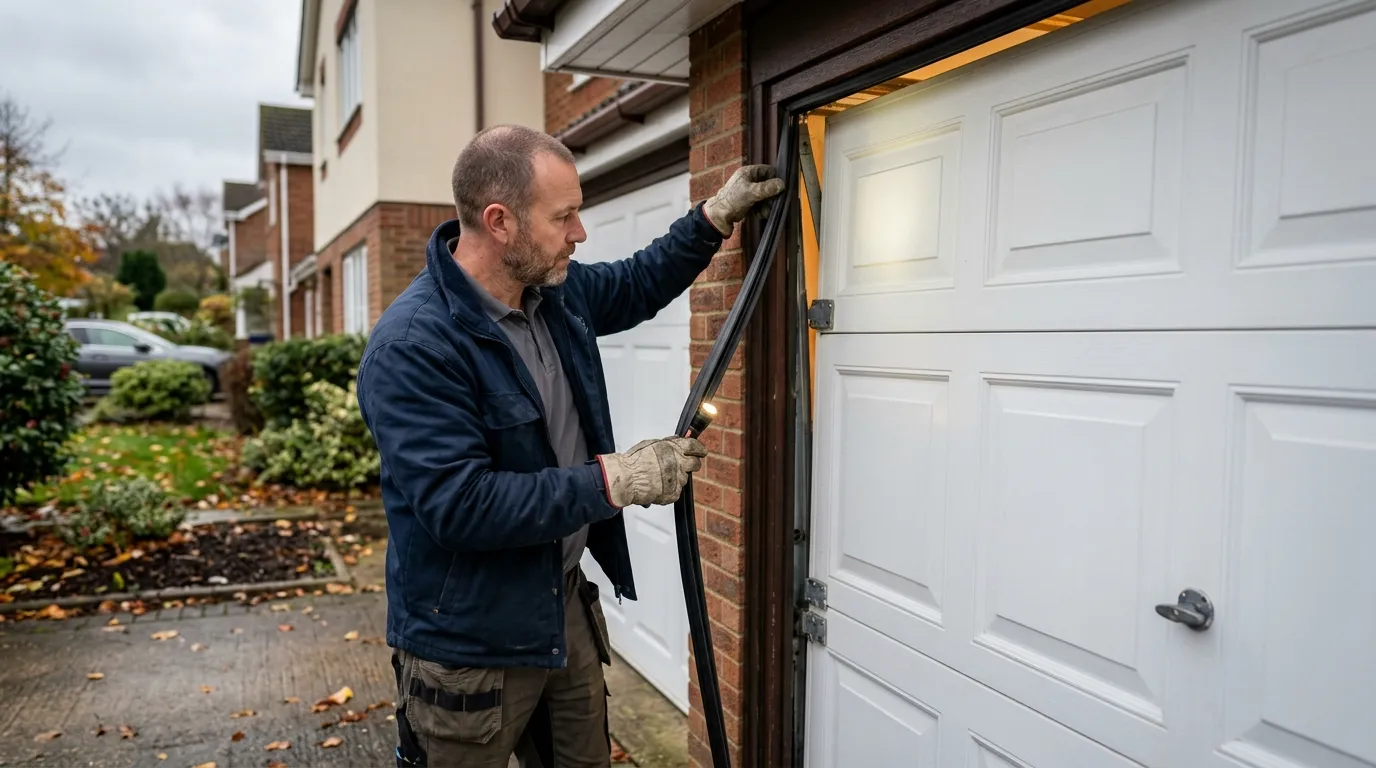
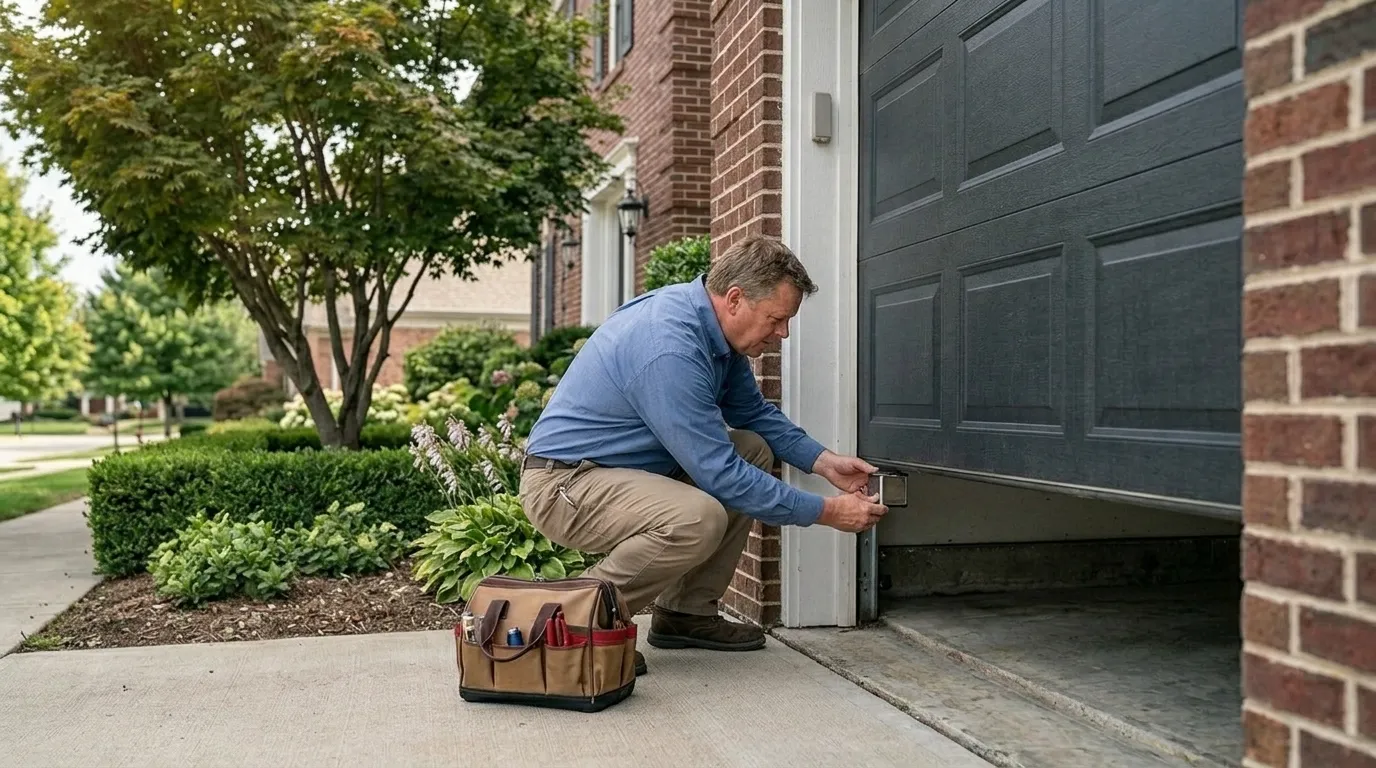
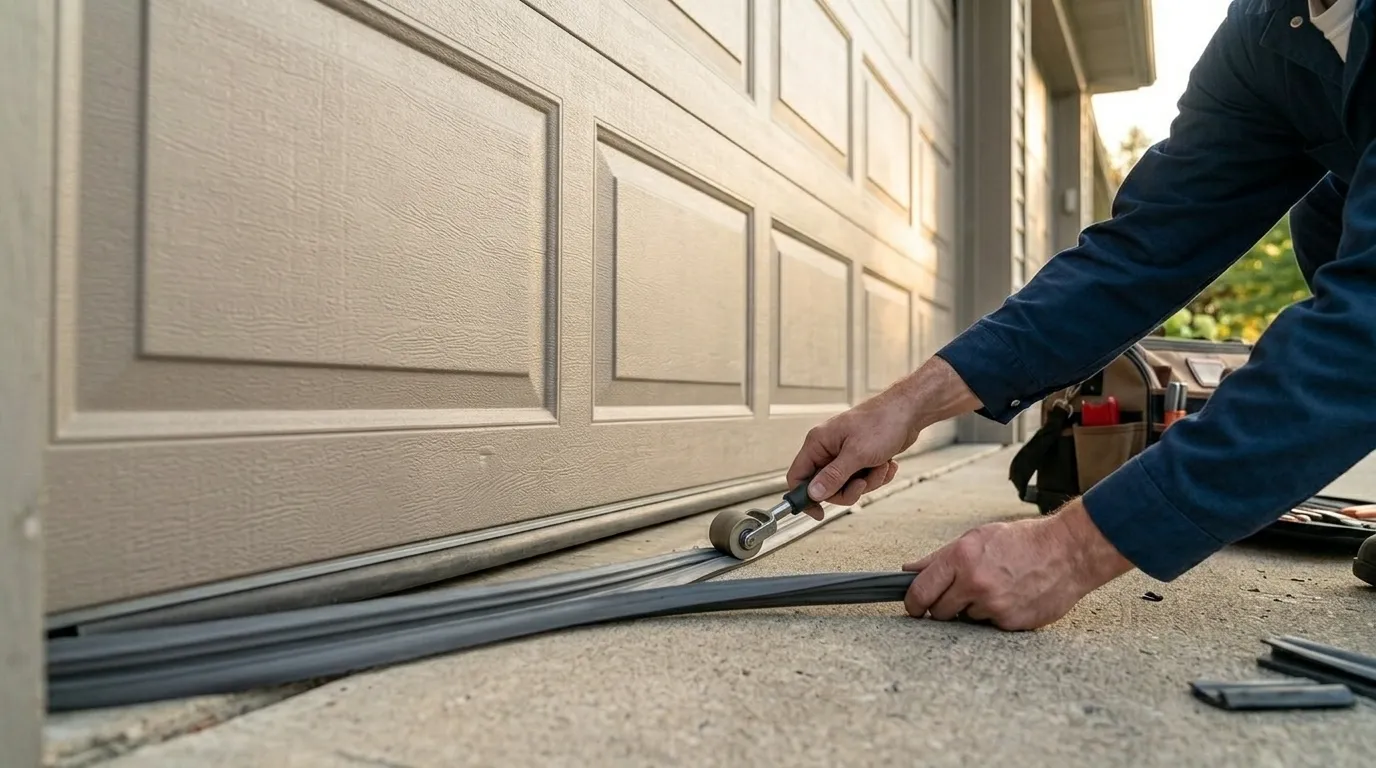
Start at the bottom seal. On a 1960s-era door in this climate band, the rubber gasket along the floor is the first thing to harden and crack, and a hardened seal lets cold air and meltwater straight into the garage. Press a thumb into it - if it doesn't flex back, it's done.

Next, run your hand along the side and top weather seals where the panel meets the frame. On older tracks and jambs that have shifted slightly over sixty years of freeze-thaw, you'll often feel a draught before you see daylight through the gap. That draught is the tell.

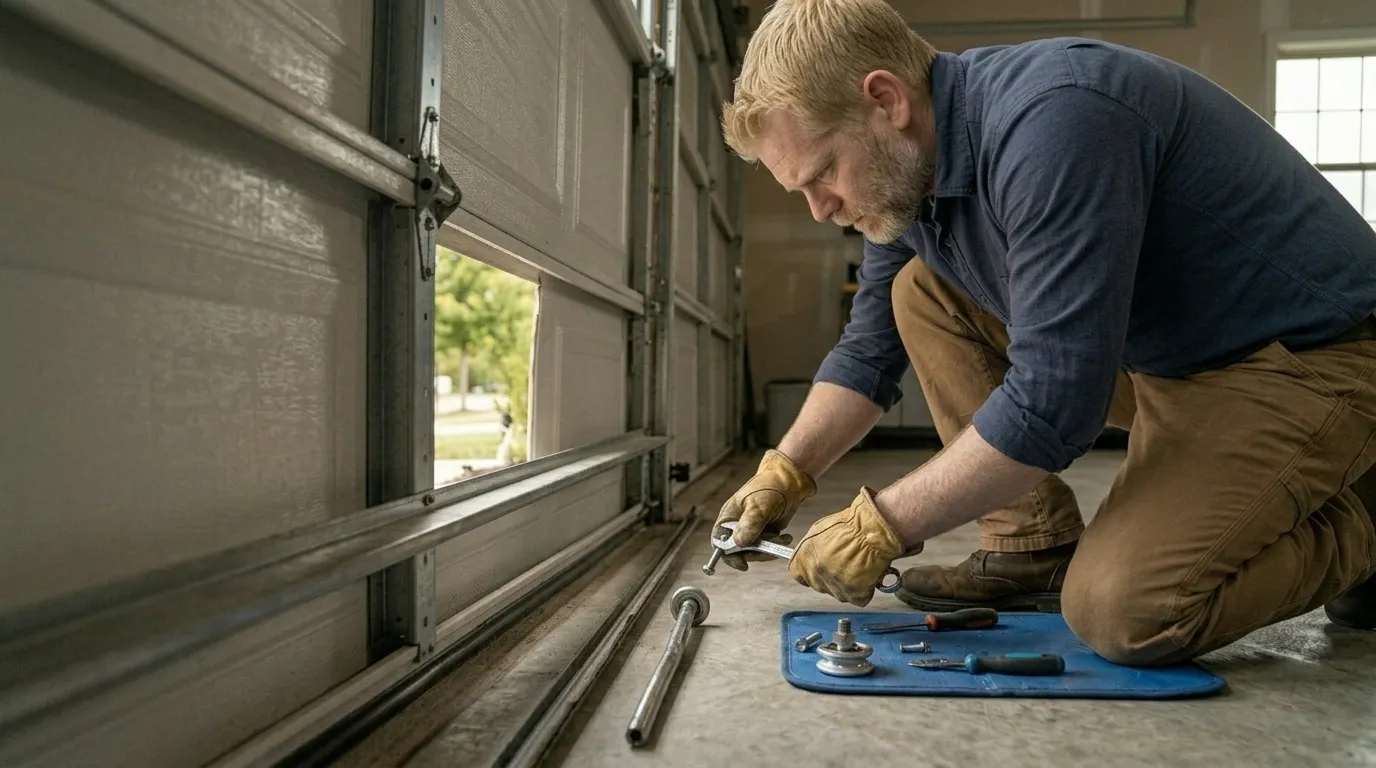
Then look at the torsion spring and cable. Cold makes steel more brittle, not less, and a spring that's cycled through decades of severe winters is closer to its fatigue limit than its rating card suggests. You're not diagnosing a break, you're looking for rust bloom at the coil ends and any fraying on the cable near the drum. If either shows up, that's not a weekend fix - that's a call.

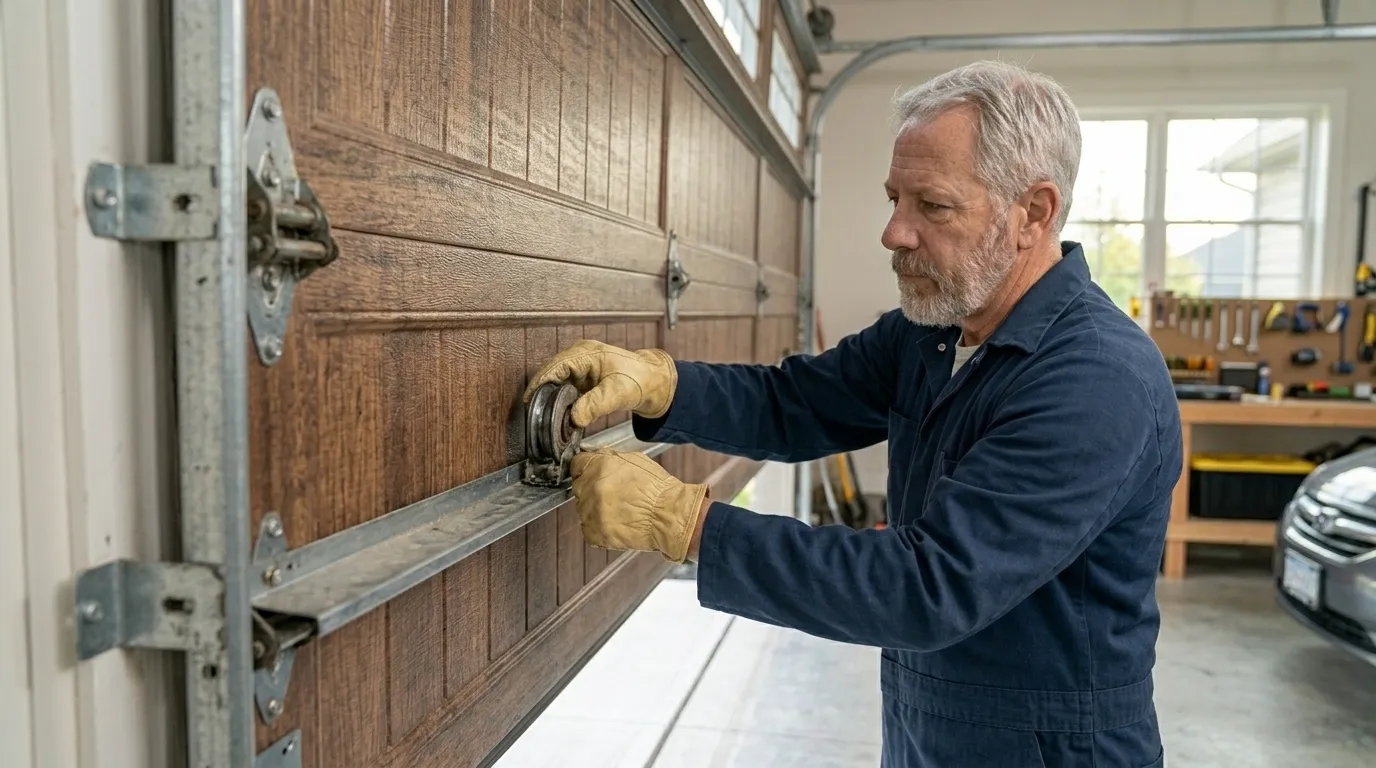
Last, listen to the opener. A motor working harder in cold months because the door's binding on ice-stiffened rollers will hum different than it did in July. That change in sound is data, not paranoia.

The Common Mistake

The mistake we see most in houses across this service area - out toward Wilbraham - is treating the weather seal like cosmetic trim instead of the only thing standing between the garage and outside air. People replace the opener, tighten the track, even swap a spring, and leave the original 1960s-vintage bottom seal because it still looks intact from three feet away.

A cracked or compressed seal doesn't fail all at once. It fails by degree, and each degree costs you in ice buildup on the slab, in a door that drags in January, and eventually in a track that's been fighting frozen rollers long enough to bend. By the time the door won't open, the seal problem has usually been visible for two winters.

We won't tell you a $12 seal fixes every cold-weather symptom. If the track's already out of plumb or the spring is showing wear, the seal is necessary but not sufficient, and no amount of new weatherstripping substitutes for correcting hardware that's genuinely tired. That's the honest limit of a seal job: it stops air, it doesn't straighten steel.

What the Weather Here Does to It

Cold-severe means real freeze-thaw cycling, not just a couple of hard frosts. Across the 27 areas we cover, from to that cycling is what actually breaks garage door hardware - not one cold night, but the repeated contraction and expansion of steel track, aluminum panel skin, and rubber seals over a whole season.

On a house built in the median year of 1965, the track brackets have absorbed sixty winters of that movement. Fasteners work loose a sixteenth of an inch at a time. Torsion springs lose a little temper with every hard freeze. None of it is sudden. All of it adds up in a climate band this severe.

Weather seals and draughts are the visible symptom of that slower mechanical fatigue. If your door feels stiffer every December, that stiffness is the same cold-driven wear working on the parts you can't see as much as the ones you can.

How it works

From “it’s stuck” to “it’s fixed”

  1. 1
    Tell us what’s wrong - Springfield garage door service

    Tell us what’s wrong

    Describe the symptom - won’t open, loud bang, opener runs but the door won’t move.

  2. 2
    On-site diagnosis - Springfield garage door service

    On-site diagnosis

    A technician tests the door under power and by hand and finds what actually failed.

  3. 3
    Clear, up-front plan - Springfield garage door service

    Clear, up-front plan

    You get the fix that’s needed and what drives the cost - before any work starts.

  4. 4
    Repaired & tested - Springfield garage door service

    Repaired & tested

    The repair is done, the door is set true and tested, and the work area left clean.

Serving Springfield, MA - tell us what your door’s doing and we’ll take it from there.

4areas covered
How we work

What to expect

Diagnosis firstEvery visit starts by finding what actually failed - not a pre-written parts list.
The right part for the doorSprings and openers matched to the door’s weight and age, so the fix holds up.
Straight answersWhen a repair makes more sense than a replacement - or the reverse - you hear it plainly.
Clean, careful workTension released safely, hardware set true, the door tested under power before we leave.
What we do

Garage Door Services

Repair and installation work for Springfield homes and businesses.

Garage Door Repair in Springfield

Garage Door Repair

Broken spring or off-track door in Springfield, MA? We work on the 1960s-70s torsion hardware common across the city's older housing stock. Book a repair call today.

Learn more
Garage Door Installation in Springfield

Garage Door Installation

Springfield Garage Door Pros installs new garage doors built for homes from the 1938-1989 boom, sized for our cold winters and Springfield's older openings.

Learn more
Garage Door Service in Springfield

Garage Door Service

Springfield Garage Door Pros fixes the spring and cable failures common in Springfield's 1960s-era housing stock, built for a cold-climate winter that ages hardware fast.

Learn more
Opener Installation in Springfield

Opener Installation

Opener installation for Springfield's 1960s-era garage doors, built for New England cold. Serving homes across the greater Springfield area since the housing here went up.

Learn more
Off-Track Repair in Springfield

Off-Track Repair

Off-track garage doors are common in Springfield's 1960s-70s housing stock. We straighten track, reset rollers, and check cables across the Springfield area.

Learn more
Panel Replacement in Springfield

Panel Replacement

Cracked or dented garage door panels are common on Springfield's 1960s-70s housing stock. See how panel replacement works, what it costs to skip it, and how to book.

Learn more
Commercial Garage Door in Springfield

Commercial Garage Door

Commercial garage door repair in Springfield, MA: torsion springs, tracks, and openers fixed for warehouses and loading docks in our severe cold climate.

Learn more
Emergency Garage Door Repair in Springfield

Emergency Garage Door Repair

Broken spring, stuck door, or dead opener in Springfield, MA. Local crew that knows the 1960s housing stock and cold-climate hardware failures common here.

Learn more
Questions

Frequently asked

Straight answers about garage door repair in Springfield. Still unsure? Ask us directly.

Is it normal for my garage door to feel harder to lift in winter?

On houses from the 1960s-70s stock common across this area, yes - cold-severe winters stiffen torsion springs and can cause rollers to bind slightly on chilled track. If it's dramatically harder or grinding, that's past normal and worth a look before the spring or cable takes the strain instead.

How often should I replace the bottom weather seal?

There's no fixed interval in the code, but on original 1960s-era doors we typically see the seal hardened and cracked well before anything else fails. Check it every fall before the freeze-thaw cycle starts; if it doesn't flex back under thumb pressure, it's not sealing anymore.

Will new weatherstripping fix a door that drags all winter?

Sometimes, but not always. If the drag is from a hardened seal, yes. If the track's out of plumb or the spring is fatigued from decades of cold cycling, a new seal helps but doesn't solve the underlying hardware problem - that needs a separate repair.

Ready to get your garage door sorted?

Tell us what it’s doing and where you are in Springfield - we’ll take it from there.

Request a QuoteCall