East Longmeadow's commercial buildings date to the same 1960s wave as its houses. Springfield Garage Door Pros repairs the steel sectional doors and hardware that era left behind.
Most commercial buildings in East Longmeadow went up around the same time as the houses nearby, with a median build year of 1965. That means a lot of the sectional steel doors on shops, garages, and small warehouse bays here are original or close to it: uninsulated 24-gauge steel skins, single-layer panels, standard 10x10 or 12x12 openings sized for the trucks of that decade. The symptom shows up as sag in the middle of the door when it's down, a grinding chain hoist that used to run quiet, or a bottom seal so compressed it no longer touches the slab. In a cold-climate service area like this one, that gap under the door isn't cosmetic - it's where the heat goes and where ice forms on the track threshold overnight. Owners usually notice it first as a draft near the office door that shares a wall with the bay, or as a spike in the heating bill they can't otherwise explain. The door hasn't broken yet in the sense of stopping - it still opens and closes - but the seal, the spring set, and the panel skin are all past what they were built to do, and each one is failing at a different rate.
What the Fix Involves
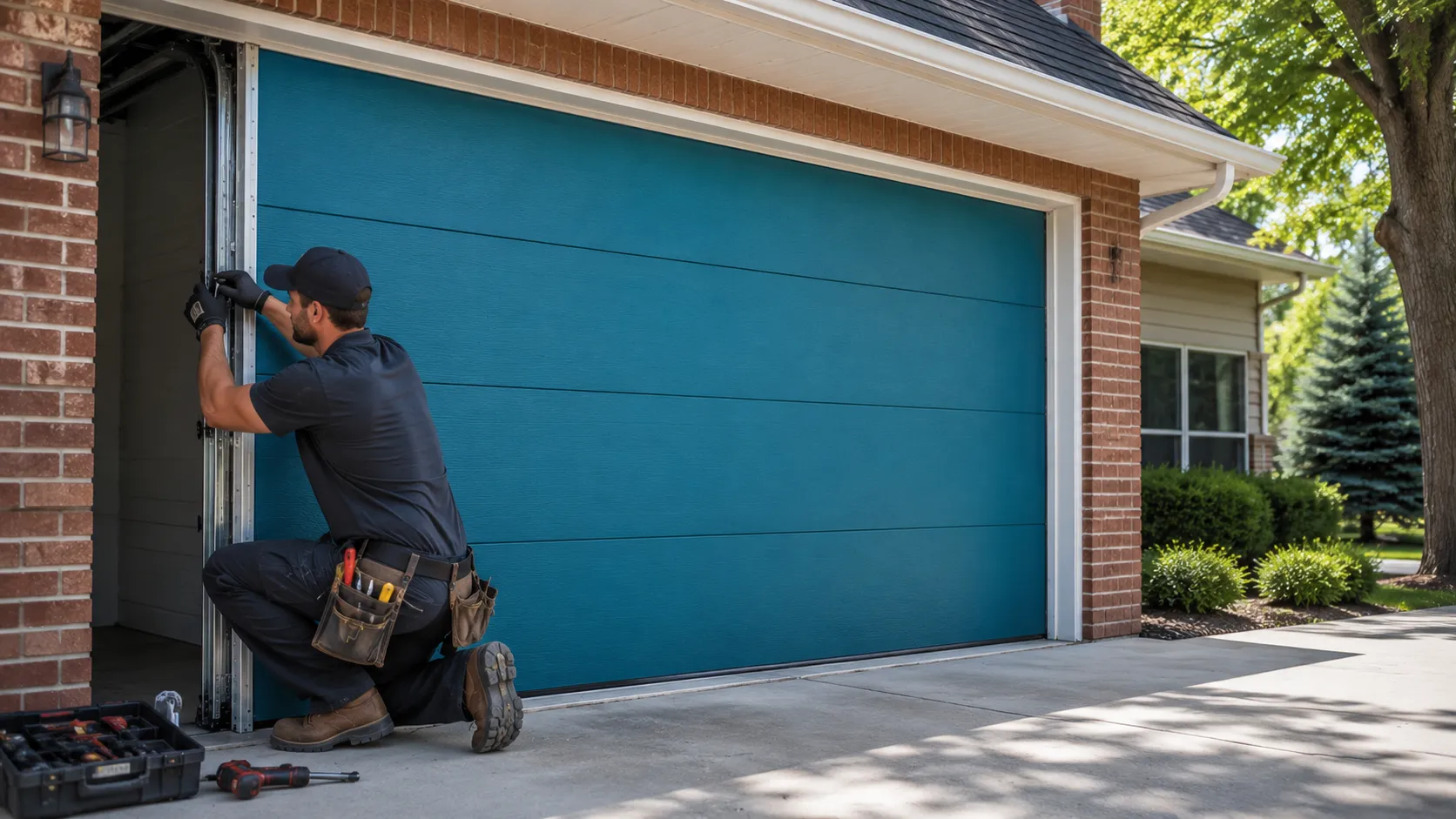
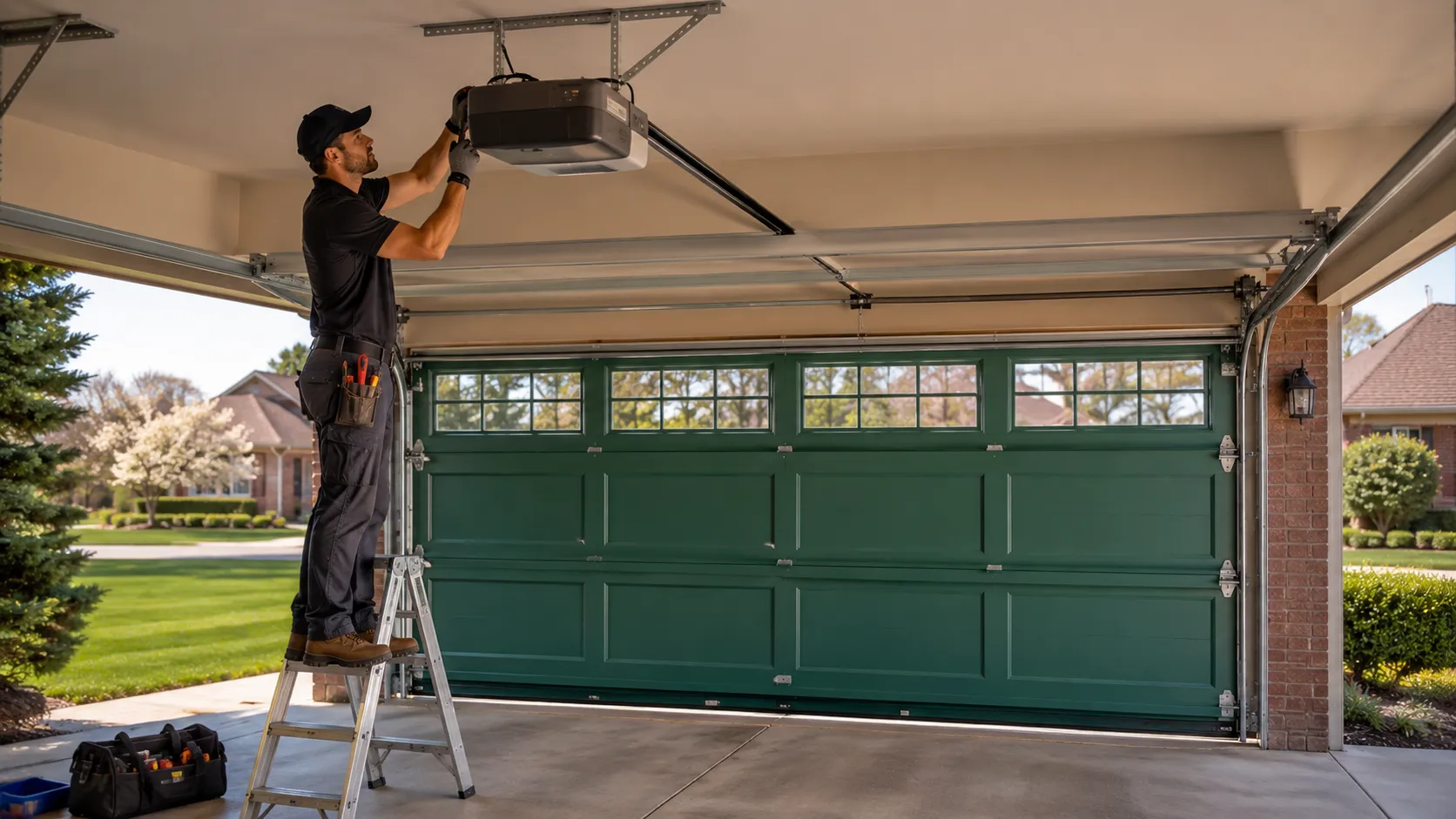
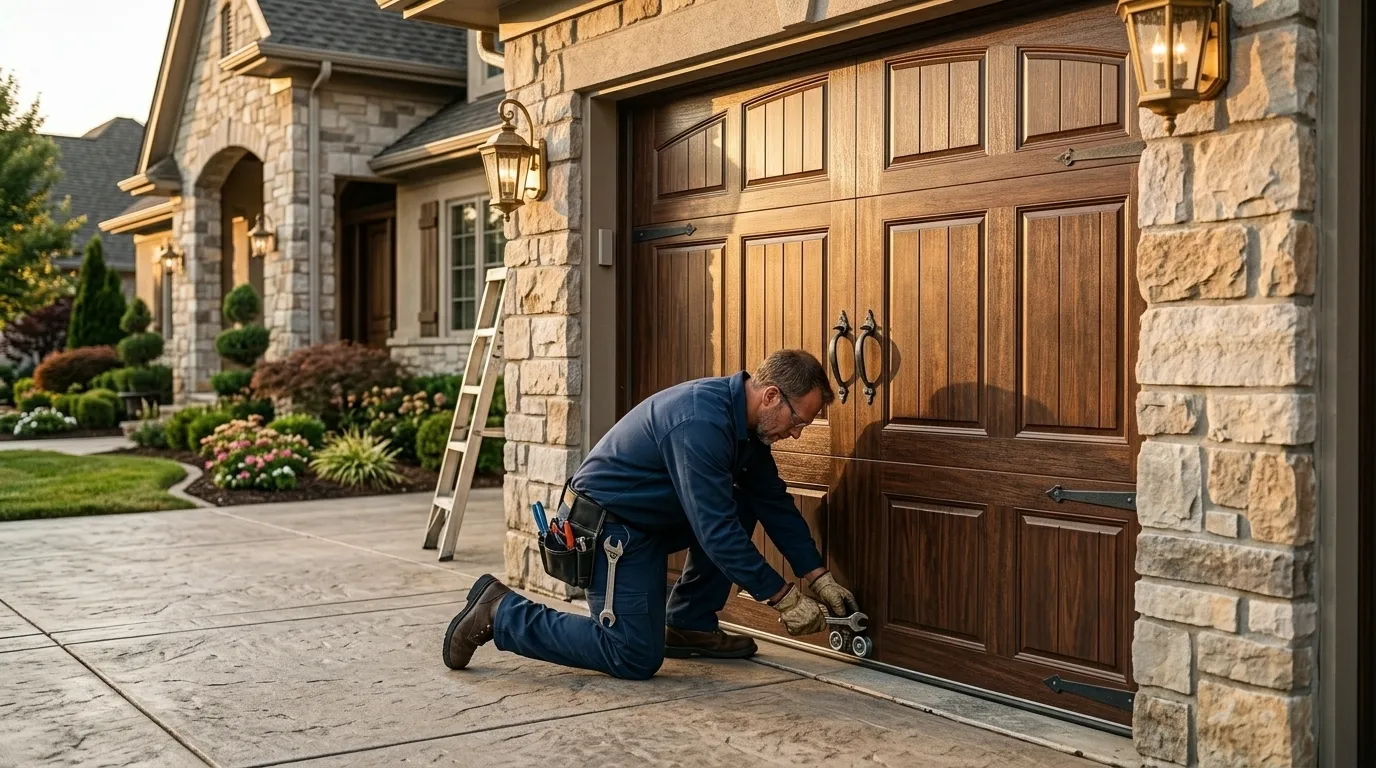
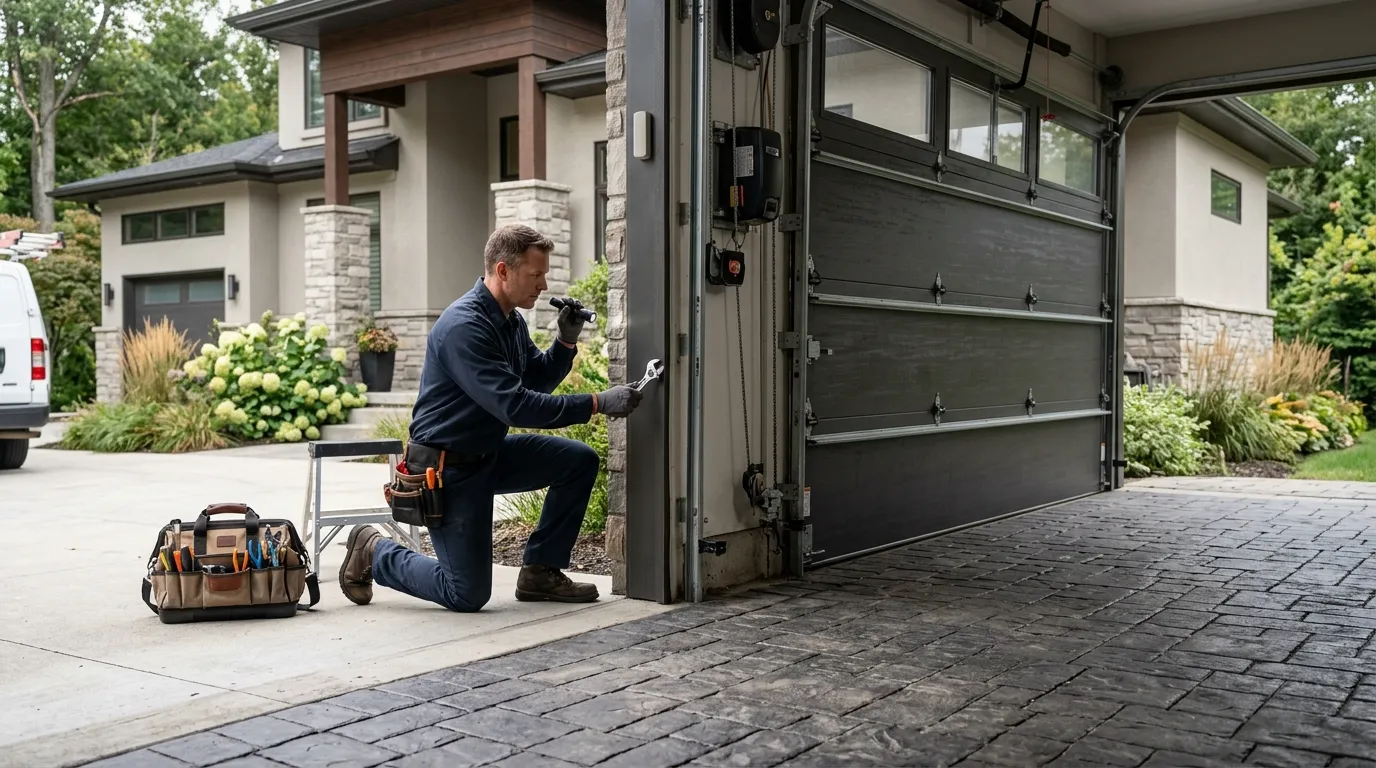
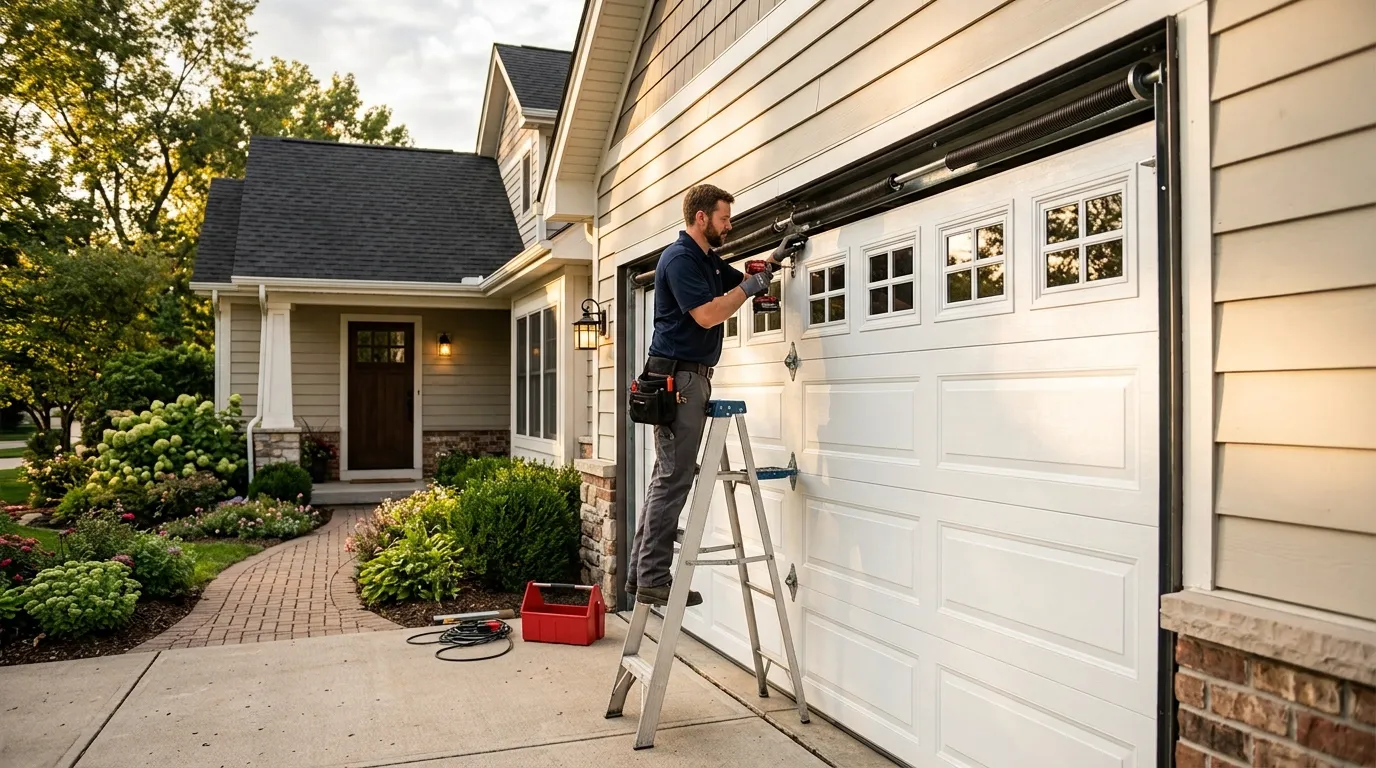
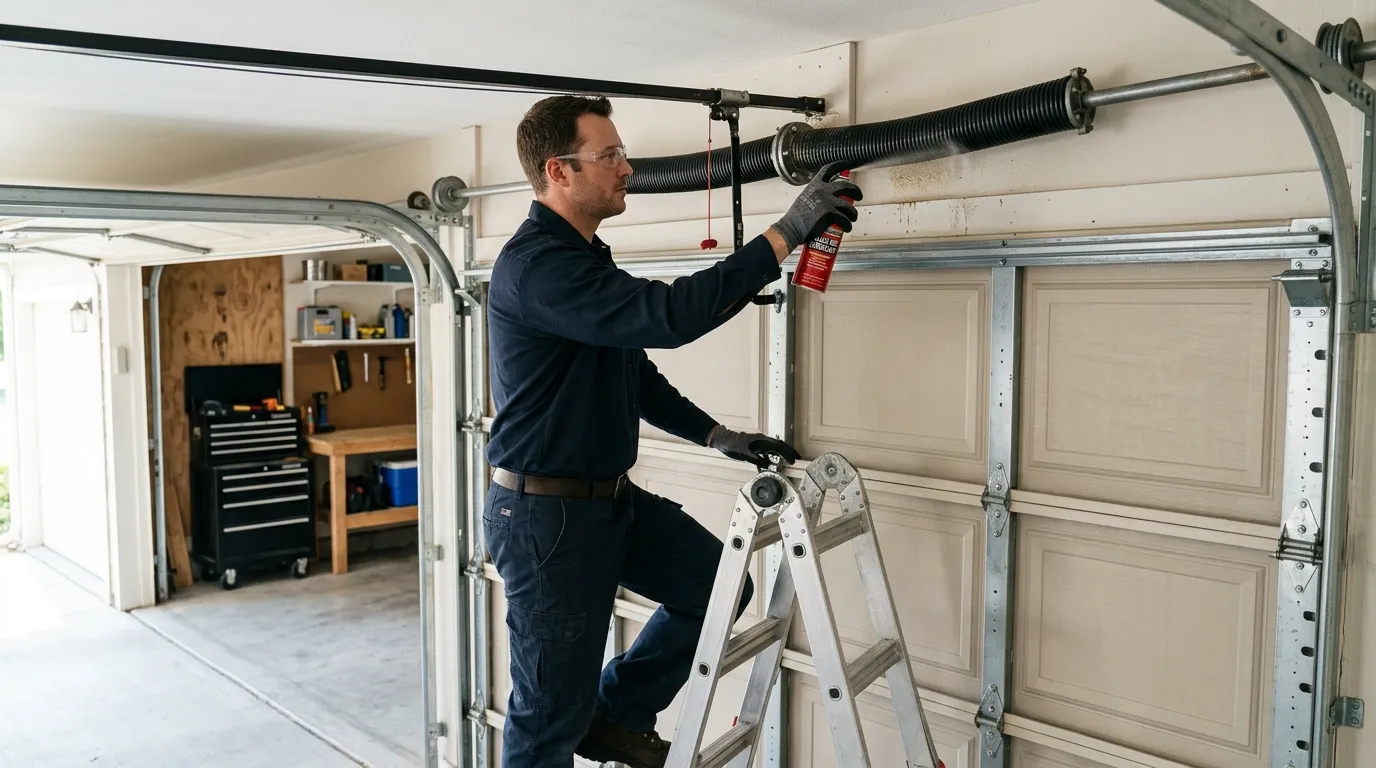
We come from Springfield, about 4 miles out, so there's no separate branch or standing crew stationed in East Longmeadow - every job here is a truck run, and that's worth knowing before you call expecting a walk-in counter. For a commercial door of this age, the fix usually starts with the spring set: original torsion springs on a 1960s-era commercial door were sized for lighter duty cycles than a business running the door multiple times a day now sees, so we're often swapping to a higher-cycle spring rated for the actual use pattern, not just replacing what broke. Weatherseal gets replaced as a matter of course, since original astragal rubber on a door this old is usually cracked through, not just worn. Where the steel skin itself has denting or rust-through at the bottom panel - common on doors that sit low near grade - we'll look at a panel swap before recommending a full door replacement, but that depends on whether the track and jamb hardware are still square enough to hold a new panel true.
What Can Go Wrong
The honest limitation here: original commercial door sections from the mid-1960s aren't a stock item anymore. If only one panel needs replacing and the rest of the door is sound, we may not be able to match the panel exactly, and ordering a custom-cut replacement panel can mean a lead time measured in weeks, not days. On some jobs the better call is a full door replacement rather than chasing a panel match - we'll tell you when we think that's true rather than billing for a repair that won't hold. Track misalignment is the other common surprise: buildings from this era were often built without much tolerance for settling, and 60 years on, a jamb that's shifted a half-inch throws off a track alignment that looks fine until the door's under load. We check for that before quoting a spring job, because a new spring on an out-of-square track fails again within months, and that's a callback nobody wants.
Why This Fails Locally
East Longmeadow's roughly 5,900 households sit in a climate zone rated cold and severe, and that combination is what wears out commercial door hardware faster here than it would somewhere milder. Steel contracts in winter cold and expands in summer heat, and torsion springs that cycle through that swing every day fatigue quicker than springs in a moderate climate would. A median household income of $101,540 in town means more of these commercial spaces are owner-operated businesses with the budget to fix it right rather than patch it cheap, which is part of why we default to recommending the higher-cycle spring and full weatherseal replacement rather than a spot fix. The building stock's age is the other half of the story: a door built in 1965 wasn't engineered for insulation standards or cycle counts anyone expects from a commercial bay door today, and no amount of local weather explains that gap - it's the age of the equipment itself, not just where it sits.
How it works
From “it’s stuck” to “it’s fixed”
1
Tell us what’s wrong
Describe the symptom - won’t open, loud bang, opener runs but the door won’t move.
2
On-site diagnosis
A technician tests the door under power and by hand and finds what actually failed.
3
Clear, up-front plan
You get the fix that’s needed and what drives the cost - before any work starts.
4
Repaired & tested
The repair is done, the door is set true and tested, and the work area left clean.
Serving Springfield, MA - tell us what your door’s doing and we’ll take it from there.
Straight answers about garage door repair in Springfield. Still unsure? Ask us directly.
Do you have a crew based in East Longmeadow?
No. We run out of Springfield, about 4 miles away, and travel to East Longmeadow for every job. There's no local depot or drop-in counter here, just a truck dispatched for the appointment.
Can you match the steel panel on an older commercial door?
Sometimes, but not always. Panels from a 1960s-era commercial door aren't a standard stock item anymore, and an exact match can mean a custom order with a real lead time. If the rest of the door is sound we'll try; if it isn't, we'll say so before you pay for a mismatch.
Why does the spring keep failing on my commercial door?
Original commercial torsion springs from this building era were rated for lighter cycle counts than most businesses run today, and the cold-severe climate here adds extra stress from temperature swings. A higher-cycle spring rated for your actual daily use usually solves it.