How to Book
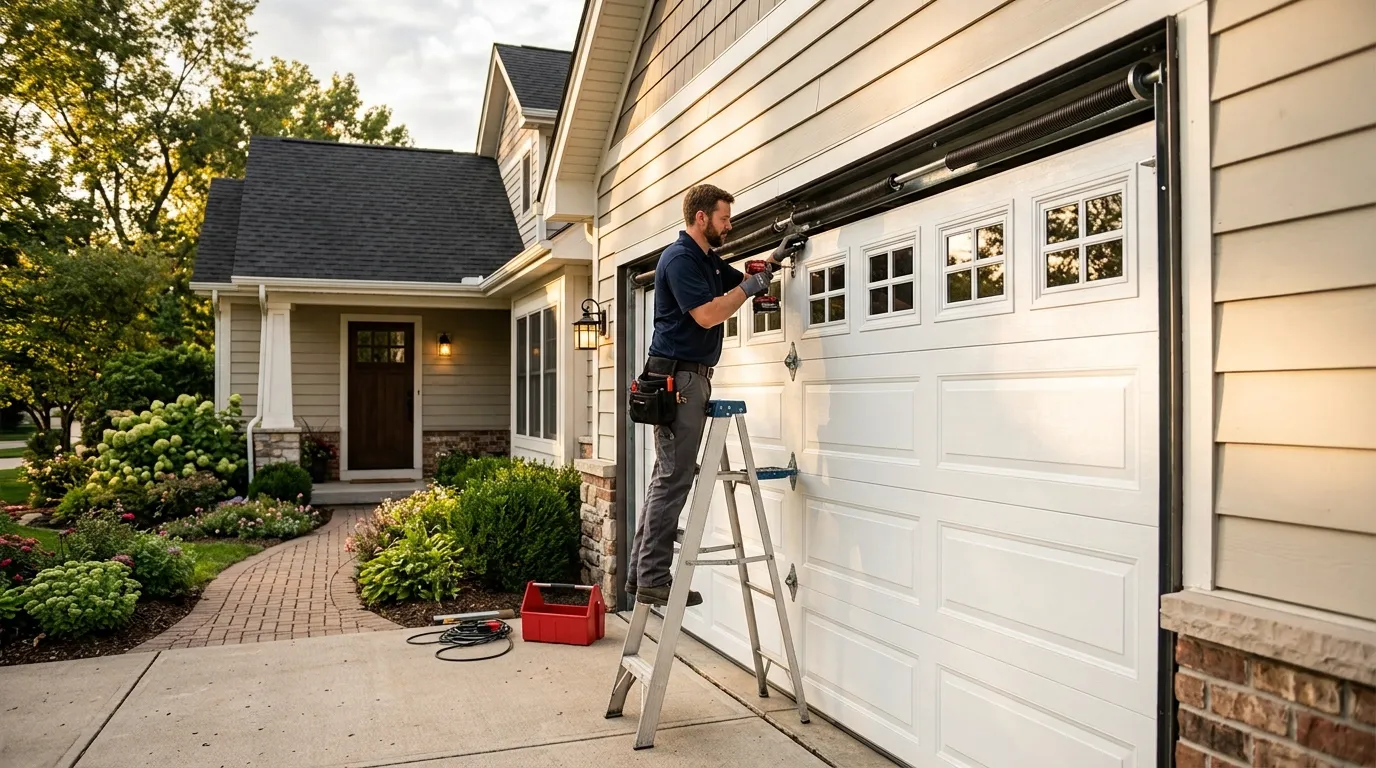
There's no branch office in Wilbraham - the crew runs out of Springfield, about 5 miles away, so booking a job here means a call or a request through the site, not a walk-in counter. Once we know the door type and what it's doing (or not doing), we schedule the truck out.
Because Wilbraham sits close in, it's a straightforward add to a Springfield-area route rather than a special trip, which keeps scheduling simple on our end. We ask a few things up front: the door's approximate age, whether it's one spring or two, and whether the opener is still working, since that changes what we bring on the truck.
If you're not sure what's wrong, that's fine - describe what it's doing (won't open, opens partway, makes a noise, one side sags) and we can usually narrow it down before the truck even leaves. See the Wilbraham coverage page for how this town fits into the broader service area, or the Springfield repair page for the full list of what we handle out of the home base.
Why This Fails Locally
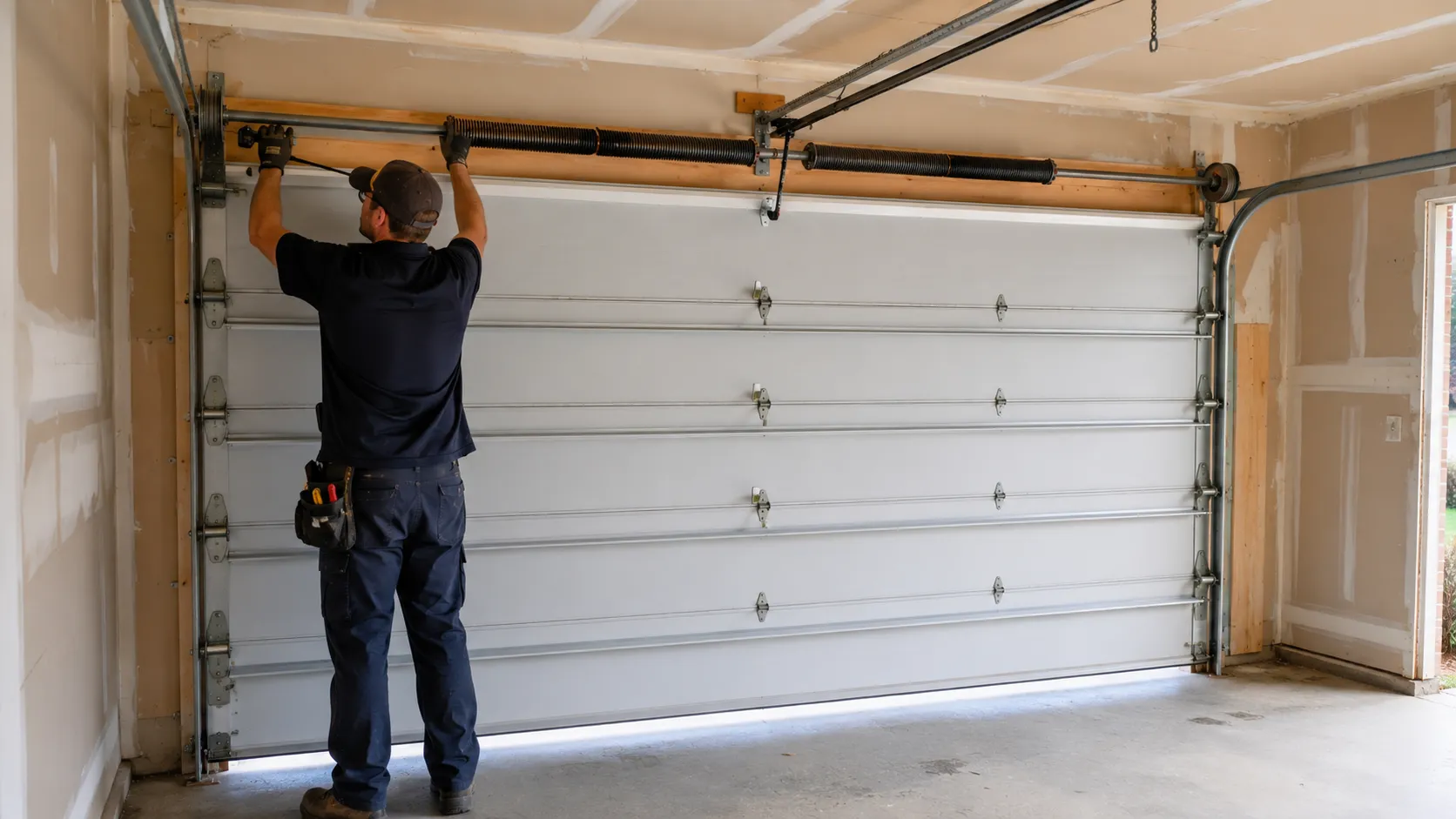
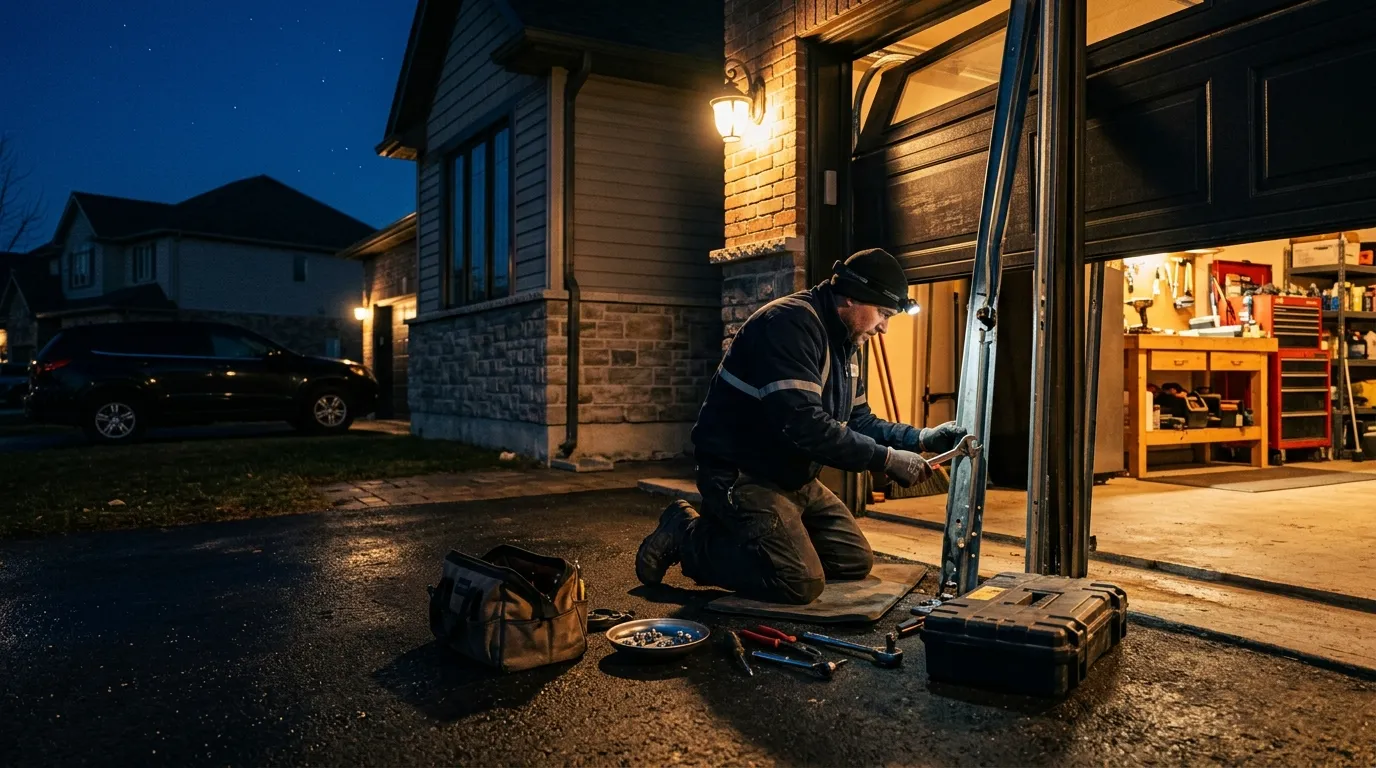
The region sits in a severe-cold climate band, and that matters more on older hardware than people expect. A torsion or extension spring loses temper faster when it's cycling through hard freezes every winter, and a lot of the doors on Wilbraham's 1959-median housing stock are still running springs that predate any real weatherization upgrade. Cold steel is brittle steel - that's when the snap happens, usually on the coldest morning of the week, not a mild one.
Add to that the number of these doors still sitting on original or first-generation replacement track, which was never designed for the added weight of a modern insulated panel if someone swapped in a heavier door without upgrading the spring rate. That mismatch is one of the more common calls: a door that's